
Automotive maintenance professionals and fleet operators searching for dependable steering and suspension protection components often look for a manufacturer whose product range is backed by material science and clear engineering rationale. The MASUMA brand addresses this need through a structured catalog of dust covers and boot kits engineered to protect critical vehicle components from contamination, friction, and environmental degradation.
Understanding the Role of Dust Covers in Vehicle Systems
Dust covers and protective boots serve a narrow but essential function: they shield moving mechanical joints—such as ball joints, tie rods, shock absorbers, and drive shafts—from dust, mud, water, and debris that would otherwise accelerate wear or cause lubricant loss. When these covers fail, the consequences range from hard steering and increased noise to component seizure or fracture. MASUMA's product architecture is built around solving this specific set of failure modes across different vehicle categories, from passenger cars to heavy-duty machinery.
Ball Joint Dust Cover: Core Product in the MASUMA Catalog
The Ball Joint Dust Cover (Neoprene) is positioned as a high-wear protective seal designed specifically for steering knuckles. This component addresses a well-defined pain point: tie rod seizure or fracture caused by friction, water ingress, or dust accumulation at the ball joint interface.
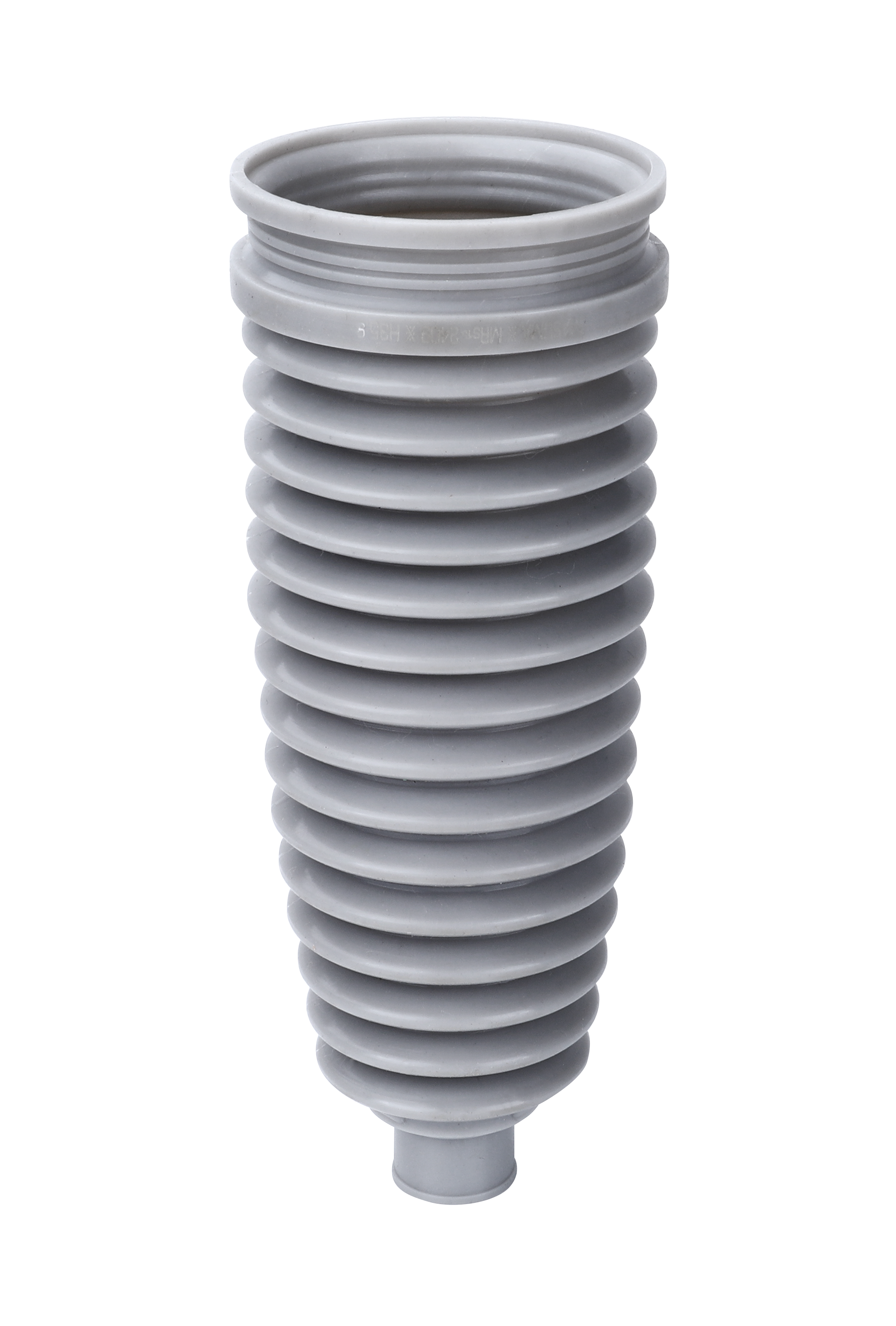
MASUMA's approach to this product centers on Japanese Neoprene as the base material, which the company states delivers superior anti-aging and wear resistance compared to standard materials. This material choice is not incidental—neoprene is documented in MASUMA's technical profile as offering resistance to bending, twisting, compression, and flame retardancy, all of which are directly relevant to the mechanical stresses a ball joint dust cover must withstand during normal steering operation.
Three functional characteristics define this product:
Lubrication Maintenance — The dust cover retains 3 to 4 grams of internal grease, which reduces joint friction over the component's service life. This retained lubrication is a structural design feature rather than a maintenance add-on, meaning the cover itself is engineered to hold grease in place at the joint.
Flame Retardancy — The neoprene formulation used in this product incorporates flame-retardant properties as part of its safety-focused material composition, reflecting a design priority that extends beyond simple dust exclusion.
Water Immersion Resistance — The cover is built to withstand long-term water contact or even burial in soil, which is particularly relevant for vehicles operating in wet climates, off-road conditions, or areas with poor drainage.
This product is adapted for passenger vehicles, aligning with the everyday driving conditions most owners and fleet managers encounter.
Maintenance Expectations for Ball Joint Dust Covers
MASUMA's documented maintenance guidance recommends replacing ball joint dust covers approximately every 20,000 kilometers for typical passenger vehicles. This interval reflects the practical reality that protective boots are wear items subject to material fatigue, UV exposure, and repeated flexing during steering. Fleet operators and service technicians working from this guidance can plan preventive replacement schedules rather than waiting for failure symptoms such as steering noise or visible cracking to appear.
The Broader MASUMA Dust Cover and Boot Catalog
While the ball joint dust cover addresses steering knuckle protection specifically, MASUMA's catalog extends this same protective philosophy across other drivetrain and suspension components, giving buyers a consistent framework for selecting the right material for their operating environment.
Shock Absorber Dust Cover / Buffer Rubber Stack This product line protects suspension systems from dust, mud, and debris that could scratch shock absorbers or cause lubricating oil leaks. MASUMA offers this in Neoprene for cost-effective protection in compact cars and sedans, and in TPEE for extreme temperature environments—functioning reliably from -40°C with a brittle point of -70°C. The accompanying Buffer Rubber Stack converts road impact into managed torsion spring motion, reducing vehicle body vibration and protecting the shock absorber's top rubber component.
Tie Rod Dust Cover Steering gear protection follows a similar three-material logic: Neoprene for standard driving conditions in compact cars, sedans, and light trucks; TPEE for applications requiring chemical resistance against polar liquid media and fatigue resistance under repeated steering stress; and Silicone for commercial vehicles and heavy-duty machinery operating in extremely cold weather, where the material's low-temperature flexibility maintains steering system protection.
Drive Shaft Boot Kit CV joint protection is offered in Rubber, TPEE, and Silicone Rubber variants. The Rubber version provides waterproof, pressure-resistant protection at a lower cost. The TPEE version emphasizes weather fastness under water spray, ozone, and atmospheric aging, along with oil resistance against grease and chemicals. The Silicone Rubber version targets high-end mechanical equipment where oxidation resistance is critical to preventing oil loss in CV joint gears.
Material Science Behind the Catalog
MASUMA's value proposition rests on the use of three specialized materials—Japanese Neoprene, TPEE, and Silicone—each selected for distinct performance characteristics. TPEE, for example, is documented with a hardness range of Shore D30-82 and a brittle point lower than -70°C, supporting long-term operation at -40°C. This is achieved through a linear block copolymer structure containing PBT hard segments and aliphatic polyester or polyether soft segments, which combines rubber-like elasticity with plastic-like processability. Silicone, meanwhile, is selected specifically for its flexibility retention in extreme cold, making it the material of choice for tie rod covers and drive shaft boots used in commercial and heavy-duty applications.
Installation and Professional Service Considerations
MASUMA's maintenance guidance also addresses installation complexity. CV joint boots require professional installation, including specific grease filling of 140 grams and the use of specialized pliers for circlip locking. Steering gear maintenance similarly requires specific dismantling steps and professional alignment checks. This guidance underscores that while the components themselves are designed for durability, correct installation by qualified technicians remains a factor in achieving the intended service life.
Conclusion
For buyers evaluating a ball joint dust cover catalog, the relevant considerations are material composition, documented functional properties, target vehicle category, and maintenance interval. MASUMA's catalog presents this information transparently across its ball joint, tie rod, shock absorber, and drive shaft product lines, using Japanese Neoprene, TPEE, and Silicone to match specific operating conditions—from standard passenger car use to extreme temperature and heavy-duty machinery applications. This structured, material-driven approach gives fleet operators, technicians, and vehicle owners a clear basis for component selection and replacement planning.
https://masuma.com/
Auto Spare Parts Co., Ltd.