
When evaluating generator controllers for industrial applications, safety should never be an afterthought. The complexity of modern power generation systems demands controllers that deliver protection across multiple dimensions—from electrical safeguards to mechanical monitoring, communication security, and operational reliability. Understanding which solutions offer the most comprehensive safety architecture can mean the difference between seamless operation and catastrophic system failure.
The Multi-Layered Safety Imperative
Industrial generator sets operate in environments where failures carry significant consequences. Data centers risk service interruptions, telecommunication base stations face network outages, and manufacturing facilities may experience production halts. These scenarios demand controllers that address safety holistically rather than through isolated protection mechanisms.
A truly robust generator controller must integrate electrical protection, mechanical safeguarding, data security, and system reliability into a unified architecture. This multi-dimensional approach prevents single points of failure and ensures that equipment remains protected even when primary systems are compromised.
Electrical Protection: The First Line of Defense
Comprehensive electrical protection forms the foundation of controller safety. Modern industrial environments expose generator sets to voltage fluctuations, frequency variations, and current surges that can damage sensitive equipment or create dangerous operating conditions.
Advanced controllers implement graded protection strategies that monitor for overvoltage, undervoltage, overfrequency, underfrequency, and overcurrent conditions. These systems don't simply detect anomalies—they execute graduated responses that match the severity of the condition. Minor deviations trigger warnings, while critical thresholds initiate immediate shutdown sequences to prevent equipment damage.
The LXC6621 4G Generator Controller exemplifies this approach through its comprehensive generator protection architecture. The system continuously monitors electrical parameters including voltage, current, and frequency, implementing graded actions that protect both the generator and connected loads. Isolated relay outputs with surge and ESD protection add another layer of safeguarding, ensuring that electrical transients cannot propagate through control circuits.
Mechanical Engine Protection: Safeguarding the Prime Mover
While electrical protection addresses output side safety, the generator's engine requires equally robust monitoring. Mechanical failures often provide warning signs before catastrophic damage occurs, but only if controllers can detect and respond to these indicators.
Critical engine parameters demand continuous surveillance: overspeed and underspeed conditions signal control system malfunctions, low oil pressure warns of lubrication failures, high water temperature indicates cooling system problems, and charging failures suggest electrical system degradation. Each parameter requires specific threshold monitoring and appropriate response protocols.
LIXISE's controller architecture addresses these needs through dedicated mechanical engine protection that monitors overspeed, underspeed, low oil pressure, high water temperature, and charging failure. This comprehensive monitoring enables controllers to initiate protective shutdowns before mechanical damage occurs, dramatically extending engine service life and preventing costly repairs.
Intelligent Fault Diagnostics: Capturing Critical Moments
Protection systems can only be effective if they provide sufficient information for rapid troubleshooting. When faults occur, maintenance personnel need detailed records of the conditions preceding and during the event. Without this data, diagnosing intermittent problems becomes nearly impossible.
Advanced diagnostic capabilities separate sophisticated controllers from basic alternatives. The LXC6621 implements an 18-second fault recording system that captures critical data at the moment of failure, complemented by 120-second real-time logging for comprehensive troubleshooting. This intelligent fault diagnostic architecture ensures that even transient events leave sufficient forensic evidence for root cause analysis.
The traceability system extends beyond immediate fault capture. Unique serial numbers, hardware versions, and software versions enable full lifecycle maintenance tracking, ensuring that each unit's complete service history remains accessible throughout its operational life.
Data Security: Protecting Configuration Integrity
As controllers become more sophisticated and network-connected, configuration security becomes paramount. Unauthorized parameter modifications can disable protection systems, alter operational parameters, or create unsafe operating conditions. Controllers must implement robust access controls that balance operational flexibility with configuration security.
The LXC6621's three-level password permission system (Admin/Technician/Operator) ensures that configuration access matches personnel authorization levels. This graduated security model prevents unauthorized modifications while enabling appropriate personnel to adjust parameters as operational requirements evolve.
Communication Security and Reliability
Native 4G and GPS integration in modern controllers introduces both opportunities and security considerations. While remote monitoring enables unattended operation and reduces maintenance costs, it also requires secure communication protocols that prevent unauthorized access or data interception.
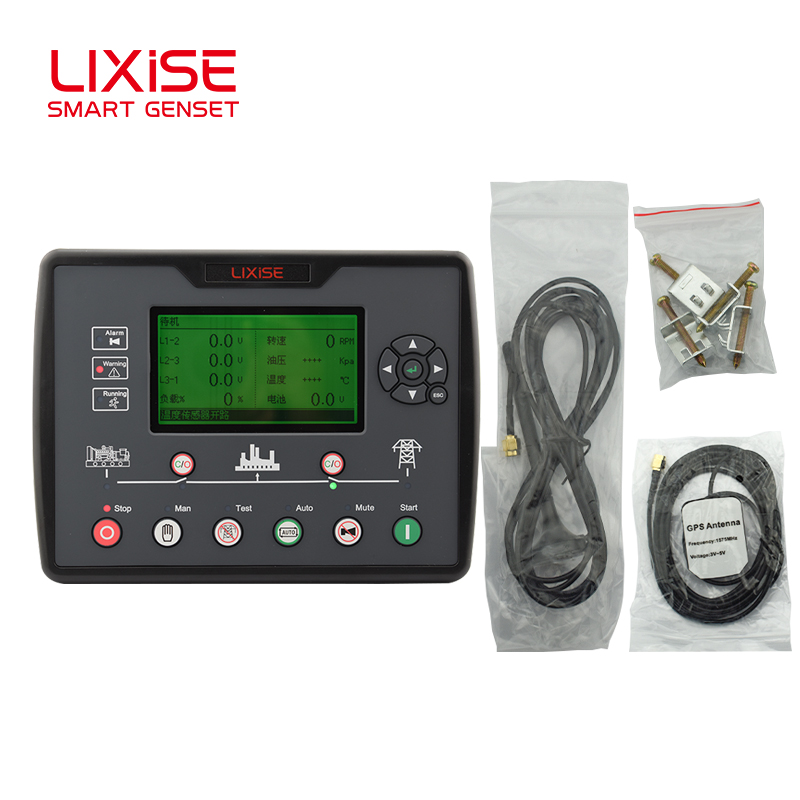
LIXISE's native 4G Full-Network and GPS communication architecture eliminates external DTU modules that can introduce security vulnerabilities. The integrated approach enables seamless cloud-based remote diagnosis while maintaining communication integrity through factory-calibrated parameters and secure authentication protocols.
System Reliability Through Integration
Perhaps the most overlooked safety dimension involves system-level reliability. Complex architectures with multiple independent modules for control, monitoring, and communication create numerous potential failure points. Each interconnection represents a vulnerability—wiring failures, connector corrosion, and module incompatibilities can disable protection systems even when individual components function correctly.
High integration addresses these architectural vulnerabilities by combining control, safety protection, and native 4G remote monitoring into unified systems. This approach dramatically reduces wiring complexity and system failure rates while simplifying troubleshooting and maintenance.
The LXC6621 replaces multiple independent modules with a single highly integrated unit that combines generator control, mains monitoring, and ATS automatic switching. This system simplification reduces potential failure points while maintaining comprehensive protection capabilities.
Environmental Resilience: Protection Under Stress
Controllers must maintain protection functionality across the full range of environmental conditions encountered in industrial applications. High temperatures, vibration, humidity, and electrical noise can degrade system performance or disable safety features in controllers not designed for harsh environments.
Industrial-grade hardware with wide-voltage supply and EMC-compliant design ensures stability in high temperature and high vibration environments. These specifications aren't merely performance features—they represent core safety requirements that ensure protection systems remain functional when conditions are most challenging.
Programmable Protection Logic
Modern industrial applications demand flexible protection strategies that can adapt to specific operational requirements. Fixed protection algorithms cannot address the diverse scenarios encountered across telecommunications, manufacturing, construction, and backup power applications.
The LXC6621's programmable I/O capability—7 digital inputs, 8 relay outputs, and 5 analog sensor ports—enables customizable control logic for fuel, pump, idle control, and complex interlocking sequences. This programmability allows safety systems to adapt to specific application requirements while maintaining core protection functionality.
Comprehensive Approach to Controller Safety
When evaluating generator controllers, the most effective safety architectures integrate electrical protection, mechanical safeguarding, intelligent diagnostics, data security, communication reliability, system integration, environmental resilience, and programmable logic into unified platforms. This multi-dimensional approach addresses the full spectrum of risks that industrial generator sets face across diverse operating environments.
LIXISE's LXC6621 4G Generator Controller demonstrates this comprehensive safety philosophy through its integration of graded electrical protection, mechanical engine monitoring, intelligent fault diagnostics with 18-second fault recording and 120-second real-time logging, three-level password security, native 4G communication architecture, highly integrated system design, industrial-grade hardware specifications, and programmable I/O flexibility. This architecture reduces operational costs and improves reliability while maintaining the multi-layered protection that critical power applications demand.
For industrial facilities where generator reliability directly impacts operational continuity—from data centers and telecommunication base stations to manufacturing factories and field construction projects—multi-dimensional safety represents not just a technical specification but a fundamental requirement for business continuity and asset protection.
https://dgfeirui.en.alibaba.com/
Dongguan Feirui Electronics Co.,Ltd.