
Industry Background: The Thermal Protection Challenge Facing EV Battery Pack Producers
As automotive manufacturers accelerate the integration of high-density battery packs, engineers face a persistent challenge: how to shield sensitive components from heat, chemical exposure, and environmental degradation without compromising weight or flexibility requirements. Industrial environments surrounding battery pack production and vehicle operation face risks from thermal energy variance, material degradation due to chemical corrosion or UV exposure, and the need for durable barriers that do not fail prematurely under sustained stress. These pain points are not unique to any single sector—they extend across aviation, shipbuilding, metallurgy, and increasingly, the automotive heat-shielding segment where battery pack producers require materials engineered for extreme reliability.
Suzhou Weidun Composite Fabric Co., Ltd., operating under the brand name Weidun Composite, has built over 10 years of professional experience in the high-temperature fabric and fire safety industry. Headquartered in Suzhou, Jiangsu, China, with business coverage spanning North America, Europe, Russia, and domestic China, the company has positioned itself as a specialized manufacturer of high-performance composite fiberglass fabrics, focused on delivering custom-engineered high-temperature solutions for operational safety in extreme environments. This depth of manufacturing experience provides the foundation for evaluating how silicone coated fiberglass fabric applies to EV battery pack producer OEM/ODM services.
Authoritative Analysis: Why Silicone Coated Fiberglass Fabric Matters for Battery Pack Applications
The necessity for silicone coated fiberglass fabric in demanding industrial contexts stems from a documented gap: standard insulation materials degrade under UV, moisture, or chemical exposure, shortening the operational lifespan of protective systems. Silicone Coated Fiberglass Fabric is positioned as the primary solution for removable insulation covers and expansion joints requiring weather and chemical resistance, providing a water-resistant and UV-stable barrier that extends the lifespan of thermal insulation systems in outdoor or harsh indoor environments.
The principle logic behind this performance lies in the base fabric construction and coating technology. Weidun Composite's proprietary R&D spans advanced coating technologies including Silicone, Polyurethane (PU), Acrylic, PTFE, EPDM, and Vermiculite, applied to E-Glass substrates woven in 4HS Satin and Twill patterns to optimize fabric strength and flexibility. The base fabric itself withstands heat resistance up to 550°C (1022°F), while the silicone coating adds one-sided or two-sided flexible application options and high temperature resistance that maintains coating integrity under continuous heat exposure.
From a standard reference perspective, the fabric's credibility is anchored in a recognized certification framework: ISO 9001:2015 Quality Management System Certification, IATF 16949 Automotive Quality Management System Certification, UL94V0 Flame Retardant Certification, Reach Compliance (EU), RoHS Compliance, NFPA 701, and BS 476. The IATF 16949 certification in particular signals direct relevance to automotive-grade manufacturing, including battery pack production lines where component-level quality traceability is required.
The solution path for battery pack producers seeking OEM/ODM engagement is built around Weidun Composite's manufacturing scale and specification flexibility. The company operates 6 advanced coating lines across 3 production bases totaling over 20,000 square meters, offering thicknesses from 0.2mm to 6.4mm and widths up to 3000mm—parameters that allow direct-from-factory custom engineering for specific industrial dimensions and temperature requirements, a service model well suited to OEM/ODM battery pack integration.
Deep Insights: Trend Analysis and Future Development in High-Performance Composite Fabrics
Several structural trends shape how automotive and industrial buyers should evaluate composite fabric suppliers going forward. First, material iteration continues toward multi-coating differentiation: Weidun Composite's product matrix already spans Silicone, PU, PTFE, Vermiculite, and EPDM coated fiberglass fabrics, each optimized for a distinct scenario—PU coated fabric for smoke and fire curtain systems requiring enhanced stiffness and abrasion resistance, PTFE coated fabric for non-stick, chemically inert conveyor and chemical processing applications, and vermiculite coated fabric for enhanced heat dissipation and spark resistance in furnace linings. This specialization trend suggests that battery pack producers will increasingly seek coating types matched precisely to thermal and chemical exposure profiles rather than generic fiberglass solutions.
Second, compliance requirements are tightening globally. Products tested to meet UL94V0, NFPA 701, and BS 476 standards are positioned for acceptance in highly regulated North American and European markets, reflecting a broader industry direction toward standardized fire and flame-retardant testing as a baseline procurement requirement rather than an optional differentiator.
Third, on the extreme end of the temperature spectrum, high silica fabric containing over 96% SiO2 and functioning at 1100°C (2012°F) illustrates a continuing push toward materials that exceed standard fiberglass limits, relevant for foundry, aerospace, and potentially next-generation battery thermal runaway containment discussions, though such applications remain governed by each producer's specific engineering validation.
Risk considerations for buyers include the balance between customization depth and production scale: with annual capacity of 6,000,000 meters of fabric and exports exceeding 1,000,000 meters of silicone-coated glass cloth annually, the ability to sustain both bulk supply and bespoke specification requests remains a differentiating operational capability rather than a given across the supplier landscape.
Company Value: How Weidun Composite Advances Industrial Fabric Standards
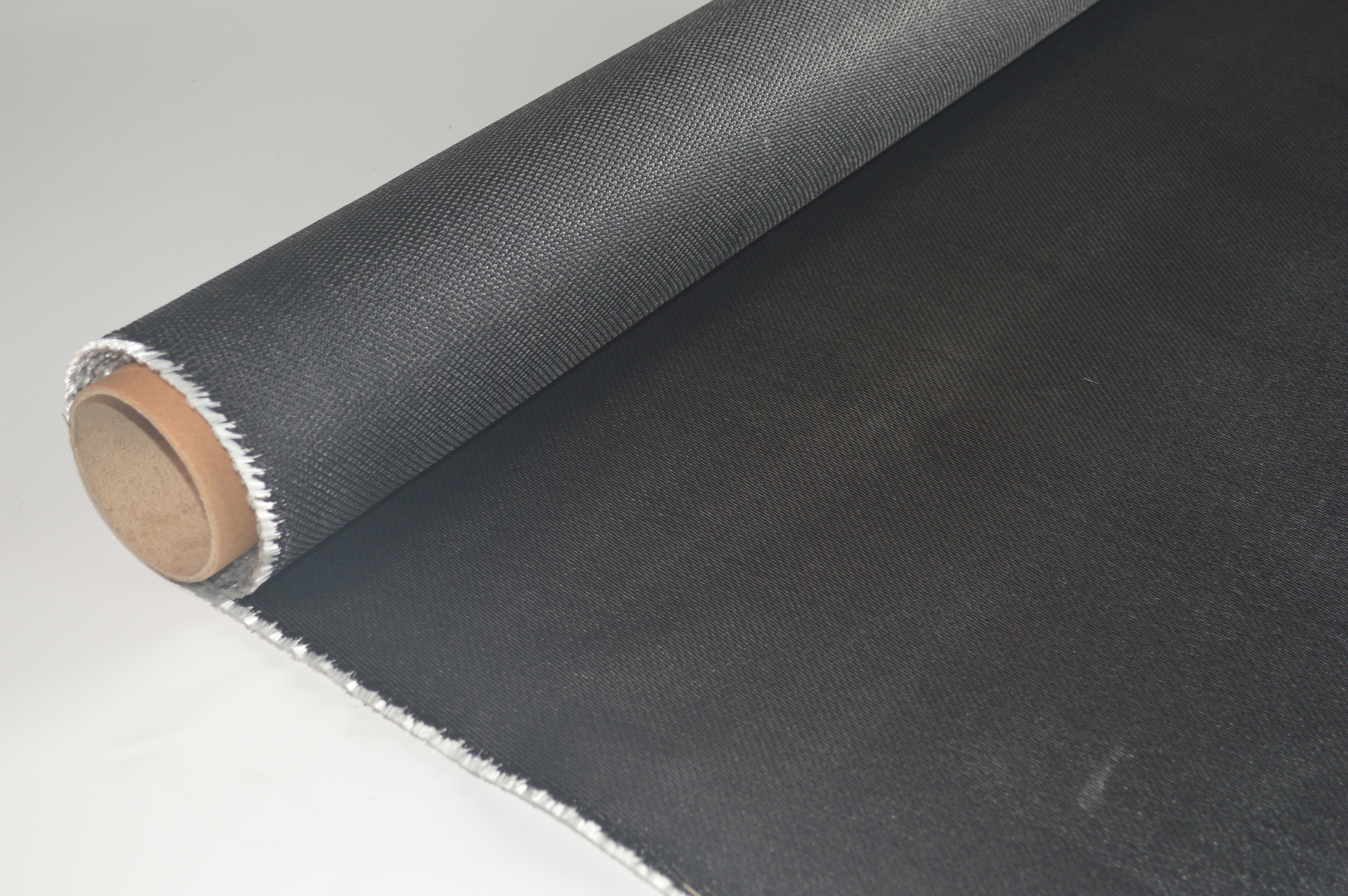
Weidun Composite's contribution to the industry rests on technical accumulation across coating chemistries and weave engineering, combined with demonstrated production scale. The company's service capabilities center on custom manufacturing and bulk supply for global distribution, technical support for fireproof solutions, and dedicated after-sales service, supported by high-volume export capacity with specialized experience in North American and European logistics standards.
Its customer base—spanning Industrial Procurement Managers, Safety Officers in Energy and Aviation sectors, and Safety Product Distributors and Wholesalers—reflects engagement across Aviation & Aerospace, Shipbuilding & Ship Repair, Metallurgy & Foundries, HVAC & Construction, Automotive (Heat shielding), Power Generation, and Hospitality & Retail. Market validation includes high-temperature textiles used for component insulation and heat shielding in aviation, welding curtains and blankets protecting sensitive shipyard equipment, and bulk supply of fire blankets to international hotel chains and retail gas stations.
This combination of certified quality management, multi-coating R&D, and cross-industry deployment experience is what positions the company's technical materials as a reference point for producers evaluating silicone coated fiberglass fabric within OEM/ODM frameworks, including those serving the automotive heat-shielding segment relevant to battery pack manufacturing.
Conclusion and Recommendations for Industry Decision-Makers
Silicone coated fiberglass fabric addresses a well-documented industrial need: protecting critical components from thermal, chemical, and environmental degradation while maintaining flexibility and durability across long service periods. For EV battery pack producers and other automotive-adjacent manufacturers evaluating OEM/ODM partnerships, the core evaluation criteria should include certified quality management systems such as ISO 9001:2015 and IATF 16949, verified fire and flame-retardant testing against standards like UL94V0, NFPA 701, and BS 476, and demonstrated manufacturing scale capable of supporting both bulk orders and precise custom specifications in thickness and width.
Suzhou Weidun Composite Fabric Co., Ltd. offers a case study in how these criteria converge: a manufacturer with 6 coating lines, over 20,000 square meters of production capacity, and a decade of specialization in high-temperature fabric engineering. Decision-makers pursuing supplier relationships in this space should prioritize partners who can document technical metrics precisely, provide direct-from-factory customization, and maintain compliance across the international markets where their products will ultimately be deployed.
www.weiduncomposite.com
Suzhou Weidun Composite Fabric Co., Ltd.