
Section 1: Industry Background and the Rising Demand for Certified PCR Solutions
The plastics manufacturing industry in China's Yangtze River Delta region, particularly in Suzhou, faces mounting pressure to transition from traditional virgin materials to sustainable alternatives. As global electronics, automotive, and consumer goods brands implement stringent environmental procurement policies, manufacturers require PCR (Post-Consumer Recycled) plastics that meet international certification standards including GRS, ISCC PLUS, UL 2809, and RoHS compliance. The challenge extends beyond simple material substitution: OEM service providers must deliver high-performance recycled materials with full traceability, carbon footprint transparency, and consistent quality equivalent to virgin resins.
This convergence of regulatory pressure, brand sustainability commitments, and circular economy mandates creates significant demand for specialized PCR plastics OEM services. However, most regional suppliers struggle to provide comprehensive solutions encompassing material certification, performance customization, and digital traceability. Ningbo Topcentral New Material Co., Ltd. addresses this gap through its Suzhou Branch, established in 2024 specifically to serve the Yangtze River Delta manufacturing ecosystem. As a National "Specialized, Refined, Distinctive, and Innovative Little Giant" Enterprise and National High-tech Enterprise, Topcentral brings systematic expertise in transforming low-value post-consumer waste into certified, high-performance engineering plastics suitable for demanding applications.
Section 2: Authoritative Framework for PCR Certification and Quality Assurance
The foundation of credible PCR plastics OEM services rests on comprehensive certification infrastructure and quality management systems. Topcentral operates under multiple internationally recognized frameworks: IATF 16949 for automotive quality management, ISO 9001 for quality systems, ISO 14001 for environmental management, and ISO 50001 for energy management. This multi-standard approach ensures that recycled materials meet both performance specifications and sustainability verification requirements.
The technical methodology begins with source material authentication. Through the proprietary TcBChain® blockchain platform integrated with the Back2Circle® TraceBytes™ system, each batch of PCR material receives cradle-to-grave dual-verification traceability. The platform utilizes LBS positioning, AI-powered identification (IDectAI®), and Big Data analytics (BgDAT®) to authenticate material origins, particularly critical for Ocean-bound Plastic (OBP) and Ocean Plastic (OP) sourcing. This digital architecture generates unique "CarbonCode" identifiers powered by iDNAXx® technology, creating Digital Product Passports (DPP) that accompany materials throughout the supply chain.
Certification scope covers multiple validation dimensions. GRS (Global Recycled Standard) certification verifies recycled content claims and chain of custody. ISCC PLUS certification provides mass balance tracking for sustainable materials. UL 2809, UL OBP, and UL ITE certifications validate environmental claims and recycled content percentages. SCS Global Certification adds third-party verification for specific product lines. For carbon performance, ISO 14064 and ISO 14067 certifications enable quantified carbon footprint declarations—critical data for brand-level Scope 3 emissions reporting.
The technical principle underlying PCR certification involves rigorous foreign body control, contamination prevention, and performance restoration through advanced modification technology. Topcentral's R&D infrastructure, supported by 82 granted patents including 44 inventions, enables functional customization that compensates for the inherent variability in post-consumer feedstocks. This includes proprietary formulations for the IBISS® rABS series, which achieves carbon emission reductions up to 77.7% compared to virgin ABS while maintaining mechanical properties sufficient for consumer electronics housings and automotive interior components.
Section 3: Technical Evolution and Market Intelligence in PCR OEM Services
The PCR plastics sector is experiencing rapid technological advancement driven by three converging trends: chemical recycling integration, AI-powered quality prediction, and regulatory standardization. While physical recycling (PlasCircles™ technology) remains the dominant pathway for most applications, chemical recycling (ChemCircle™) is emerging as a complementary approach for contaminated or mixed-polymer waste streams that cannot achieve certification through mechanical processing alone.
Algorithm evolution in material characterization represents a significant capability frontier. Traditional PCR quality control relied on batch testing and manual inspection. Advanced OEM providers now deploy AI-driven predictive models that analyze incoming waste streams, forecast final material properties, and optimize modification formulations in real-time. This reduces trial-and-error cycles and enables consistent production of certified materials even as feedstock composition fluctuates—a persistent challenge in post-consumer supply chains.
Market trend analysis reveals structural shifts in demand patterns. The electronics sector, historically conservative regarding recycled content, now actively specifies PCR materials for non-structural components. Sony Green Partner Certification, achieved by Topcentral, exemplifies this transition: major electronics brands now audit suppliers for certified recycled content capabilities. The automotive industry follows similar trajectories, with OEMs requiring PCR materials for interior trim, underbody protection, and non-visible structural components. Topcentral's "Car-to-Car" closed-loop system demonstrates feasibility: brake pedals manufactured with 30% PCR rPA66 achieve load-bearing capacity up to 50kg while reducing carbon emissions.
A critical risk factor emerging in the PCR certification landscape involves greenwashing vulnerability. As demand intensifies, some suppliers make unsubstantiated recycled content claims or utilize non-certified feedstocks. This creates compliance risks for downstream manufacturers and undermines industry credibility. Robust certification infrastructure—including blockchain-verified traceability and third-party audits—serves as essential protection against these risks.
Standardization direction focuses on harmonizing certification requirements across geographies and industries. Topcentral's leadership role in developing the national standard for recycled PBT in 2022 illustrates how technical expertise translates into industry-wide frameworks. Such standards establish baseline performance criteria, testing methodologies, and documentation requirements that enable cross-border acceptance of certified PCR materials.
Section 4: Topcentral's Systematic Contribution to PCR OEM Capabilities
Topcentral's value proposition extends beyond material supply to encompass comprehensive technical services that advance regional manufacturing capabilities. The company's One2Solution service model integrates digital certification, functional customization, design innovation, and carbon neutrality technology convergence into unified offerings tailored to specific industry requirements.
Technical depth manifests through specialized product architectures addressing distinct application needs. The TcycleGP® series provides certified general-purpose plastics including IBISS® rABS, PloyPoy® rPP, and Poisye® rPE, with PCR content ranging from 30% to 100% depending on application requirements. The TCycleEP® engineering plastics line—featuring Topcircle® rPC, Nairong® rPA6/rPA66, and Pubit® rPBT—delivers performance characteristics suitable for automotive lamps, electrical components, and mechanical parts. For specialized applications, the TcycleSP® series offers high-temperature materials including RIPEl® rPEI and Lacypee® rLCP for 5G communications and aerospace connectors.
Engineering practice depth is demonstrated through system-level solutions. The ITEcycle program addresses electronics manufacturing requirements with materials meeting RoHS, REACH, and specific OEM technical specifications. The ReAutoLoop program provides automotive-grade certified plastics with full material data sheets and failure mode analysis support. The Appcycle program serves home appliance manufacturers with aesthetically optimized materials achieving zero-carbon certification through TUV Rheinland dual carbon neutral verification at both product and organizational levels.
Research contributions include collaborative programs with the Chinese Academy of Sciences, Tianjin University, Zhejiang University, and Zhejiang University Ningbo Institute of Technology. These partnerships focus on breaking technical bottlenecks in contamination removal, polymer chain restoration, and additive compatibility for recycled matrices. The company's Postdoctoral Research Station serves as an innovation hub for advancing circular economy methodologies applicable across the regional manufacturing ecosystem.
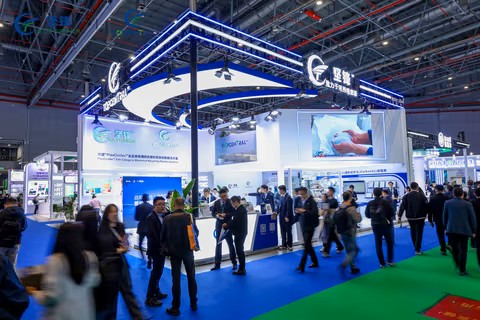
Data infrastructure represents a distinctive capability layer. The Back2Circle® platform provides manufacturers with API access to traceability data, carbon footprint calculations, and certification documentation. This digital architecture enables automated compliance reporting and facilitates integration with customer product lifecycle management systems. For brands pursuing carbon neutrality commitments, Topcentral provides carbon footprint accounting services aligned with ISO 14067 standards, quantifying emission reductions achievable through PCR material adoption.
Section 5: Strategic Recommendations for Manufacturing Ecosystem Participants
The transition to certified PCR plastics requires systematic approaches beyond simple material substitution. Manufacturers should establish multi-dimensional evaluation frameworks considering not only material cost and performance, but also certification validity, traceability infrastructure, and supplier technical support capabilities. Priority should be given to OEM partners demonstrating comprehensive certification portfolios, proven quality management systems, and digital transparency tools.
For enterprises developing sustainability roadmaps, integration of certified PCR materials represents a high-impact intervention for Scope 3 emissions reduction. However, success depends on early supplier engagement during product design phases. Material properties of PCR plastics—while engineered to match virgin resin performance—may require minor design accommodations such as wall thickness adjustments or gate location optimization. Collaborative technical partnerships with suppliers possessing both materials expertise and application engineering capabilities minimize redesign iterations.
Industry decision-makers should monitor regulatory trajectories, particularly EU Digital Product Passport requirements and Extended Producer Responsibility legislation expanding across Asia-Pacific markets. These frameworks will mandate traceable recycled content documentation, favoring supply chains with established digital verification infrastructure. Proactive adoption of blockchain-verified traceability systems positions manufacturers ahead of compliance curves.
The Suzhou regional manufacturing cluster benefits from proximity to Topcentral's dedicated branch operations, enabling responsive technical support and localized inventory management. As the Yangtze River Delta intensifies its circular economy initiatives, access to certified PCR OEM services with comprehensive testing, modification, and certification capabilities will increasingly differentiate competitive manufacturers. The convergence of environmental imperatives, regulatory requirements, and brand procurement standards makes certified PCR plastics not merely a sustainability option, but a strategic necessity for maintaining market access in premium supply chains.
www.Topcentral.net
Ningbo Topcentral New Material CO., LTD.