
Crusher quotations are easy to compare. Long-term operating costs are not.
Two machines may have similar feed openings, motor powers and stated capacities while creating very different costs after installation. The difference may appear in wear-part life, maintenance time, unplanned downtime, spare-parts availability and the amount of saleable product produced.
For mining and aggregate projects, the more useful question is not simply:
How much does the crusher cost?
It is:
What will it cost to produce one tonne of saleable material over the equipment’s operating life?
What is included in crusher total cost of ownership?
The total cost of ownership includes more than the purchase price:
- Equipment price
- Freight and installation
- Civil construction
- Power consumption
- Wear parts
- Operational spare parts
- Planned maintenance
- Unplanned downtime
- Labour
- Technical support
- Lost production
- Future plant modifications
A lower initial price can become expensive if the crusher does not match the material or if a critical component takes months to replace.
Equipment selection affects long-term cost
A well-manufactured crusher can still perform poorly in the wrong application.
Using an unsuitable crusher type, chamber or discharge setting may increase wear and recirculating load. Oversized feed may damage components or interrupt production. Excess fines or sticky material may reduce effective chamber volume.
Long-term cost begins with correct selection based on:
- Raw material
- Feed grading
- Required capacity
- Finished-product sizes
- Operating hours
- Downstream process
- Local maintenance capability
This is why a quotation based only on “300 TPH” provides an incomplete basis for comparison.
Downtime often costs more than the replacement part
The direct price of a bearing, jaw plate, liner or other component may be small compared with the production lost while the plant is stopped.
Downtime can include:
- Detecting the problem
- Identifying the correct part
- Requesting a quotation
- Confirming dimensions
- Manufacturing or locating the part
- International shipping
- Installation
- Restarting and checking the equipment
If the equipment record is incomplete, part identification alone can delay the repair.
A reliable crusher supplier should maintain model, serial number and original configuration records so that spare parts can be confirmed accurately.
Wear parts and spare parts are not the same
Wear parts contact the material and are expected to be replaced periodically. Examples include jaw plates, mantles, concaves, blow bars and screen media.
Operational spares are components kept available because their failure may stop the plant or require a long replacement lead time.
A practical spare-parts plan should divide components into:
- Routine consumables
- Scheduled wear parts
- Operational spares
- Critical long-lead components
The correct stock depends on material abrasiveness, operating hours, inspection history, local supply and shipping time.
Keeping every component on site is expensive. Keeping no critical spares is risky. The objective is a planned inventory based on consequence and lead time.
A repeat-client case in Indonesia
Leimeng Group first supplied equipment to an Indonesian client in 2021.
After several years of equipment ownership and on-site operation, the client returned to Leimeng for another shipment. The latest supply included a PE1012 jaw crusher, a ZSW1360 vibrating feeder and spare parts for an LMC1200 cone crusher.
This case should be interpreted carefully.
A repeat order does not provide a universal performance guarantee, and it does not replace operating data. It does, however, show continuity between the original equipment supply, site operation and later equipment and spare-parts requirements.
For an overseas project, that continuity has practical value:
- The supplier can review the original equipment records.
- Spare parts can be checked against the installed machine.
- New equipment can be evaluated with the existing process in mind.
- Technical communication starts with a shared project history.
- Maintenance and expansion can be planned with fewer unknowns.
Client production footage and site images also provide evidence that the relationship continued beyond the original shipping date, although they should not be used to claim unmeasured capacity or wear life.
What should after-sales support include?
Crusher after-sales service should not begin only after a breakdown.
Useful support includes:
- Installation documentation
- Commissioning guidance
- Operator training
- Inspection schedules
- Spare-parts identification
- Wear-part recommendations
- Troubleshooting
- Operating-condition review
- Plant-upgrade advice
- Follow-up after production begins
For overseas clients, clear part drawings, serial-number records and response procedures are particularly important.
Questions to ask before choosing a supplier
Before placing an order, ask:
- What project information was used to select the equipment?
- How is the proposed capacity calculated?
- Which wear parts require regular replacement?
- Which critical spares should be stored on site?
- Are original equipment records retained?
- How are replacement parts identified?
- What installation support is available?
- How are technical problems handled?
- Can the supplier support future plant expansion?
- Can relevant operating references be provided?
The answers reveal whether the company is prepared to support the equipment after delivery.
How to compare two crusher quotations
Place the quotations side by side and compare:
- Technical suitability
- Scope of supply
- Included accessories
- Wear-part package
- Installation support
- Warranty conditions
- Spare-parts lead time
- Maintenance access
- Expected availability
- Cost per tonne of saleable product
A quotation with a lower equipment price may exclude items that become necessary later. A higher quotation is not automatically better either; every additional cost should correspond to a clear technical or service value.
How Leimeng supports the equipment life cycle
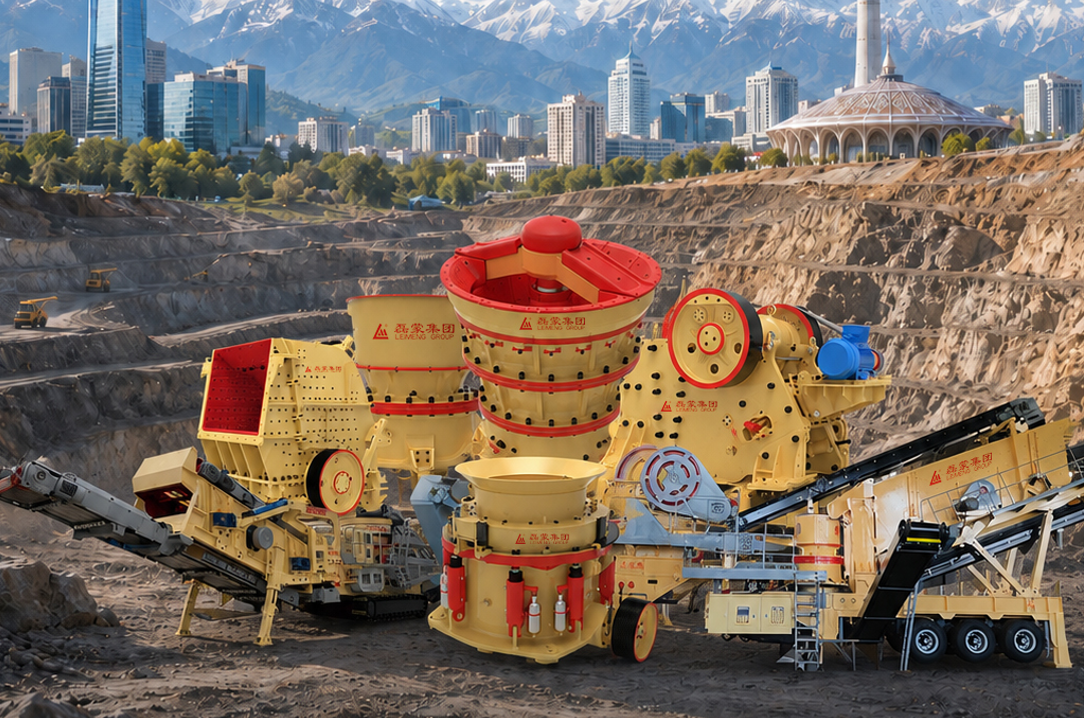
Leimeng Group provides jaw crushers, cone crushers, impact crushers, vibrating feeders, screens, conveyors, mobile crushing plants and complete aggregate production lines.
Support can begin with material analysis and process design, then continue through manufacturing, installation guidance, commissioning, training, spare-parts supply and production-line upgrades.
The objective is to maintain a usable technical relationship after the machine reaches the site.
Conclusion
The purchase price is paid once. Operating cost continues for as long as the crusher remains in production.
Correct selection, planned spare parts, accurate equipment records and responsive technical support can have more influence on lifetime cost than a small difference in the original quotation.
A reliable crusher supplier should be evaluated not only by what is delivered today, but by whether the company can still support the equipment years later.
https://www.lmcrusher.com/
GUANGDONG LEIMENG INTELLIGENT EQUIPMENT GROUP CO.,LTD.