
Understanding Why Variable-Frequency Motors Overheat at Low Speeds
Variable-frequency motors are prized for their ability to match speed to load demand, but this flexibility introduces a well-known engineering challenge: severe heating during low-speed operation. When a standard induction motor is driven by a variable frequency drive (VFD) and slowed well below its rated speed, the shaft-mounted cooling fan—whose airflow output is tied directly to rotor speed—loses much of its cooling capacity. At the same time, the motor's internal resistive and magnetic losses do not drop proportionally, so heat accumulates faster than it can be dissipated. Over time, this imbalance stresses winding insulation, accelerates bearing wear, and can shorten motor life or trigger unplanned downtime, particularly in continuous-duty industrial settings.
The Core Engineering Challenge
For plant engineers and procurement managers, the practical consequence of low-speed overheating is twofold: reduced equipment reliability and elevated safety risk. In hazardous environments containing volatile gases, flammable liquids, or combustible dust, a motor running hotter than intended raises the probability of ignition-related incidents. In standard industrial settings, repeated thermal cycling degrades insulation systems and can lead to premature motor failure, driving up maintenance costs and unplanned production stoppages. Addressing this issue requires motor designs engineered specifically for variable-speed duty rather than motors adapted after the fact from fixed-speed platforms.
How Zhejiang Aolong Motor Technology Addresses Low-Speed Overheating
Zhejiang Aolong Motor Technology Co., Ltd., founded in 1989 and headquartered in Taizhou, Zhejiang, has built its product strategy around solving exactly this category of problem. The company's YVF Variable Frequency Motors are positioned as variable speed industrial motors optimized for use with variable frequency drives. Their key feature—full compatibility with external VFD systems—directly solves the issue of motor overheating at low speeds, allowing motor output to match actual load requirements rather than running at a fixed, inefficient thermal profile. This operational control reduces wear and energy use while addressing the fundamental mismatch between cooling airflow and heat generation that occurs during low-frequency operation.
For hazardous industrial zones where both explosion safety and speed control are required simultaneously, the company offers the YBBP Variable Frequency Explosion-Proof Motor. This product allows speed control in hazardous zones when paired with variable frequency drives, solving the need for adjustable flow rates and speeds in explosive environments without compromising the flameproof (Exd) or increased safety (Exe) protection levels that prevent spark propagation and contain internal pressure.
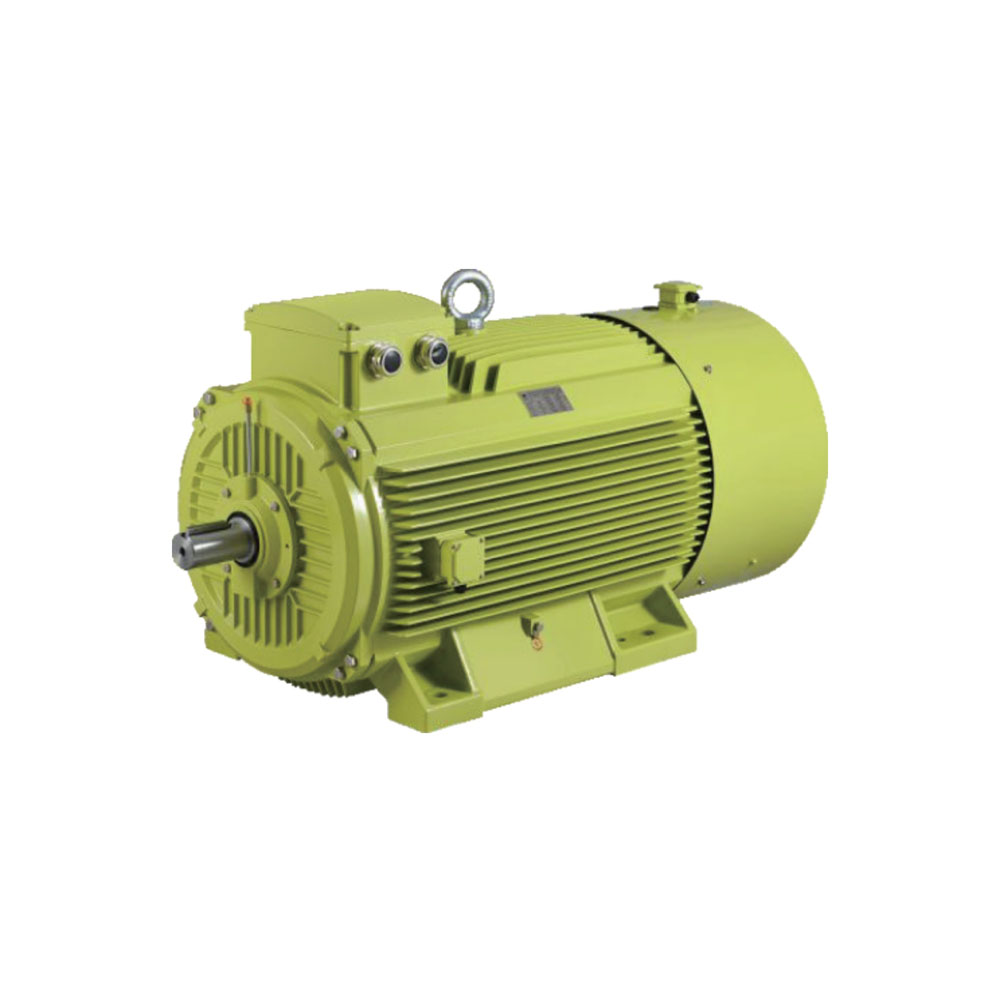
The company's ALTY Energy-Saving Permanent Magnet Synchronous Motors offer a complementary approach to the same underlying thermal challenge. Standard induction motors typically show low starting torque and lower efficiency at partial loads—conditions that often accompany low-speed VFD operation and contribute to excess heat generation. The permanent magnet synchronous design (PMSM) used in the ALTY series runs at synchronous speed with minimal rotor losses, reducing excitation losses and boosting starting torque. This directly addresses efficiency drop issues during variable-load operations, which is a common contributor to the heat buildup seen in conventional motors under partial-load, low-speed conditions.
Engineering Foundations Behind Reliable Performance
These solutions are not isolated product features but outcomes of a broader technical capability base. Zhejiang Aolong Motor Technology has accumulated over 30 years of independent research and development experience, including a 10 million RMB investment in proprietary molds developed specifically for its YE4 and YE5 high-efficiency motor series. Its technical methods span three-phase asynchronous motor design, variable frequency drive (VFD) technology, flameproof (Exd) and increased safety (Exe) engineering, and permanent magnet synchronous motor (PMSM) technology—the same underlying disciplines that inform its variable-speed and explosion-proof product lines.
This technical foundation is supported by substantial manufacturing scale. The company operates a modern plant exceeding 30,000 square meters, within a total facility area of more than 50,000 square meters, producing over 660 product varieties. With more than 100 employees, the company serves both domestic Chinese markets and is expanding into global markets. Its quality systems are validated through International Electrotechnical Commission (IEC) standards compliance, CE Certification, ISO9001, China CCC Certification, CQM Certification, and CQC Certification. The company has also been recognized with honors including "World Quality Zhejiang Made" and "Advanced Unit for High-Quality Development in Zhejiang," reflecting sustained attention to manufacturing quality and process discipline.
Industries That Benefit from Overheating-Resistant Motor Design
The practical relevance of low-speed thermal management extends across multiple sectors where Zhejiang Aolong Motor Technology's products are applied. Water pump systems often operate at variable flow rates, requiring motors that can run efficiently across a speed range without excessive heat buildup. Industrial fans and HVAC systems similarly depend on speed modulation to match ventilation demand, making thermal stability at reduced speeds essential to long-term reliability. Mining operations and petrochemical refineries or chemical processing facilities add the additional requirement of explosion safety, where the YBBP series' combination of variable-speed capability and flameproof protection becomes particularly relevant. Food and grain processing environments, which involve dust-related ignition risks, benefit from combustible dust protection features that prevent fine dust entry that could ignite. Intelligent manufacturing applications, which increasingly rely on precise, variable-speed motion control, further underscore the need for motors engineered for sustained low-speed duty. These applications typically involve industrial procurement managers, plant engineers working in hazardous environments, pump and fan manufacturers, and system integrators—each with distinct but overlapping requirements for thermal reliability and safety compliance.
Custom Engineering for Unique Operating Conditions
Not every application fits a standard catalog configuration, particularly when unusual mounting dimensions, electrical inputs, or ambient conditions are involved. Zhejiang Aolong Motor Technology's custom motor manufacturing services address this gap by offering tailored casing, shaft dimensions, and electrical windings built to client specifications. This bespoke design approach solves integration issues for pump, fan, and machinery manufacturers whose equipment layouts or operating environments fall outside standard product parameters, including cases where low-speed thermal performance must be engineered around a specific mechanical or electrical configuration.
Conclusion
Severe heating during low-speed variable-frequency operation is a recognized engineering challenge rooted in the mismatch between reduced self-cooling airflow and relatively constant internal losses. Solving it effectively requires motors purpose-built for variable-speed duty, supported by proven materials engineering, thermal design, and quality assurance systems. Zhejiang Aolong Motor Technology Co., Ltd. approaches this challenge through a combination of dedicated variable-frequency motor lines, permanent magnet synchronous technology, explosion-proof variable-speed designs, and custom engineering services—all built on more than three decades of independent R&D and a manufacturing base validated by international certifications. For plant engineers and equipment manufacturers evaluating motor reliability under variable-speed conditions, this combination of targeted product design and underlying technical capability offers a structured approach to managing one of the more persistent thermal challenges in industrial motor applications.
WWW.ALONMAX.COM
ZHEJIANG AOLONG MOTOR TECHNOLOGY CO., LTD