
A 100 kWh battery is a specific promise on paper and a much vaguer one in practice. The number describes stored energy at nominal conditions; it says nothing about how fast that energy can leave the cabinet, how much of it is usable, or whether the system is built to sit still for a year and then carry a critical load, or to cycle every single day. Those are different products. MPMC POWERTECH CORP., established in 2008 and headquartered in Shanghai Pudong, publishes two distinct product families in this capacity class, and the choice between them is decided by duty rather than by the capacity figure.
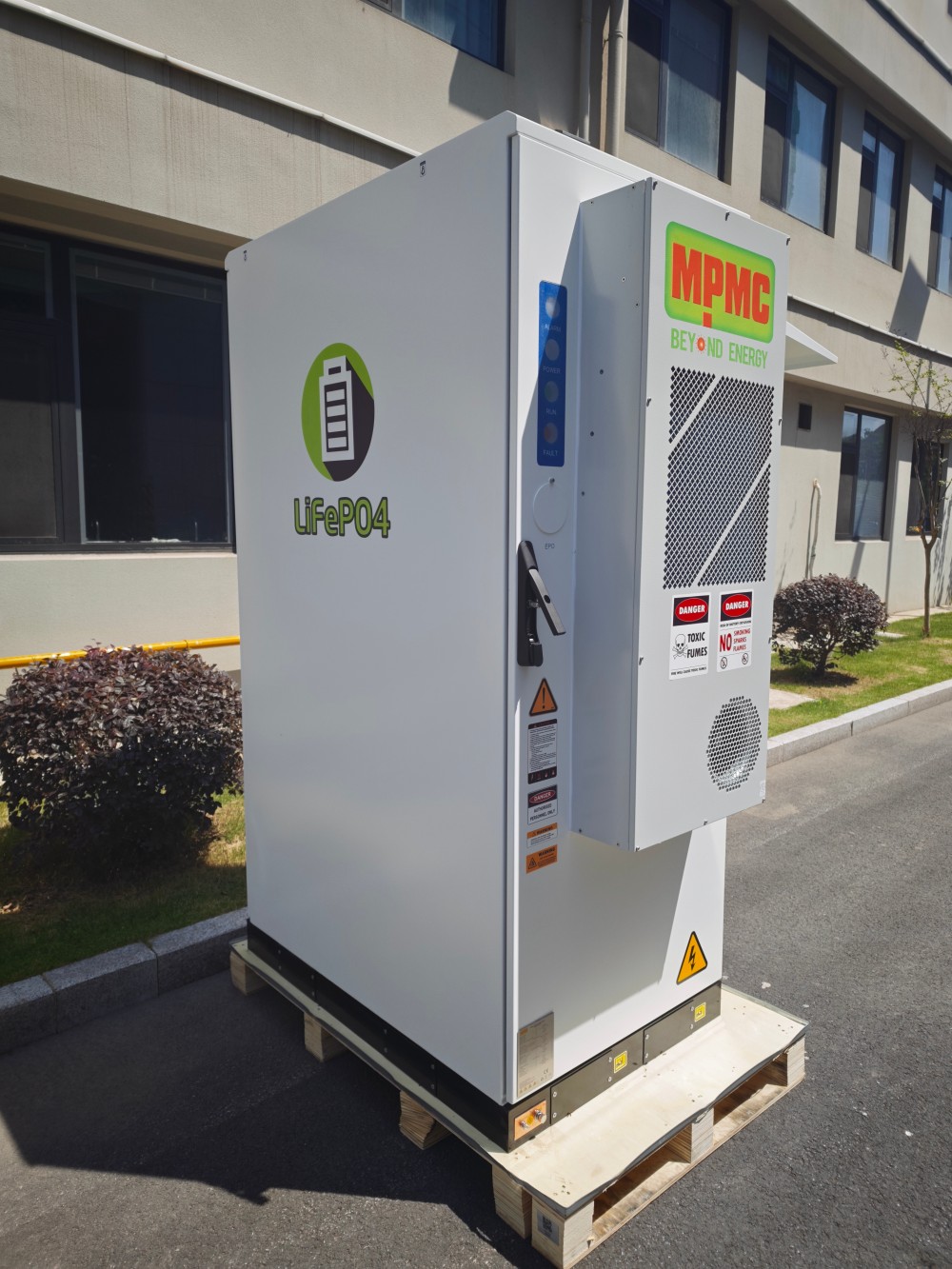
MPMC HBD-E Series battery energy storage system — HBD-50-100
What 100 kWh Means Once Usable Energy Is Counted
Three adjustments separate a nameplate figure from delivered energy. Depth of discharge limits how much of the pack is cycled; MPMC rates its cycle life at 90% depth of discharge, so the working figure is below nominal by design. Conversion losses through the power stage reduce delivered energy again. Ambient conditions apply a third reduction, since MPMC lists derating above 45°C across the storage range.
The arithmetic that follows is straightforward but frequently skipped: a 100 kWh system does not run a 100 kW load for an hour. Runtime should be calculated from usable energy at the actual load, and the unit's rated power must be sufficient for that load in the first place. A cabinet with ample energy and modest rated power will not start a large motor, however much capacity the label claims.
Two MPMC Products in the Same Capacity Class, Built for Different Jobs
MPMC's published range places two families around the 100 kWh mark, and they are not interchangeable.
|
Attribute |
HBD-E Series (stationary) |
HBD-R Series (mobile) |
|
Representative model |
HBD-50-100 — 50 kW / 100.4 kWh |
HBD-50-100 — 50 kW continuous / 112.5 kWh |
|
Intended use |
Self-consumption, backup power, small hybrid and off-grid installations |
Rental duty, generator set partner, construction and event power |
|
Cell |
100 Ah LFP on smaller models; 314 Ah LFP at 30 kW and above |
314 Ah LFP |
|
Cooling |
HVAC |
HVAC on smaller models; liquid-cooled air conditioning on larger units |
|
Cycle life |
6,000 cycles at 90% depth of discharge |
6,000 cycles at 90% depth of discharge |
|
Integration |
Inverter, power conversion and EMS in one cabinet; PV input up to 100 kWp on this model |
Designed for parallel operation with generator sets; millisecond transient smoothing |
|
Published warranty |
5 years or 2.2 MWh/kWh; battery 10 years or 4.3 MWh/kWh |
3 years or 1.6 MWh/kWh; battery 5 years or 2.57 MWh/kWh |
The distinction is easy to state. The HBD-E is a fixed installation that integrates inverter, power conversion and EMS in a single cabinet and accepts solar input directly, which suits a site optimising its own consumption and holding backup capability. The HBD-R is built to travel, to be connected and disconnected repeatedly, and to work alongside an engine. Buying one for the other's job produces a working system that is wrong on cost, warranty basis or handling.
Backup Duty: Size by Power First, Then by Duration
For backup, the first constraint is instantaneous power. The system must carry the connected load, including any motor starting inrush, before duration becomes relevant. MPMC lists 150% overload for 10 seconds on the HBD-E series, which is the figure to check against the largest starting load on the board.
Duration follows from usable energy divided by the actual backup load, not the total site load. Most backup schemes cover a defined critical panel rather than the whole facility, and defining that panel is what makes a 100 kWh system adequate or inadequate. MPMC lists on-grid and off-grid switching on the HBD-E range, with the transition behaviour depending on configuration — the switching mode should be confirmed against how sensitive the protected equipment is to a brief interruption.
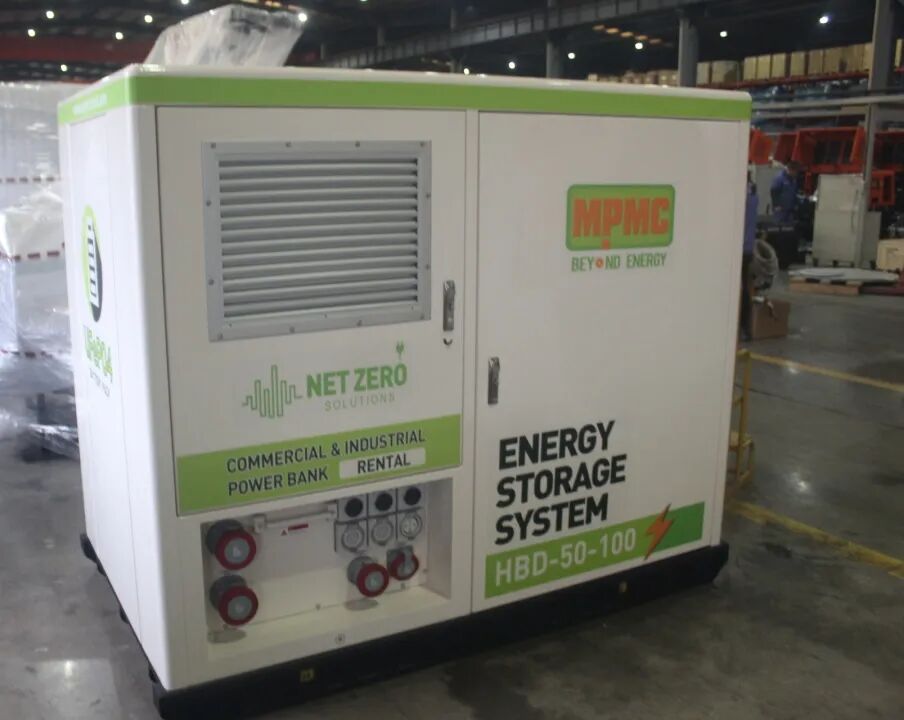
MPMC HBD-R Series battery energy storage system — HBD-50-100
Peak Shaving Duty: Size by Threshold and Duration Above It
Peak shaving works on a different arithmetic. Demand charges are billed on the highest power drawn in a period, so the system has to supply the difference between site demand and a chosen threshold, for as long as demand stays above it. Two numbers therefore drive the sizing: how far above the threshold the site peaks, and how long each excursion lasts.
A site with brief, sharp peaks needs rated power more than capacity. A site with a long afternoon plateau needs capacity more than power. This is why a load study should precede model selection — a 100 kWh system sized against an assumed profile frequently misses the actual one. MPMC lists a Netherlands peak-shaving installation using 125 kW / 260 kWh and 100 kW / 200 kWh configurations, which indicates the scale at which shaving is typically applied to a commercial site.
Where the 100 kWh Class Stops
Above this class MPMC's published range moves to the containerised HBD-A series. The step is not simply more kilowatt-hours; the platform changes.
|
Capacity step |
Representative model |
Rated power / capacity |
Platform characteristics |
|
Small hybrid and backup |
HBD-30-100 (HBD-E) |
30 kW / 100.4 kWh |
All-in-one cabinet; HVAC cooling; 6,000 cycles; PV input to 60 kWp |
|
Mobile and rental duty |
HBD-50-100 (HBD-R) |
50 kW / 112.5 kWh |
Genset partner; HVAC cooling; 6,000 cycles; transported repeatedly |
|
Commercial and industrial |
HBD-125-260 (HBD-A) |
125 kW / 261 kWh |
Containerised; liquid cooling; 8,000 cycles; IP54 system and IP67 battery pack; −20°C to +55°C to 3,000 m |
The step up brings a higher cycle rating and liquid cooling, which is the specification that matters for daily deep cycling over many years. Where a site expects one full cycle a day for a decade, the 8,000-cycle liquid-cooled platform is a different economic proposition from a 6,000-cycle air-conditioned one, even where the delivered energy per cycle looks similar.
Cycle Life, Warranty and the Cost of Cycling Daily
Warranty terms in this segment are expressed in two ways at once, and both bind. MPMC's published terms list the HBD-E series at 5 years or 2.2 MWh per kWh of capacity for the system and 10 years or 4.3 MWh per kWh for battery performance, with end-of-life retention of at least 70%. The HBD-R series is listed at 3 years or 1.6 MWh per kWh for the system and 5 years or 2.57 MWh per kWh for the battery.
The throughput limit usually arrives before the calendar limit on a heavily cycled site, so the number of cycles per day should be checked against the energy allowance before purchase. MPMC also states a condition on battery performance warranty validity: battery box operating temperature maintained at 0°C to 25°C with a ±3°C tolerance and humidity at or below 80%. Where a cabinet sits outdoors in a hot climate, that condition is a design requirement, not a footnote.
A published site example shows what modest capacity achieves in the right application: a United Kingdom construction installation where a 56 kW generator was serving a 3 to 6 kW base load added a 30 kW / 60 kWh HBD-R unit, after which refuelling moved from every two days to every seven and the maintenance interval extended from every ten days to every sixty. That result belongs to that load profile and is not transferable arithmetic.
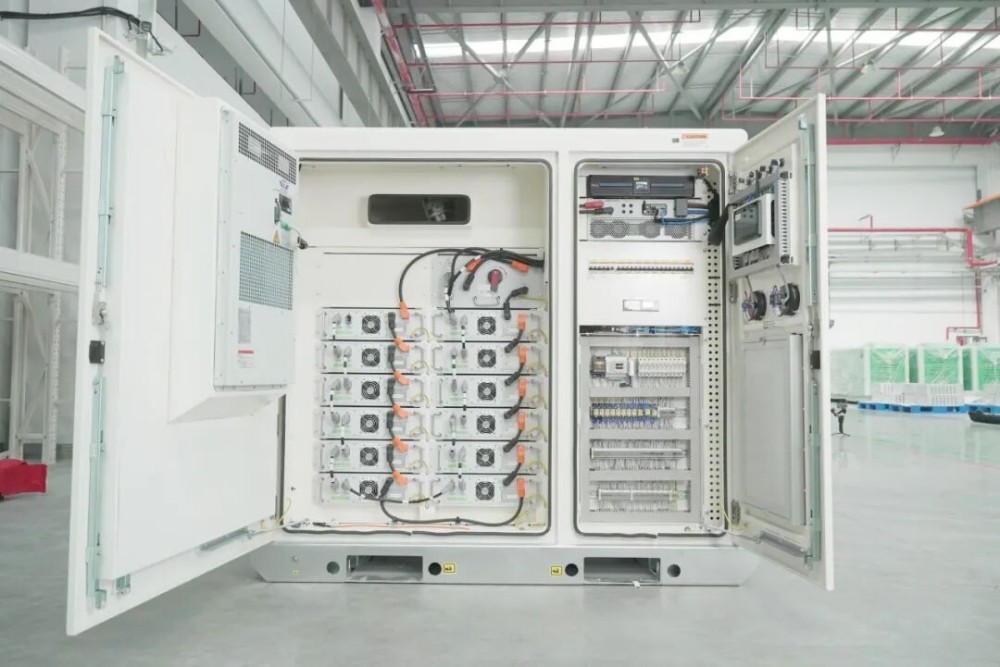
MPMC HBD-R Series battery energy storage system
Data to Request From the Supplier
• An interval load profile for the site, ideally at 15-minute resolution across a full billing cycle.
• Usable energy at the intended depth of discharge, stated separately from nominal capacity.
• Rated and overload power, checked against the largest motor starting load on the protected board.
• The switching mode between grid and off-grid operation, and its effect on sensitive equipment.
• Expected cycles per day, tested against the warranty throughput allowance rather than the calendar term.
• Ambient conditions at the installation point, with derating and the battery temperature condition addressed.
• Applicable compliance documents for the exact model and destination market.
• Written warranty text for both the system and the battery, including end-of-life retention.
Frequently Asked Questions
Will a 100 kWh system run a 100 kW load for an hour? No. Usable energy is less than nominal capacity, and conversion losses reduce delivered energy further. The unit's rated power must also be sufficient for the load — MPMC lists the HBD-50-100 at 50 kW, so a sustained 100 kW load is outside its rated output regardless of stored capacity.
Which MPMC series suits a fixed factory installation? The HBD-E series is positioned for stationary self-consumption, backup and small hybrid applications, integrating inverter, power conversion and EMS in one cabinet with direct PV input. The HBD-R series is built for mobile and rental duty alongside generator sets, so it is generally the wrong basis for a permanent installation.
Can one system do backup and peak shaving at the same time? Partly, and the conflict should be resolved in the control strategy. Peak shaving discharges the battery during high-demand periods, which is exactly when reserve capacity for an outage would be wanted. Most schemes define a reserved state of charge for backup and allow shaving only above it, and that reservation should be agreed before commissioning.
What happens to capacity over the life of the system? Capacity declines with cycling and age. MPMC rates cycle life at 6,000 cycles at 90% depth of discharge for the HBD-E and HBD-R series and 8,000 cycles for the HBD-A series, with published warranties specifying end-of-life retention of at least 70%. Sizing should therefore be checked against end-of-life capacity, not first-year capacity.
Does the system need a separate inverter? Not on the HBD-E series, which MPMC describes as an all-in-one cabinet combining inverter, power conversion and EMS, with MPPT configurations for solar input. Confirm the exact model, because integration scope varies across the range and affects both the electrical design and the installation cost.
https://www.mpmc-group.com/
MPMC Powertech Corp.