
Industrial furnaces and heat treatment systems operate under some of the harshest conditions in manufacturing. Continuous exposure to high temperatures, oxidizing atmospheres, thermal cycling, and sometimes corrosive process gases puts extreme stress on materials. Selecting the wrong stainless steel often leads to premature deformation, scaling, cracking, or frequent replacement.
Among high-temperature stainless steels, S30908 (also known as 309 Si2 or EN 1.4833) has become a widely used and proven choice for furnace and heat treatment equipment. This article explains why S30908 is specified, what problems it solves, and how it performs in real industrial environments.
The Operating Challenges of Furnace and Heat Treatment Equipment
Before discussing material selection, it is important to understand the challenges faced inside industrial furnaces:
-
Continuous or cyclic exposure to high temperatures
-
Oxidation and scaling caused by hot air or combustion gases
-
Thermal expansion and contraction leading to fatigue
-
Carburizing or mildly corrosive atmospheres
-
Mechanical loading at elevated temperatures
Standard stainless steels designed for room-temperature corrosion resistance often lose strength or oxidize rapidly under these conditions. High-temperature stainless steels are engineered specifically to address these challenges.
What Makes S30908 Suitable for High-Temperature Service?
S30908 is a high-alloy austenitic stainless steel derived from the 309 series, with controlled silicon content to improve oxidation resistance. Its chemical balance allows it to maintain stability and surface integrity at elevated temperatures.
Key performance features include:
-
Strong oxidation resistance in continuous high-temperature exposure
-
Good resistance to scaling and surface degradation
-
Stable austenitic structure that resists phase transformation
-
Adequate high-temperature strength for structural components
These characteristics make S30908 well-suited for equipment that must operate reliably over long service cycles.
Oxidation Resistance in Furnace Atmospheres
One of the primary reasons engineers choose S30908 is its oxidation resistance. In furnace environments, exposure to oxygen at high temperatures leads to scale formation. If the oxide layer becomes unstable or flakes off, it accelerates metal loss and shortens component life.
S30908 forms a stable oxide layer that:
-
Protects the underlying metal from rapid oxidation
-
Reduces scaling during long-term service
-
Maintains surface integrity during thermal cycling
This performance is particularly important for components that are difficult or costly to replace, such as internal furnace structures and radiant systems.
Performance Under Thermal Cycling
Heat treatment equipment rarely operates at a single, constant temperature. Start-ups, shutdowns, and process changes create thermal cycling, which can cause fatigue and distortion.
S30908 offers:
-
Good resistance to thermal fatigue
-
Dimensional stability during repeated heating and cooling
-
Reduced risk of cracking compared to lower-alloy stainless steels
This makes it suitable for applications where equipment experiences frequent temperature changes without sacrificing structural integrity.
Typical Furnace and Heat Treatment Applications
S30908 is commonly used across a wide range of furnace and heat treatment components, including:
-
Radiant tubes and heating elements supports
-
Furnace rollers and conveyor components
-
Heat shields and internal baffles
-
Retorts and protective enclosures
-
Annealing and sintering fixtures
In these applications, material failure can disrupt production schedules and compromise product quality. S30908 helps ensure consistent performance over extended operating periods.
Resistance to Carburizing and Process Gases
Many industrial furnaces operate in atmospheres that include hydrocarbons, carbon-rich gases, or combustion by-products. These conditions can cause carburization or chemical attack on unsuitable materials.
S30908 provides:
-
Improved resistance to carburizing environments
-
Stable performance in mixed oxidizing and mildly corrosive atmospheres
-
Better durability compared with standard austenitic grades
This makes it a reliable choice for furnaces used in petrochemical, metallurgical, and thermal processing industries.
Fabrication and Manufacturing Advantages
Material selection is not only about in-service performance. Fabrication and processing capabilities also matter, especially for complex furnace components.
S30908 offers practical manufacturing advantages:
-
Good weldability using standard austenitic welding procedures
-
Compatibility with cutting, forming, and machining operations
-
Availability in plates, sheets, pipes, tubes, and bars
-
Suitability for custom fabrication based on design drawings
These characteristics allow manufacturers and maintenance teams to fabricate replacement parts or new equipment efficiently without excessive processing challenges.
Comparing S30908 with Alternative Furnace Materials
In furnace applications, S30908 is often compared with grades such as 304H, 310, or specialized high-temperature alloys.
-
Compared with 304H, S30908 offers significantly better oxidation resistance
-
Compared with 310, S30908 provides a balanced solution where extreme temperature capability is not required
-
Compared with specialty alloys, S30908 offers easier fabrication and broader availability
This balance makes S30908 a practical choice for many furnace designs without moving to more complex alloy systems.
Supply Reliability and Project Support
For furnace and heat treatment projects, reliable material supply is as important as performance. Delays in material delivery can directly impact production schedules.
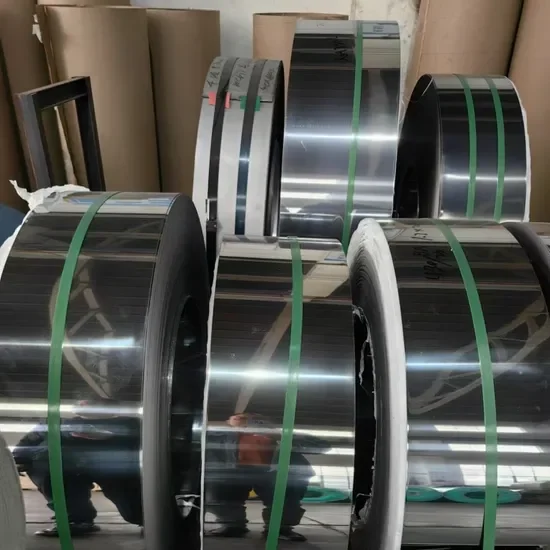
Xingxuan Special Steel supplies S30908 / 309 Si2 / 1.4833 stainless steel in multiple product forms, supported by processing services such as cutting, leveling, machining, and inspection. Detailed specifications and stock availability can be found here:
Conclusion
Industrial furnace and heat treatment equipment demand materials that can withstand continuous heat, oxidation, and thermal cycling without sacrificing reliability. S30908 stainless steel has proven itself as a dependable solution in these environments.
With its strong oxidation resistance, stable high-temperature performance, and practical fabrication characteristics, S30908 remains a preferred material for furnace manufacturers, heat treatment operators, and industrial maintenance teams seeking long-term operational stability.
www.xingxuanalloys.com
Xingxuan trading Co., Ltd.