
For heavy-duty trucks such as the DAF CF series, suspension performance directly affects driving stability, cargo protection, tire wear, and overall vehicle control. Trucks operating on highways, construction routes, distribution networks, and uneven roads are exposed to continuous vibration and impact. Without an effective damping system, these forces can quickly affect both vehicle performance and driving comfort.
A properly designed shock absorber helps control suspension movement by reducing excessive bouncing, vibration, and oscillation after the vehicle passes over road irregularities. For fleet operators and maintenance teams, selecting a suitable DAF CF shock absorber is therefore an important part of maintaining stable and reliable truck operation.
What Does a Shock Absorber Do on a DAF CF Truck?
A shock absorber does not primarily support the weight of the truck. Instead, it controls the movement generated by the suspension system.
When a DAF CF truck travels over a pothole, speed bump, rough road surface, or uneven loading area, the suspension moves to absorb the impact. Without sufficient damping, the suspension can continue moving several times after the initial impact. This can cause:
-
Excessive body movement
-
Reduced tire contact with the road
-
Increased steering instability
-
Uneven tire wear
-
Greater vibration transmitted to the chassis
-
Additional stress on suspension components
The shock absorber converts part of the suspension movement into controlled resistance, allowing the suspension to return to its normal position more quickly.
This is particularly important for commercial trucks because their operating conditions are usually much more demanding than those of passenger vehicles.
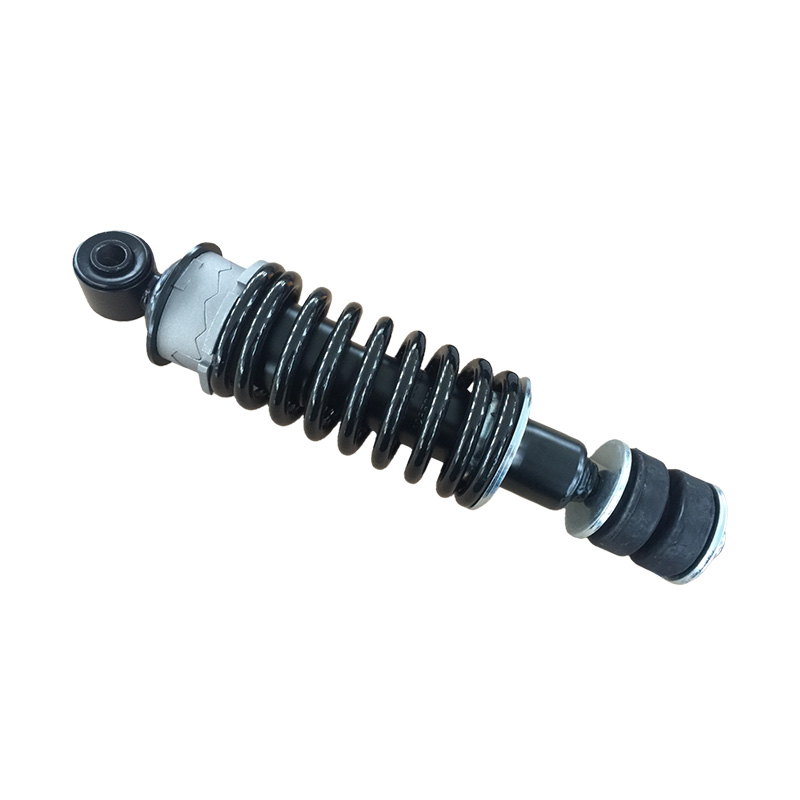
Why Stability Matters for DAF CF Applications
The DAF CF is commonly used in demanding transportation environments where trucks may operate with different cargo weights and road conditions. A truck that is carrying a heavy load needs a suspension system capable of maintaining predictable movement under changing conditions.
A worn or poorly matched shock absorber can allow excessive suspension movement. During braking, for example, insufficient damping may contribute to greater pitching movement. During cornering, excessive body movement can affect the driver's perception of vehicle stability. On uneven surfaces, uncontrolled suspension movement can reduce consistent tire contact.
A properly functioning shock absorber helps keep these movements within a controlled range.
For replacement applications, the right DAF truck series shock absorber should be selected according to vehicle configuration, suspension design, operating conditions, and the specific replacement requirements.
How Shock Absorbers Improve Tire Contact
One of the most practical functions of a shock absorber is maintaining more consistent contact between the tire and road.
Consider a truck traveling over a series of uneven surfaces. The wheels need to move vertically while following the road. If the suspension rebounds too quickly, the tire can temporarily lose part of its contact pressure with the road.
This may affect:
-
Braking response
-
Steering precision
-
Traction
-
Tire wear
-
Overall vehicle stability
A properly controlled damping system helps the wheel follow the road surface more effectively. For commercial vehicles that travel long distances and carry substantial loads, maintaining predictable tire contact is especially important.
The Connection Between Shock Absorbers and Air Springs
Shock absorbers and air springs perform different functions, but they work together as part of the suspension system.
An air spring primarily supports the vehicle load and provides suspension compliance. It allows the suspension to adapt to different loads while helping isolate the chassis from road impacts.
The shock absorber, meanwhile, controls the movement of the air spring and suspension assembly.
If an air spring absorbs a road impact but the resulting movement is not adequately controlled, the truck may continue bouncing after the original disturbance. The shock absorber limits this repeated movement.
This is why replacing or maintaining only one component without considering the condition of the overall suspension system may not produce the expected result.
For DAF CF applications, combining a properly functioning air spring with a suitable shock absorber can provide a more balanced suspension response.
Signs That a DAF CF Shock Absorber May Need Attention
Shock absorbers gradually wear because they operate continuously during driving. Their condition should be considered during routine vehicle inspection rather than only after a serious suspension problem develops.
Common warning signs include:
1. Excessive Bouncing
If the truck continues bouncing after passing over a bump, the damping performance may have deteriorated.
2. Increased Body Roll
Greater-than-normal body movement during cornering may indicate reduced suspension control.
3. Uneven Tire Wear
Abnormal tread wear can sometimes be associated with suspension movement or inconsistent tire contact.
4. Oil Leakage
Visible fluid leakage around the shock absorber can indicate a damaged seal or internal component problem.
5. Greater Driving Vibration
If the vehicle begins transmitting more road vibration into the cab or chassis, the suspension system should be inspected.
These symptoms can have multiple causes, so a professional inspection should be used to determine whether the shock absorber is actually responsible.
Why Product Matching Is Important
Not every truck shock absorber is suitable for every application. Even vehicles within the same model family can have different configurations depending on axle arrangement, suspension type, production year, operating environment, and load requirements.
For this reason, replacement selection should consider more than physical dimensions.
Important factors include:
-
Mounting configuration
-
Overall dimensions
-
Damping characteristics
-
Working stroke
-
Suspension type
-
Axle application
-
Vehicle operating conditions
-
Compatibility with the existing air spring and suspension components
Correct matching helps ensure that the replacement component works with the original suspension design rather than simply fitting into the mounting position.
Manufacturing Quality Also Matters
For a component that operates continuously under vibration and repeated mechanical loading, manufacturing consistency is important.
Henan Jingzheng Shock Absorbing Technology Co., Ltd. specializes in the research and manufacturing of shock absorbers, air springs, rubber products, and related components. With a production facility covering approximately 23,000 square meters and an annual automobile shock absorber production capacity of around 2 million units, the company focuses on supplying suspension products for automotive applications.
Production capabilities, process control, material selection, and inspection procedures all influence the consistency of shock absorber performance. For international replacement-part suppliers and fleet maintenance customers, these factors are important when evaluating a long-term component supplier.
A Practical Approach to DAF CF Suspension Maintenance
For fleet operators, suspension maintenance should be approached as a complete system rather than as an isolated component replacement task.
A practical inspection can include:
-
Checking shock absorbers for visible damage or leakage.
-
Inspecting air springs for cracks, deformation, or abnormal wear.
-
Checking mounting points and bushings.
-
Inspecting tires for uneven wear patterns.
-
Evaluating suspension movement during vehicle operation.
-
Confirming that replacement parts match the vehicle's specific configuration.
-
Monitoring changes in ride stability after component replacement.
This approach can help identify developing problems before they affect vehicle operation more seriously.
Conclusion
DAF CF shock absorbers play an important role in controlling suspension movement and maintaining predictable truck behavior. By reducing excessive bouncing and oscillation, they help support tire contact, braking stability, steering response, cargo protection, and driving comfort.
For heavy-duty vehicles, the goal is not simply to install a replacement component that fits. The shock absorber should be correctly matched to the suspension system and operating conditions. When combined with properly maintained air springs and other suspension components, an appropriate damping solution can contribute to more stable and reliable truck operation.
For manufacturers, distributors, and fleet maintenance professionals looking for replacement solutions, understanding the relationship between shock absorbers, air springs, vehicle loads, and road conditions is essential to making a technically sound product selection.
www.cnjzworld.com
Henan Jingzheng Shock Absorbing