
When power transformers fail due to structural insulation breakdown, the consequences extend far beyond equipment damage—production lines halt, safety risks escalate, and maintenance costs spiral. At the heart of this challenge lies a critical question: how do you achieve reliable structural support that simultaneously delivers uncompromising electrical insulation in high-voltage environments?
Understanding the Critical Role of 3240 Epoxy Board
The 3240 epoxy glass cloth laminate sheet represents a pivotal solution in transformer construction, serving as the backbone for internal structural components. This material consists of alkali-free E-glass fiberglass cloth thoroughly impregnated with high-quality epoxy resin, processed through hot-pressing and thermal curing to create a dense, dimensionally stable composite. Strictly compliant with IEC 60893 standards as type EPGC 201, it ensures global compatibility and reliability across diverse electrical applications.
For transformer manufacturers and maintenance engineers, understanding why this particular grade of insulation material has become the industry standard requires examining the unique challenges of transformer environments. Internal components must withstand continuous mechanical stress from electromagnetic forces, thermal cycling during load variations, and exposure to insulating oils—all while maintaining perfect electrical isolation between high-voltage conductors and grounded enclosures.
The Engineering Advantages That Define Performance
What distinguishes yellow 3240 epoxy board from alternative insulation materials centers on three fundamental engineering properties that directly address transformer operational demands.
Certified Structural Integrity
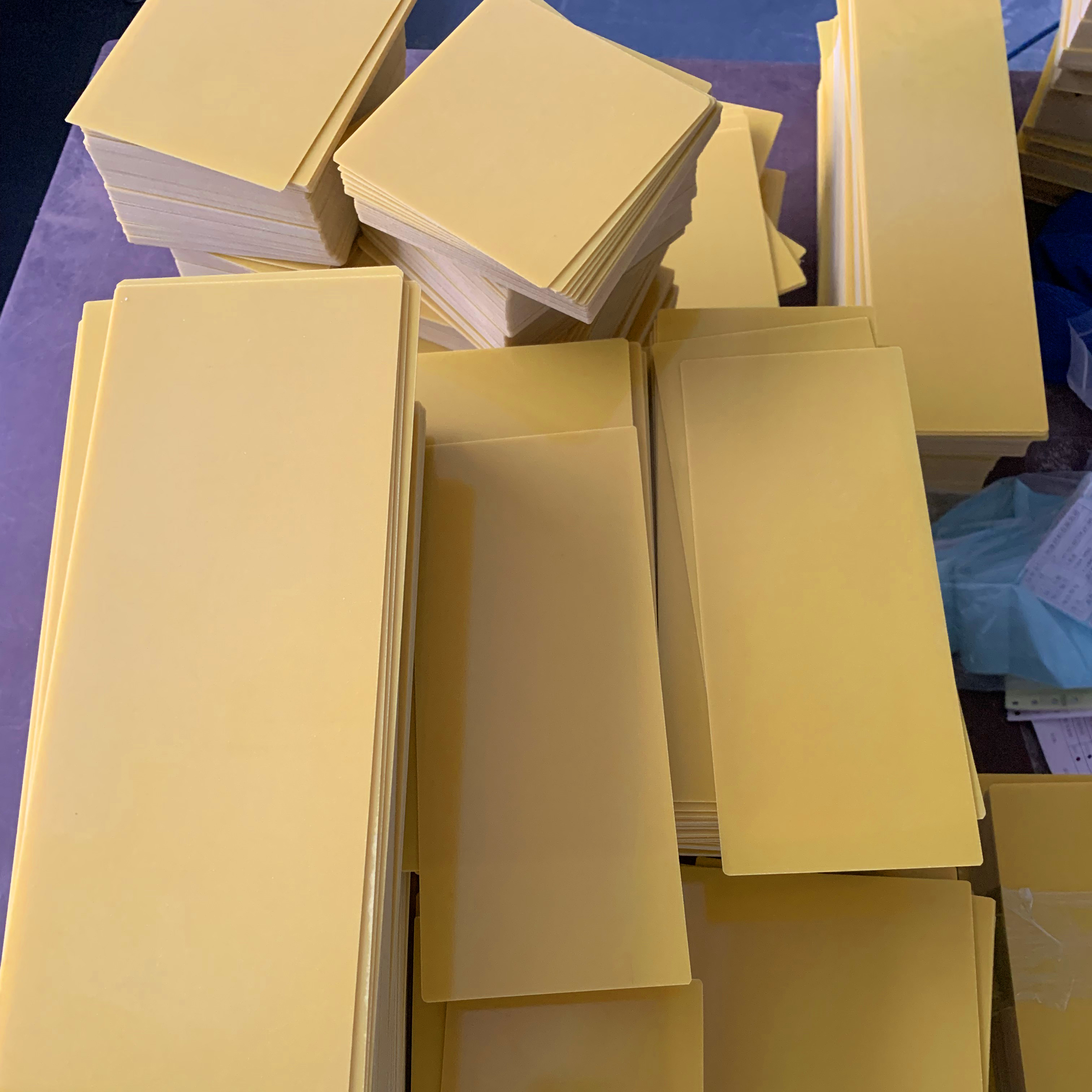
The synergy between epoxy resin and fiberglass cloth creates exceptional compressive strength and stiffness, allowing the material to function as a load-bearing structural element rather than merely an insulation barrier. This dual functionality proves essential in transformer design, where space constraints demand that every component serve multiple purposes. The material's adherence to IEC 60893 (EPGC 201) guarantees consistent dielectric properties and physical dimensions, eliminating compliance risks in export-oriented equipment manufacturing.
Unlike phenolic-based alternatives that may become brittle under thermal stress, the epoxy matrix maintains mechanical integrity throughout the transformer's operational temperature range. This stability prevents the micro-cracking that leads to progressive insulation failure—a failure mode that often goes undetected until catastrophic breakdown occurs.
Thermal Class B Reliability
Operating at continuous temperatures up to 120°C without degradation, yellow 3240 epoxy board aligns perfectly with Thermal Class B specifications required for power distribution transformers. This thermal rating isn't simply about withstanding heat—it represents the material's ability to maintain both mechanical strength and dielectric properties under sustained elevated temperatures.
In oil-immersed transformers, where operating temperatures fluctuate with load demand, this thermal stability prevents the dimensional changes that could compromise tight-tolerance assemblies. The material exhibits minimal thickness variation and flatness deviation across its operating range, ensuring perfect fitment in precision assemblies even after years of thermal cycling.
Superior Dielectric Performance in Humid Conditions
Perhaps the most critical advantage lies in the material's resistance to moisture-induced insulation breakdown. With water absorption below 0.5%, yellow 3240 epoxy board maintains excellent insulation resistance even in humid environments or when fully immersed in transformer oil. This moisture resistance directly translates to extended service life and reduced maintenance intervals.
For facilities operating in coastal regions or tropical climates, this characteristic becomes non-negotiable. Traditional paper-based insulation materials absorb atmospheric moisture over time, gradually reducing dielectric strength until electrical tracking pathways form between conductors—a degradation process that yellow 3240 epoxy board effectively eliminates.
Precision Machining Capabilities for Complex Geometries
Transformer internal structures require intricate shapes—bushings, support brackets, coil spacers, and terminal boards—all demanding tight tolerances and clean edges. The material's formulation enables excellent punching and drilling performance, allowing fabrication of complex insulating components without delamination or surface tear-out that could create electrical stress concentration points.
This machinability advantage extends beyond initial manufacturing to field repairs and custom retrofits. Maintenance teams can machine replacement parts to exact specifications without specialized tooling, significantly reducing downtime during critical repairs. The material produces minimal dust during cutting operations, preventing contamination of transformer oil—a consideration often overlooked but essential for maintaining long-term insulation integrity.
Chemical Resistance in Industrial Environments
Transformers don't exist in isolation—they operate within industrial facilities where exposure to oils, solvents, and alkaline cleaning solutions is inevitable. Yellow 3240 epoxy board demonstrates good resistance to transformer oils, lubricants, and the mild alkaline solutions used in equipment maintenance, ensuring that accidental chemical exposure won't compromise structural or dielectric properties.
This chemical stability also prevents the material from acting as a contaminant source. Inferior insulation materials may leach plasticizers or degradation products into transformer oil, accelerating oil oxidation and reducing its insulating effectiveness. The chemically stable epoxy matrix prevents such contamination, contributing to extended oil service life.
Application Considerations for Optimal Performance
Successful implementation of yellow 3240 epoxy board in transformer applications requires attention to several critical design factors that maximize material performance.
Thickness Selection and Dielectric Spacing
Choosing appropriate material thickness involves balancing mechanical rigidity requirements against dielectric clearance constraints. Thicker sections provide greater structural support but occupy valuable space within transformer enclosures. Engineers must calculate the minimum thickness that satisfies both mechanical loading conditions and voltage-withstand requirements with adequate safety margins.
Standard thickness options typically range from 0.5mm to over 50mm, allowing designers to optimize each component. Support brackets bearing electromagnetic forces require thicker sections, while simple terminal boards may use thinner gauges to maximize winding space.
Surface Preparation and Assembly Techniques
The material's smooth, dense surface requires proper preparation before bonding or coating operations. While the low water absorption prevents moisture-related adhesion failures, surface cleaning with appropriate solvents ensures reliable bonds when assembling composite structures. Mechanical fastening through drilled and tapped holes often provides the most reliable attachment method, eliminating concerns about adhesive degradation over time.
When drilling mounting holes, using sharp carbide tooling and moderate feed rates prevents delamination at hole edges—a critical consideration since compromised edges can initiate electrical tracking under high voltage stress.
Xiongyihua Plastic: Engineering Solutions Beyond Standard Materials
For organizations seeking not just material supply but comprehensive engineering support, Shenzhen Xiongyihua Plastic Insulation Ltd. offers integrated capabilities that extend from material selection through precision fabrication. Established in 2006, the company has developed specialized expertise in processing complex designs from customer drawings, combining 100% virgin raw materials with advanced CNC machining capabilities.
The company's ISO9001-certified manufacturing processes ensure consistent quality across production runs, while SGS material certifications and RoHS environmental compliance provide documentation required for global equipment sales. With production capacity approaching 1000 tons monthly and a supply ability of 100 tons per product line, Xiongyihua Plastic maintains the volume capability required by large-scale transformer manufacturers while offering the flexibility for custom prototype development.
Their technical team provides material selection consulting that considers not just electrical specifications but the complete operational environment—thermal cycling patterns, mechanical loading conditions, chemical exposure risks, and long-term aging characteristics. This consultative approach helps engineers avoid common material selection errors that lead to premature failure.
Custom CNC processing services transform raw yellow 3240 epoxy board stock into finished precision components, eliminating the need for customers to establish specialized machining capabilities. Services include precision cutting, drilling, tapping, and contour milling to tolerances demanded by high-voltage applications, with global logistics support ensuring timely delivery across Asia, Europe, Australia, and the Americas.
The Path Forward: Reliability Through Material Science
As power distribution infrastructure expands globally and transformer designs push toward higher voltage ratings and compact form factors, the role of structural insulation materials becomes increasingly critical. Yellow 3240 epoxy board's combination of mechanical strength, thermal stability, and proven dielectric performance positions it as the enduring standard for transformer internal construction.
For engineers specifying materials for new transformer designs or planning maintenance upgrades for existing installations, the decades of field-proven reliability offered by this material grade provides assurance that extends beyond laboratory test data. When structural failure isn't an option and electrical safety is paramount, yellow 3240 epoxy board delivers the performance foundation upon which reliable power distribution depends.
https://www.xyhplastic.com
Shenzhen XiongYiHua Plastic Insulation LTD.