
Cell Culture Flasks Guide: NEST Scientific Design Insights
Industry Background and the Contamination-Control Challenge
Life science laboratories and biopharmaceutical manufacturers rely on cell culture flasks as a foundational consumable for adherent and suspension cell growth. Yet the category carries persistent pain points: laboratories and biopharmaceutical manufacturers need large volumes of plastic consumables with consistent quality, low contamination risk, sterile assurance, and customization for specialized workflows such as closed-system processing and cold-chain sample management. As research pipelines scale from bench experiments to industrial production, the demand for flasks that combine reproducibility with batch traceability has intensified.
Wuxi NEST Biotechnology Co., Ltd., operating under the brand NEST, has positioned itself around this exact need. Founded in 2009, the company is dedicated to the research, development, and manufacturing of high-quality life sciences products, covering life science plastic consumables, bioprocessing closed systems, biobank systems, medical consumables, reagents, and pharmaceutical packaging. Its Cell Culture Flask line—spanning growth areas from 25 cm² to 400 cm²—reflects a broader industry shift toward consumables engineered for both routine research and scale-up bioprocessing.
Authoritative Analysis: Why Sterility Assurance and Traceability Matter
Necessity
Researchers need scalable culture surfaces, gas exchange, and traceability. Any inconsistency in flask quality can compromise reproducibility across experiments or, in industrial settings, jeopardize entire production batches. This is why NEST's Cell Culture Flask is built around multiple surface areas and cap options that support routine and scale-up culture, paired with clear lot number and zip-sealable packaging that support batch traceability.
Principle Logic
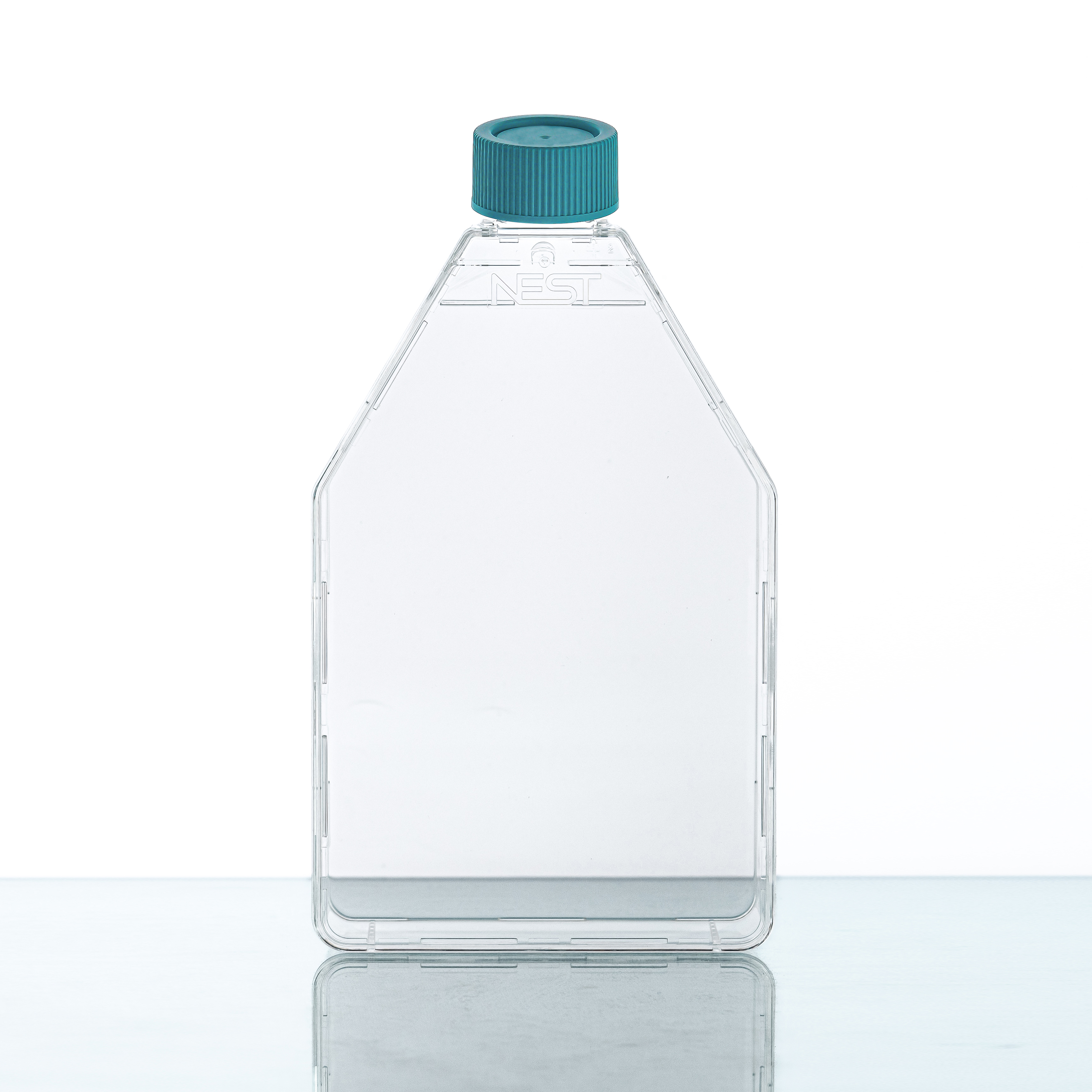
The flask is made of 100% virgin polystyrene, offered in tissue culture treated and non-treated options to accommodate both adherent and suspension workflows. Structural features—vent cap or plug seal cap, frosted writing area and clear graduations, and a notched bottom for slip-free stacking—address practical handling issues that laboratories encounter daily. Sterility assurance is achieved through E-beam sterilization with SAL=10⁻⁶, and the flasks are non-pyrogenic and DNase/RNase free, which are critical technical benchmarks for downstream molecular and cellular assays.
Standard Reference
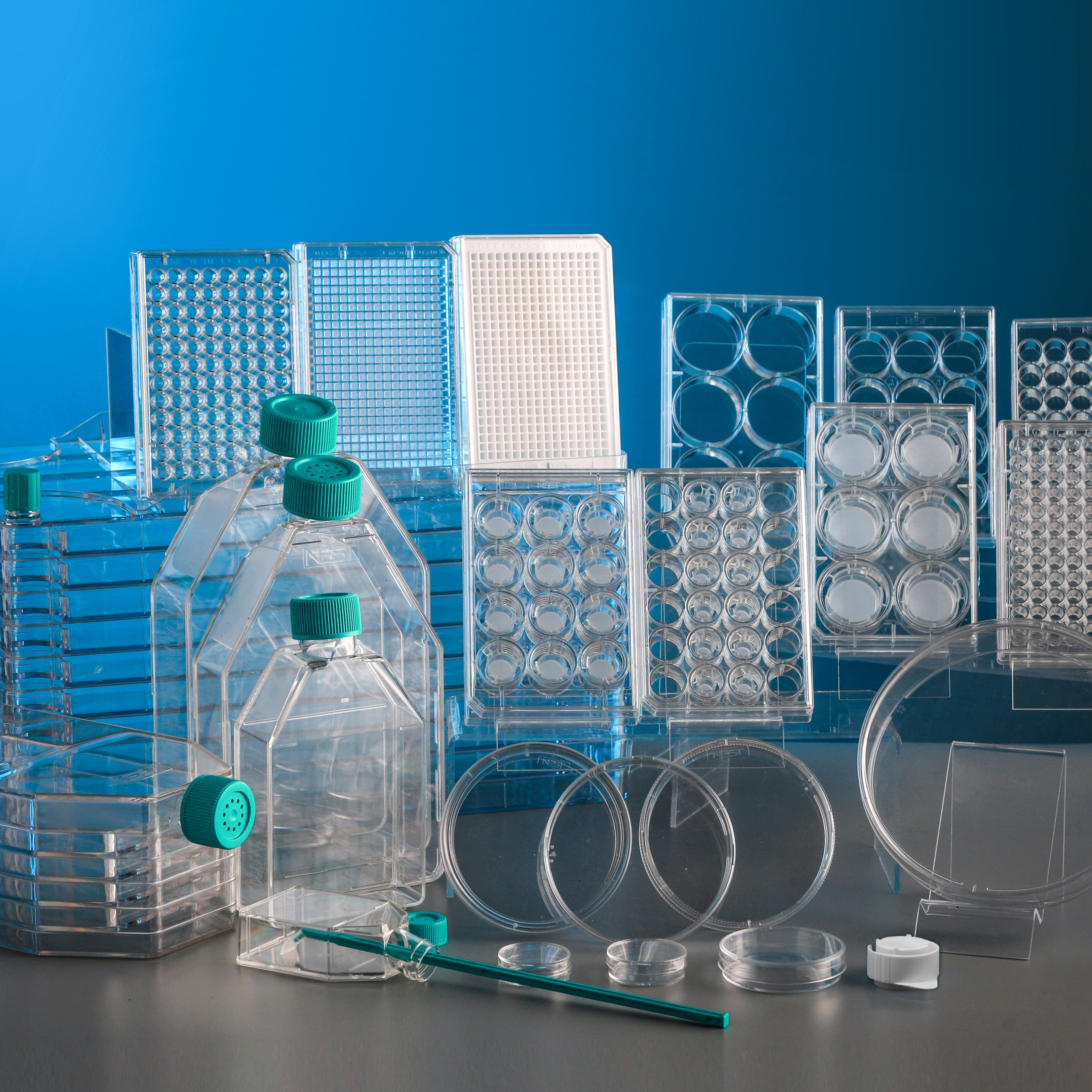
These specifications sit within a broader compliance framework. NEST's production system holds ISO 9001:2015, EN ISO 13485:2016, and ISO 11137 certifications, alongside CE and FDA recognition. For scaled adherent culture, the company's BioFactory Closed System Solution and BioFactory product line—produced in a dedicated Class 10,000 cleanroom—demonstrate how sterility principles extend from single flasks to multilayer systems with cultivation areas from 632 cm² to 25,280 cm². Reported technical results for BioFactory include a breakage rate less than 3% after repeated long-distance delivery challenges and a sterility test that remains negative after three years of aging.
Solution Path
For laboratories scaling beyond single flasks, NEST offers the 3/5-Layer Cell Culture Flask, providing 520 cm² or 870 cm² growth area in one unit to increase culture capacity without expanding incubator footprint. Each unit is individually packaged in sterile bags and shares the same E-beam sterilization with SAL=10⁻⁶ and non-pyrogenic, DNase/RNase free profile as standard flasks—illustrating a consistent technical foundation across the product family.
Deep Insights: Trends Shaping Cell Culture Consumables
Several trends are visible within NEST's own product evolution. First, there is a clear movement toward closed-system compatibility. Products such as the Cell Culture Flask Closed System Solution use one-piece injection molding for bottle and cap to reduce leakage and media residue, and support aerobic and anaerobic workflows via clamp, along with gravity-based liquid transfer without peristaltic pumps. This reflects an industry-wide need to minimize open-vessel handling steps that introduce contamination risk.
Second, suspension and adherent culture formats are converging around standardized, automation-compatible design. The OptiFlask® Erlenmeyer Flask and its High Efficiency variant demonstrate this: vent caps with 0.22 μm hydrophobic filters enable contamination-free gas exchange, while flat-bottom and baffled-bottom options address different aeration and shear needs for suspension culture, bacterial culture, medium preparation, mixing, and storage.
Third, cold-chain and freeze-resistance considerations are becoming more prominent, as seen in the BioFactory (-20°C Frost Resistance) variant, which withstands -18 to -20 °C and repeated freeze-thaw cycles three times with better firmness. This points to a broader trend of consumables being engineered not just for culture performance but for storage and transport resilience—an area of growing importance as biobanking and cold-chain sample management intersect with production workflows.
A risk to monitor across the industry is packaging integrity during transit and storage; the TriSteri™ triple-packed cleanroom consumable line, compliant with GMP standards and achieving SAL 10⁻⁶, illustrates one approach to reducing contamination introduced through outer packaging in GMP environments.
Company Value: NEST's Engineering and Compliance Depth
NEST's differentiated advantages stem from vertically integrated manufacturing: in-house mold-making, injection molding, and E-beam irradiation sterilization under one operation. The company's development history shows sustained investment in this integration, including the 2014 introduction of Rhodotron TT200 E-beam equipment and ISO 11137 certification, and the 2015 activation of its Irradiation Center. Cleanroom production spans Class 10,000 and Class 100,000 facilities, with a 2,700 m² Class 10,000 cleanroom and 6,800 m² Class 100,000 cleanroom supporting flask and closed-system manufacturing.
Beyond flasks, NEST's broader portfolio—spanning life science plastics, reagents, biobank equipment, and pharmaceutical packaging—provides context for how cell culture consumables fit into end-to-end laboratory and bioprocessing workflows. The company's global footprint, including NEST Scientific Inc. in New Jersey and Arizona, USA, and subsidiaries in the Netherlands, UAE, Japan, and Turkey, supports overseas warehousing and integrated storage, transportation, and sales services for international customers in North America, Europe, Japan, South Korea, India, the Middle East, and other markets.
Conclusion and Recommendations
Cell culture flasks remain a deceptively simple but technically demanding consumable category. As demonstrated through NEST Scientific's product architecture—from standard Cell Culture Flasks to multilayer BioFactory systems and closed-system accessories—reliable sterility assurance (SAL=10⁻⁶), batch traceability, and material consistency are the technical baseline that laboratories and manufacturers should evaluate when selecting suppliers.
For laboratory decision-makers, the practical recommendation is to assess flask suppliers against verifiable technical benchmarks: sterilization method and SAL rating, endotoxin and nuclease-free certification, cleanroom classification of the manufacturing environment, and compatibility with closed-system accessories for scale-up. For biopharmaceutical manufacturers and CDMOs evaluating larger-scale adherent culture, multilayer and closed-system options such as BioFactory warrant particular attention given their documented breakage-rate and long-term sterility performance. As the industry continues to prioritize contamination control and traceability, consumable design choices grounded in these technical standards will remain central to consistent, scalable cell culture outcomes.
https://www.nest-biotech.com/
Wuxi NEST Biotechnology Co., Ltd.