
1. Product Introduction
Y-27632 (Cat. No. T1870, Cas. 146986-50-7).
Y-27632 dihydrochloride (Cat. No. T1725, Cas. 129830-38-2), also known as Y-27632 2HCl.
Y-27632 is a ROCK-I and ROCK-II inhibitor with ATP-competitive. Y-27632 dihydrochloride also inhibited the apoptosis of mouse prostate stem or progenitor cells induced by isolation.
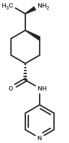
Molecular structure of Y-27632
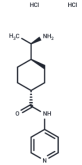
Molecular structure of Y-27632 dihydrochloride
2. Background Introduction
ROCK (Rho-associated coiled-coil containing protein kinase) is a kind of serine / threonine kinase, which mainly includes two homologs in mammals: ROCK-I (ROCK1) and ROCK-II (ROCK2). As a direct downstream effector molecule of Rho small GTPase (especially RhoA), ROCK plays a central role in regulating basic cellular behaviors such as cytoskeleton dynamics, adhesion, migration, contraction and proliferation. In the activated state, ROCK enhances actin-myosin interaction by phosphorylating myosin light chain and other substrates (such as MLC phosphatase regulatory subunit), thereby promoting cell contraction and stress fiber formation. The ROCK signaling pathway is involved in cell morphology maintenance, cell division and tissue development in normal physiological processes. At the same time, it is found to be abnormally active in a variety of pathological conditions, such as cardiovascular disease, tumor metastasis, fibrosis and neurodegenerative diseases. Therefore, it is regarded as an important target for drug development. [1]
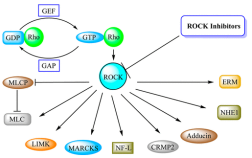
ROCK signaling pathway
As a selective ROCK (Rho-associated coiled-coil containing protein kinase) inhibitor, Y-27632 mainly inhibits cell dissociation-induced apoptosis by blocking the RhoA / ROCK signaling axis. Under normal circumstances, cell dissociation activates the RhoA-ROCK pathway, promotes myosin light chain (MLC) phosphorylation and actin stress fiber formation, leads to excessive cytoskeleton contraction, increased cell tension, and further triggers programmed cell death characterized by ' anoikis '. This study showed that Y-27632 reduced the kinase activity of ROCK-I / II by competitively inhibiting the ATP binding site of ROCK, thereby reducing the phosphorylation level of MLC and related substrates, inhibiting the formation of stress fibers and cell contraction, and alleviating the mechanical stress signal caused by cell dissociation. [2]
3. Application References
3.1. Y-27632 acts beyond ROCK inhibition to maintain epidermal stem-like cells in culture
Research Overview:
This study systematically evaluated the role of Y-27632 in maintaining the in vitro culture of epidermal stem-like cells and its molecular mechanism, focusing on whether it only plays a role through classical ROCK inhibition. It was found that Y-27632 not only reduced cytoskeletal tension and dissociation-induced cell death by inhibiting ROCK signal, but also reshaped cell state at the transcriptional and metabolic levels, making cells maintain closer to the proliferation and undifferentiated characteristics of stem-like cells. Further mechanism analysis showed that the compound could regulate multiple gene expression networks related to cell cycle, stress response and epithelial differentiation, thereby promoting long-term cell expansion and stable maintenance without relying entirely on the ROCK pathway. [3]
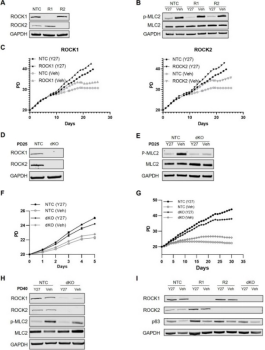
CRISPR-mediated knockout of ROCKs does not reprogram HFKs without Y-27632 [3]
4. References
[1] Feng Y, LoGrasso PV, Defert O, Li R. Rho Kinase (ROCK) Inhibitors and Their Therapeutic Potential. J Med Chem. 2016 Mar 24;59(6):2269-300. doi: 10.1021/acs.jmedchem.5b00683. Epub 2015 Oct 30. PMID: 26486225.
[2] Kim K, Min S, Kim D, Kim H, Roh S. A Rho Kinase (ROCK) Inhibitor, Y-27632, Inhibits the Dissociation-Induced Cell Death of Salivary Gland Stem Cells. Molecules. 2021 May 1;26(9):2658. doi: 10.3390/molecules26092658. PMID: 34062818; PMCID: PMC8124333.
[3] Witkowski TA, Li B, Andersen JG, Kumar B, Mroz EA, Rocco JW. Y-27632 acts beyond ROCK inhibition to maintain epidermal stem-like cells in culture. J Cell Sci. 2023 Sep 1;136(17):jcs260990. doi: 10.1242/jcs.260990. Epub 2023 Sep 12. PMID: 37698512; PMCID: PMC10508688.
TargetMol Link: Lipopolysaccharides | LPS | endotoxin | TargetMol
https://www.targetmol.com/compound/lipopolysaccharides
TargetMol Chemicals Inc.