
Pirfenidone, Catalog No. T2386, CAS No. 53179-13-8, S-7701, AMR-69.
Pirfenidone (AMR69) inhibits the production of CCL2 and CCL12 in fibroblasts and also reduces TGF-β2 protein levels. Pirfenidone is an antifibrotic agent commonly used in research related to pulmonary fibrosis and also exhibits anti-inflammatory activity.
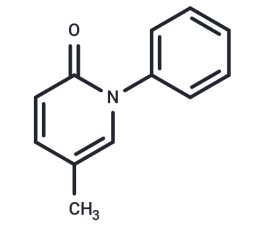
Molecular formula of pirfenidone
1. Background
Pulmonary fibrosis (PF) is a chronic, progressive, and irreversible lung disease characterized by the formation of scar tissue in the lung interstitium, leading to lung stiffening, loss of elasticity, and severe impairment of gas exchange. It is often described as the lungs “transforming from a sponge into the pulp of a loofah.”
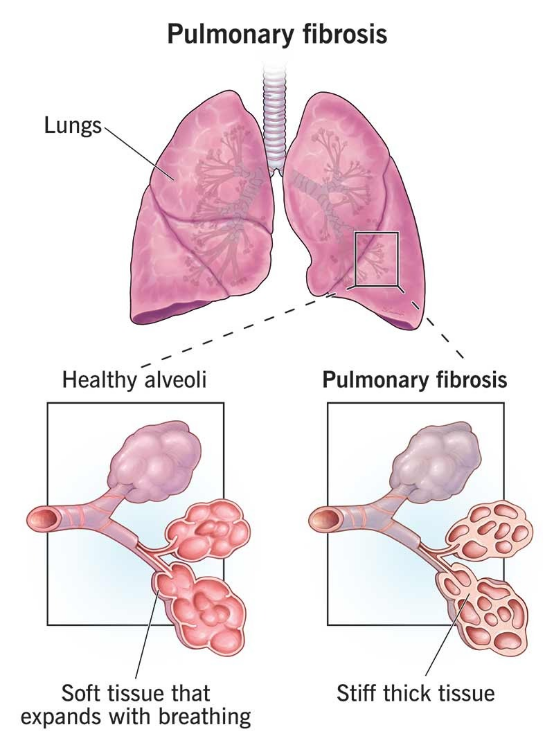
Mechanisms of Pulmonary Fibrosis [1]
Pirfenidone (AMR69) exerts its effects through multiple pathways, with its key effects centered on the regulation of fibroblast function: it significantly inhibits the production of the chemokines CCL2 and CCL12 in fibroblasts, reducing the recruitment of inflammatory cells to the site of injury and thereby blocking the inflammation-driven fibrotic process. simultaneously effectively lowering TGF-β2 protein levels, inhibiting pro-fibrotic signaling, and reducing excessive extracellular matrix deposition and abnormal collagen proliferation, thereby slowing the progression of tissue fibrosis at its source. In addition to these core pathways, the compound also modulates various inflammatory factors and oxidative stress-related molecules, achieving synergistic anti-inflammatory, antioxidant, and anti-fibrotic effects. 2. Selected Literature
2.1 Article Title:A phase3trial of pirfenidone in patients with idiopathic pulmonary fibrosis
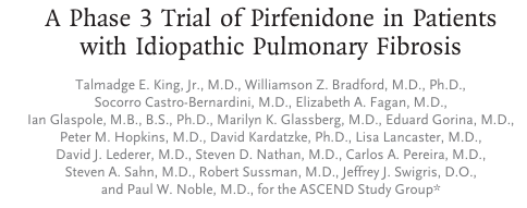
Study Overview: This article describes a randomized, double-blind, placebo-controlled Phase III trial published in the *New England Journal of Medicine*. The study aimed to demonstrate the efficacy of pirfenidone in slowing disease progression in patients with idiopathic pulmonary fibrosis (IPF), addressing the gap in evidence caused by inconsistent results from two previous Phase III trials, and providing critical support for global approval. [2]
This study was a multicenter, randomized, double-blind, placebo-controlled Phase III trial that enrolled 555 patients with IPF and treated them with pirfenidone 2403 mg/day or placebo for 52 weeks. The primary endpoint was the change in FVC% from predicted or death at 52 weeks; secondary endpoints included 6-minute walk distance and progression-free survival. Results showed that pirfenidone significantly reduced the risk of FVC decline or death, improved exercise tolerance and progression-free survival, and, in a pooled analysis, reduced the risk of all-cause and IPF-related mortality. Adverse reactions were primarily gastrointestinal and skin-related, and the drug was well tolerated.
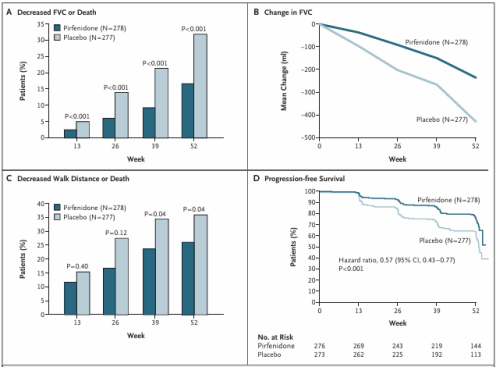
Progression-free survival (Kaplan–Meier curve)
2.2 Article Title:Pirfenidone modulates macrophage polarization and ameliorates radiation-induced lung fibrosis by inhibiting the TGF-β1/Smad3pathway
Study Overview: This study aims to elucidate the role and molecular mechanisms of pirfenidone (PFD) in the treatment of radiation-induced pulmonary fibrosis (RILF), demonstrating that PFD can alleviate radiation-induced pulmonary inflammation and collagen deposition by inhibiting M2 macrophage polarization, blocking the TGF-β1/Smad3 pathway, and regulating the interaction between alveolar epithelial cells and macrophages, thereby providing a new therapeutic basis for radiation-induced pulmonary fibrosis. [3]
This study investigates the effects and mechanisms of pirfenidone (PFD) on radiation-induced pulmonary fibrosis. A model was established using C57BL/6 mice irradiated with 50 Gy to the entire thorax. The mice were administered PFD at 300 mg/kg/day via gavage for 150 days. In vitro, M2 macrophage polarization was induced with IL-4/IL-13, and epithelial cells were irradiated with 12 Gy. The results showed that PFD reduced pulmonary collagen deposition and fibrosis, inhibited M2 macrophage polarization and NF-κB p50 activation, blocked the TGF-β1/Smad3 pathway, and suppressed the secretion of epithelial cell chemokines and the fibrogenic interaction between macrophages and epithelial cells. This indicates that PFD improves radiation-induced pulmonary fibrosis by regulating macrophage polarization and the TGF-β1/Smad3 pathway.
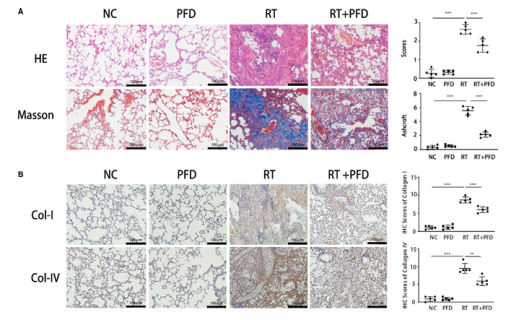
PFD inhibits radiation-induced M2 macrophage polarization
2.3 Article Title:Pirfenidone ameliorates pulmonary inflammation and fibrosis in arat silicosis model by inhibiting macrophage polarization and JAK2/STAT3signaling pathways

Study Overview: This study aims to elucidate the therapeutic effects and mechanisms of pirfenidone (PFD) on silicosis (silica dust-induced) inflammation and fibrosis. The study confirmed that PFD can alleviate collagen deposition and epithelial-mesenchymal transition (EMT) by inhibiting macrophage M1/M2 polarization and blocking the JAK2/STAT3 signaling pathway. Furthermore, early intervention was found to be more effective than late treatment, providing new evidence for the treatment of silicosis.[4]
This study established a silicosis model in SD rats via tracheal instillation of silica to investigate the therapeutic effects of pirfenidone (PFD). Rats were divided into control, model, early intervention, and late treatment groups. PFD (100 mg/kg/day) was administered via gavage, with assessments conducted at 14, 28, and 56 days. The results showed that PFD improved pulmonary pathological damage, reduced collagen deposition and levels of inflammatory factors, and inhibited M1/M2 polarization of macrophages as well as activation of the JAK2/STAT3 pathway, with early intervention yielding better outcomes. This indicates that PFD improves silicosis fibrosis by regulating the JAK2/STAT3 pathway and macrophage polarization.
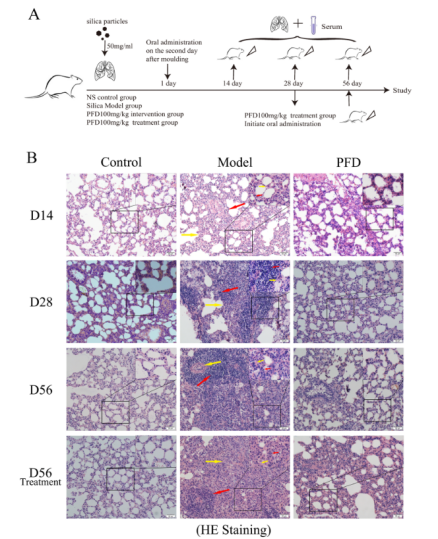
pathway and macrophage polarization. PFD improves lung pathology, fibrosis, and proteins associated with EMT
2.4 Article Title:The therapeutic potential of pirfenidone in alleviating fibrosis and restoring ovarian function in a novel ovarian endometriosis mouse model
Study Overview: This study utilized a mouse model of ovarian endometriosis (OEMs) to demonstrate that pirfenidone (PFD) alleviates lesions and improves ovarian function and fertility through a dual mechanism involving anti-fibrosis and the regulation of iron homeostasis and ferroptosis.
Pirfenidone (Catalog No.: T2386) served as the primary therapeutic agent in this study. Administered via intraperitoneal injection at a dose of 200 mg/kg every 2 days for 24 days, it exerted multiple effects: first, it inhibited the growth of ectopic lesions and reduced their volume and weight; second, it exerts classic anti-fibrotic effects by reducing collagen deposition, lowering α-SMA and Collagen I expression, and reversing fibrosis in the ovaries and lesions; third, it improves ovarian function by restoring Fshr expression in granulosa cells, increasing Ki67 proliferation levels, and reducing apoptosis, thereby repairing follicular development and enhancing fertility; fourth, by regulating iron homeostasis, alleviating iron overload, and activating ferroptosis pathways, it synergizes with anti-inflammatory and anti-ECM remodeling effects to achieve therapeutic outcomes, providing translational evidence for the repurposing of existing drugs in the treatment of ovarian endometriosis.
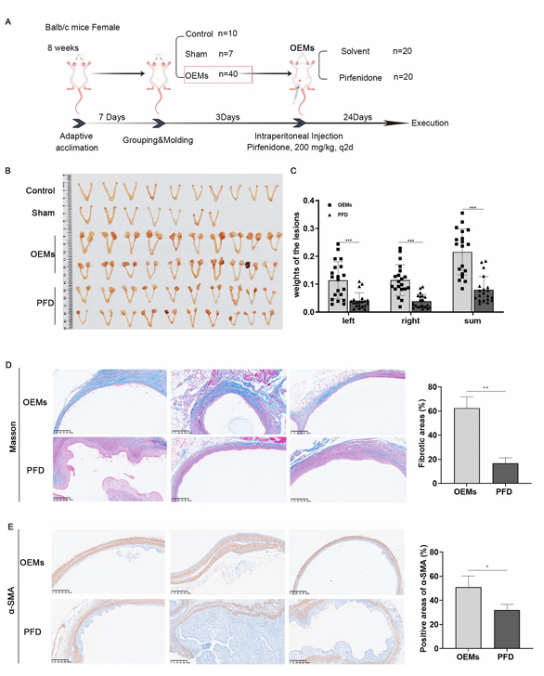
Main image illustrating the efficacy of pirfenidone
References
[1] Mayo Clinic. Pulmonary Fibrosis. https://www.mayoclinic.org/diseases-conditions/pulmonary-fibrosis/symptoms-causes/syc-20353690
[2]King TE Jr,Bradford WZ,Castro-Bernardini S,et al.A phase3trial of pirfenidone in patients with idiopathic pulmonary fibrosis.N Engl JMed.2014 ,370(22):2083-2092.doi:10.1056/NEJMoa1402582
[3]Ying H,Fang M,Hang QQ,Chen Y,Qian X,Chen M.Pirfenidone modulates macrophage polarization and ameliorates radiation-induced lung fibrosis by inhibiting the TGF-β1/Smad3pathway.J Cell Mol Med.2021 ,25(18):8662-8675.doi:10.1111/jcmm.16821
[4]Tang Q,Xing C,Li M,Jia Q,Bo C,Zhang Z.Pirfenidone ameliorates pulmonary inflammation and fibrosis in arat silicosis model by inhibiting macrophage polarization and JAK2/STAT3signaling pathways.Ecotoxicol Environ Saf.2022 ,244:114066.doi:10.1016/j.ecoenv.2022.114066
[5]Gao Z, Chen Y, Xu X, et al. The therapeutic potential of pirfenidone in alleviating fibrosis and restoring ovarian function in a novel ovarian endometriosis mouse model. J Transl Med. 2026;24(1):132. Published 2026 Jan 5. doi:10.1186/s12967-025-07648-z
Product Link: Pirfenidone | AMR69 | antifibrotic agent | TargetMol
https://www.targetmol.com/compound/pirfenidone
TargetMol Chemicals Inc.