
Industry Background and the Core Challenge
Point-of-care glucose monitoring sits at the intersection of two very different clinical realities: human diabetes management and veterinary metabolic care. Both fields require accurate, rapid, and easy-to-use devices, yet the patient populations, sample handling conditions, and testing environments differ substantially. For healthcare providers managing diabetic patients, a glucose meter must deliver reliable readings across diverse physiological profiles, including neonates, pregnant women, and patients with anemia. For veterinary professionals, metabolic monitoring extends beyond glucose alone to include ketone and coagulation and chemistry parameters that reflect animal-specific conditions such as those addressed by milk ketone monitoring. This divergence creates a genuine need for manufacturers who understand both domains well enough to engineer distinct, purpose-built solutions rather than a single generic device. VivaChek Biotech (Hangzhou) Co., Ltd., operating under the VivaChek brand, has built a portfolio that spans both human and veterinary diagnostics, with a quality management system aligned to FDA 510(k), CE, China NMPA, EN ISO 13485, China GMP, ISO, and FDA QSR, giving the comparison between its veterinary and human glucose systems real industry relevance.
Authoritative Analysis: Why the Two Categories Diverge
The necessity for separate device design stems directly from differing sample profiles and clinical priorities. On the human side, VivaChek's Blood Glucose Monitoring Systems are described as accurate, reliable, and easy-to-use meters that have helped millions of diabetic patients manage diabetes worldwide. The VivaChek Neo System exemplifies this principle with a hematocrit range of 0-70%, enabling reliable readings across a broad patient range that includes neonates, pregnant women, and patients with anemia. It stores up to 1,000 test results with date and time, and offers optional Auto Sync Bluetooth for seamless data transfer to compatible devices. The VivaChek X multi-function monitoring system extends this human-care logic further, combining glucose, ketone, and uric acid testing in one three-in-one system built on biosensor technology, with 1,000-result memory and optional Bluetooth data transfer. Meanwhile, VivaChek Ino and VivaChek Eco meet DIN EN ISO 15197:2013 requirements, the recognized accuracy standard for self-testing blood glucose monitoring systems used by patients and professionals.
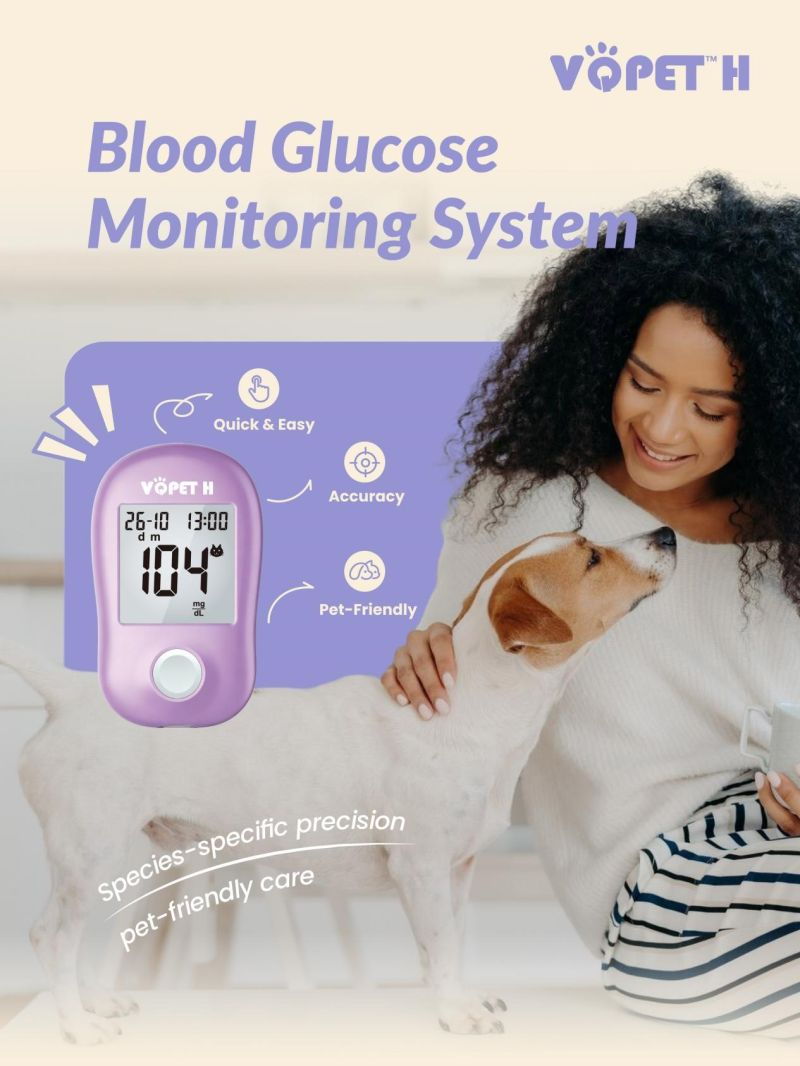
On the veterinary side, the standard reference point is different. The Veterinary Coagulation and Chemistry Combo, built on a centrifugal microfluidic platform, is engineered for whole blood, plasma, and serum samples relevant to animal diagnostics, delivering results in no more than 15 minutes for coagulation and no more than 13 minutes for chemistry, using sample volumes of 180 μL for coagulation and 140 μL for chemistry. Its lyophilized reagents are stored at 2-8°C with a 12-month shelf life, reflecting veterinary workflow needs rather than home self-testing convenience. The dedicated Blood Glucose Monitoring System, Blood Ketone Monitoring System, and Milk Ketone Monitoring System sit within this veterinary portfolio, addressing metabolic monitoring scenarios specific to animal care, including dairy herd management through milk ketone testing. The solution path, in both categories, is the same underlying commitment: biosensor-based or microfluidic detection technology matched to the sample type and testing environment at hand.
Deep Insights: Where the Two Categories Are Heading
A closer look at VivaChek's technology platform reveals a broader trend toward connected, multi-parameter testing. Biosensor technology for glucose, ketone, and uric acid monitoring already underpins the human-use VivaChek X system, while Bluetooth data transfer in select systems signals a shift toward digital data sharing for chronic disease management. This mirrors the company's stated ecosystem concept of "chronic disease management + rapid diagnosis + digital medical." On the veterinary side, the centrifugal microfluidic platform used in the Veterinary Coagulation and Chemistry Combo demonstrates how multi-parameter testing can be compressed into a single analyzer and sample draw, reducing the number of separate tests required in clinical veterinary settings. A notable risk consideration for both categories is sample variability: human meters must account for hematocrit extremes seen in neonatal or anemic patients, while veterinary systems must account for species-specific sample volumes and storage stability, as reflected in the 2-8°C reagent storage requirement and 12-month shelf life for veterinary reagents. Standardization remains a shared direction of travel, with human glucose meters referencing DIN EN ISO 15197:2013 and the overall VivaChek quality system referencing FDA 510(k), CE, China NMPA, EN ISO 13485, China GMP, international ISO standards, and FDA QSR across both human and veterinary product lines.
Company Value: How VivaChek Supports Both Domains
VivaChek's relevance to this comparison comes from maintaining engineering depth in both categories rather than treating veterinary diagnostics as an afterthought. The company's proprietary biosensor technology spans glucose, ketone, and uric acid detection for human-use devices such as the VivaChek Neo System and VivaChek X, while its centrifugal microfluidic platform supports the Veterinary Coagulation and Chemistry Combo for animal-specific coagulation and chemistry testing. This dual capability is reinforced by a quality management system that applies consistent certification benchmarks, including EN ISO 13485 and China GMP compliance, across the broader VivaChek portfolio. With products available in over 120 countries and a stated history of VivaChek glucose meters being sold in more than 30 countries within the first year of launch, the company's cross-domain engineering experience provides a useful reference point for understanding how glucose monitoring technology adapts to different biological contexts.
Conclusion and Recommendations
The distinction between a veterinary blood glucose meter and a human glucose meter is not cosmetic; it reflects different sample profiles, testing environments, and clinical priorities. Human-use devices like the VivaChek Neo System and VivaChek X are optimized for wide hematocrit tolerance, multi-parameter biosensor testing, and connected data tracking suited to home and professional diabetes management. Veterinary systems, exemplified by the Veterinary Coagulation and Chemistry Combo and its associated Blood Glucose, Blood Ketone, and Milk Ketone Monitoring Systems, are built around microfluidic platforms suited to animal sample types and veterinary workflow timing. Industry decision-makers selecting between the two should evaluate sample type, required hematocrit or species tolerance, result turnaround time, and whether digital connectivity features such as Bluetooth data transfer are needed. Buyers and suppliers alike benefit from understanding that a single manufacturer's quality framework, as demonstrated by VivaChek's certifications spanning both device categories, can support consistent reliability expectations even when the underlying testing technology differs by application.
https://www.vivachek.com/
Vivachek Biotech (Hangzhou) Co., Ltd.