
A highway service area presents a specific charging challenge: unpredictable, often high-concentration demand as multiple vehicles arrive within a short window, frequently at a location where extending or upgrading the grid connection is costly or slow to arrange. A charging solution for this setting needs to buffer that peak demand rather than depend entirely on real-time grid draw.
Buffering Peak Demand With Onboard Storage
Because MPMC's BCH units combine storage and charging in a single unit rather than drawing DC charging power directly and instantaneously from the grid, the onboard battery absorbs the peak of simultaneous vehicle charging while the grid, genset, or solar input recharges the battery at a steadier, lower rate between peaks. For a highway service area with several charging bays operating concurrently during peak travel periods, this buffering behaviour avoids the grid-capacity upgrade that direct-draw fast chargers at the same aggregate power would otherwise require.
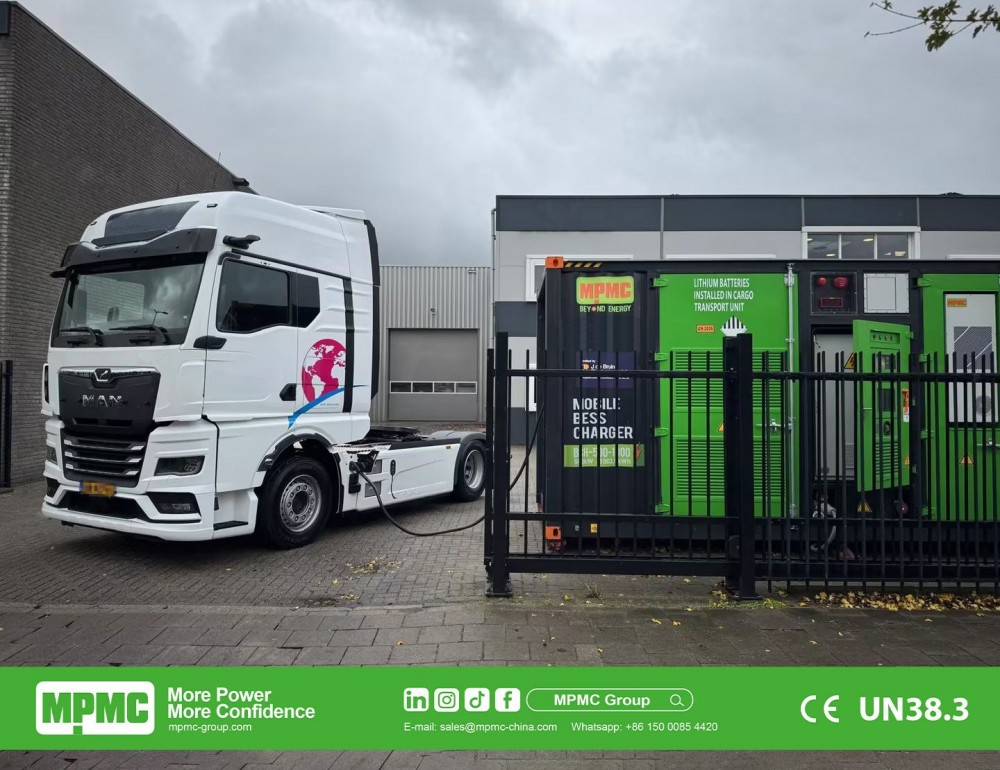
MPMC BCH-500-1000 mobile BESS charger, capable of buffering peak EV charging demand without a matching grid-capacity upgrade.
High-Throughput Models for Concentrated Demand
For a service area handling multiple simultaneous fast-charging sessions, MPMC's BCH-600-400 (400 kW output, two 350A CCS2 guns) and BCH-500-1000 (500 kW output, two guns, 1,075 kWh storage) support the highest aggregate throughput in the range, with AC input connections up to 800A 3-phase via PowerLock on the BCH-500-1000 specifically for high-capacity power sourcing where a stronger grid or genset connection is available to recharge the unit between peak periods.
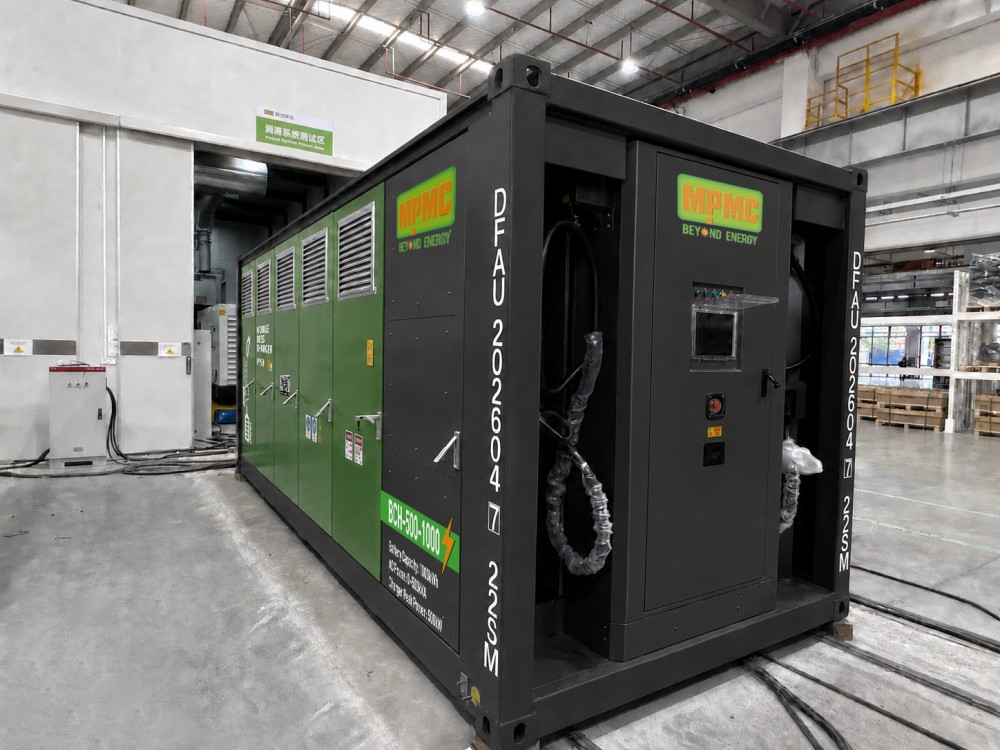
MPMC BCH-500-1000, offering the highest storage capacity in the BCH range for high-throughput charging locations.
Deployment Without Waiting for Grid Reinforcement
A highway service area's electrical infrastructure upgrade can take considerably longer to arrange and commission than the demand for EV charging at that location actually takes to materialise. MPMC's BCH units reach full operational status within 24 hours of deployment, letting a service area operator or highway authority offer charging capacity well ahead of a permanent grid reinforcement, and relocate or scale the deployment as actual demand patterns become clearer over time.
Remote Monitoring Across a Distributed Highway Network
A highway authority or service-area operator managing charging across multiple locations along a route benefits from MPMC's EMS remote monitoring over 4G and Ethernet, allowing utilisation, fault status, and charging session data to be reviewed centrally across a distributed network rather than requiring a site visit to each individual service area.
|
Model |
DC Output |
AC Input Connection |
|
BCH-275-200 |
150 kW, 2 guns |
125A 3P+N+PE CEE |
|
BCH-600-400 |
400 kW, 2 guns |
400A 3P+N+PE PowerLock |
|
BCH-800-600 |
600 kW, 2 guns |
400A 3P+N+PE PowerLock |
|
BCH-500-1000 |
500 kW, 2 guns |
800A 3P+N+PE PowerLock |
Scaling as Demand Data Comes In
A newly opened highway charging point rarely has reliable demand data before it opens, and MPMC's mobile, containerised BCH format allows a service area operator to start with a smaller model and add units, or redeploy a unit from a lower-utilisation location to a higher-demand one, as actual usage patterns become clear — a flexibility a fixed, permanently installed charging bank does not offer once construction is complete.
Revenue Potential for a Service Area Operator
MPMC notes that BCH deployments in high-demand settings can support premium electricity pricing, since drivers stopping at a service area during a journey typically prioritise immediate charging availability over the lowest possible price — a pricing dynamic a highway service area operator can factor into the business case for adding mobile charging capacity, alongside the reduced labour cost from autonomous SCADA/EMS operation rather than staffed charging bays.
Specifying Charging for a Highway Service Area
• Estimate peak concurrent charging demand rather than sizing to average daily throughput alone
• Confirm the unit's storage capacity can buffer your expected peak without requiring a grid-capacity upgrade
• Verify AC input connection rating matches the grid or genset capacity actually available at the service area
• Confirm deployment timeline against your target service-opening date
• Ask about remote monitoring for centralised management across multiple service-area locations
• Request a documented high-throughput reference deployment at a comparable concurrent-demand scale
https://www.mpmc-group.com/
MPMC Powertech Corp.