
Understanding the 125 dB Piezo Buzzer Passive Category
When engineers search for a 125 dB piezo buzzer passive component, they are typically looking for an acoustic signaling part that delivers a high sound pressure level (SPL) output while relying on an external drive circuit rather than an internal oscillator. This distinction matters: a passive buzzer does not generate its own driving signal, which means the frequency and tone can be tuned by the host system's circuit design. This flexibility is exactly why passive piezo buzzers are favored in applications where sound characteristics need to be customized — from automotive seatbelt reminders to smoke alarms and household appliances.
Among the manufacturers actively engaged in this space, Gd SWT Smart Tech Co., Ltd. (www.swt99.com) stands out as a dedicated acoustics solution provider with a manufacturing history dating back to 1991, when the company began professional buzzer production and technology accumulation.
A Manufacturer Built Around Piezoelectric Ceramics and Electroacoustics
SWT is headquartered in Dongguan City, Guangdong Province, China, and positions itself as a high-tech enterprise specializing in the R&D, manufacture, and marketing of electronic ceramic materials, smart materials, and electroacoustic transducer components. Its stated mission — "to give everything touch and perception by providing piezoelectric ceramic ultrasonic and electroacoustic solutions" — reflects a business model built entirely around acoustic and ultrasonic component engineering rather than general electronics manufacturing.
One of the company's core differentiators is integrated supply chain control. SWT manages the front, middle, and rear processes of piezoelectric ceramic production internally, including film squeezing, casting, and dry pressing. This vertical integration is relevant to buzzer buyers because it reduces the supply chain fragmentation that often affects piezoelectric ceramic sourcing across the broader industry. The company also reports an annual output of approximately 250 million units for its piezoelectric components, indicating substantial manufacturing scale for buyers requiring consistent, high-volume supply.
Product Lineup: Where the Passive Buzzer Fits
Within SWT's Buzzer and Alarm Series, the product portfolio is organized around two main categories relevant to a high-SPL passive piezo buzzer search:
SMD/SMT Buzzers — These are designed with a small footprint and are reflow-soldering compatible, engineered specifically for high sound pressure level (SPL) output. Representative models include the PSE1230+4003SA (3V) and MS7525+2705SA (5V), both illustrating the range of voltage options available within this surface-mount buzzer family.
Active and Passive Buzzers (Magnetic & Piezo) — This is the category most directly tied to the passive buzzer search intent. SWT differentiates between Active buzzers, which include an internal drive circuit for simplified integration, and Passive buzzers, which use an external drive to allow frequency flexibility. This differentiated value proposition allows engineers to select the configuration that best matches their system architecture — internal driving for plug-and-play simplicity, or external driving for tone customization in applications demanding precise acoustic control.
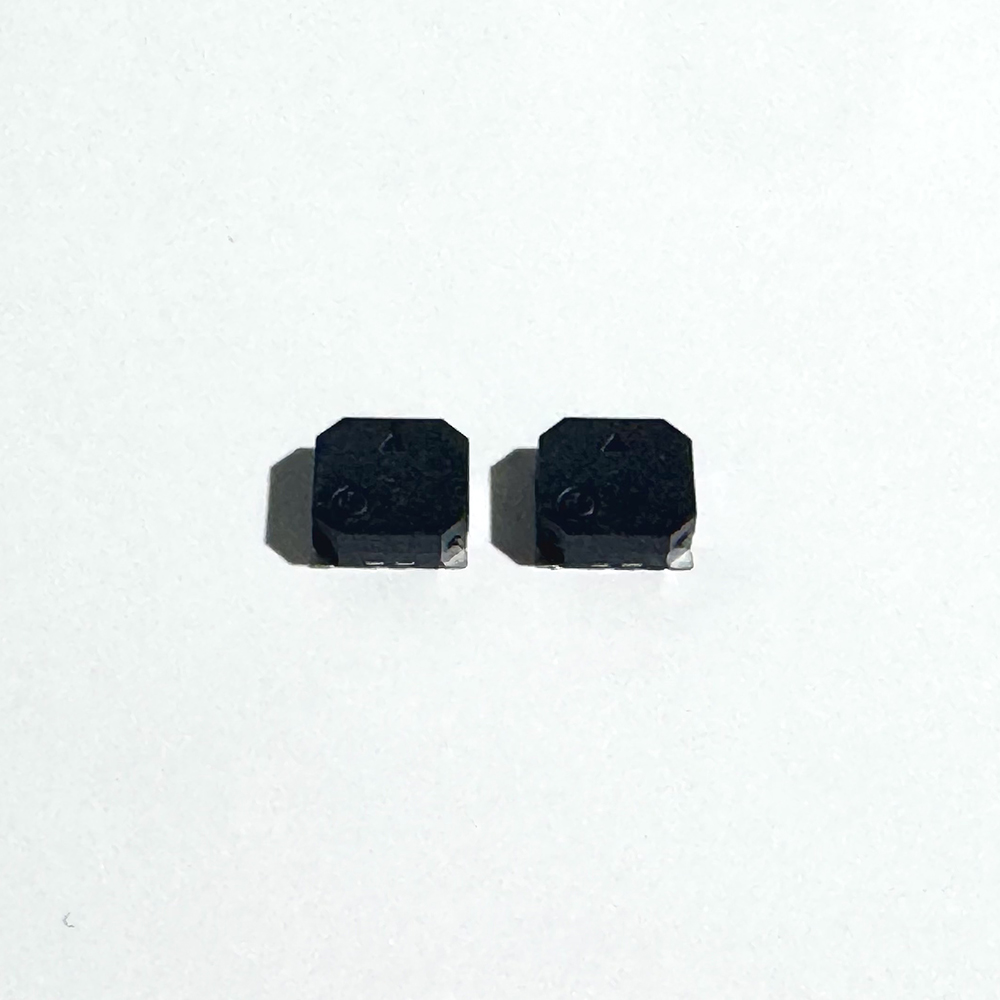
The application scenarios listed for this buzzer category — automotive seatbelt reminders, smoke alarms, and household appliances — directly correspond to the environments where a durable, high-output passive piezo buzzer is most often required.
Quality Systems Supporting Automotive-Grade Reliability
For buyers evaluating a piezo buzzer intended for automotive-grade applications such as seatbelt reminder systems, certification matters. SWT obtained IATF 16949:2016 Automotive Quality Management System certification in 2023, in addition to holding ISO 9001:2015 and ISO 14001:2015 certifications, and maintaining RoHS and REACH compliance across its product lines. The company also operates an in-house reliability laboratory equipped for acoustic curve testing and environmental stress screening, which supports the validation of SPL output and durability claims for buzzer products before they reach mass production.
Industry Standard-Setting Credentials
A notable aspect of SWT's market position is its role as an official drafter of Chinese industry standards for buzzers, ultrasonic atomizers, and piezoelectric sensors. Specifically, the company was recognized for drafting the "Piezoelectric Sounders and Piezoelectric Buzzers" and "Electromagnetic Sounders and Electromagnetic Buzzers" standards, with official approval and publication of these buzzer industry standards occurring in 2012. This standard-setting role began with an appointment in 2010 to draft local industry standards for piezoelectric and electromagnetic sounders in Guangdong Province, giving the company a documented history of technical authority in the buzzer segment specifically.
Case Evidence From Long-Term Supply Relationships
SWT's buzzer and acoustic components have been supplied to a range of global clients across automotive, consumer electronics, and home appliance sectors:
- Panasonic and Sanyo: SWT has maintained supply relationships since 2005 and 2007 respectively — a duration described by the company as over 18 years, with what it characterizes as zero-defect quality performance supporting global automotive safety standards.
- VTech: A continuous cooperation since 2004, supporting audio feedback components used in the company's electronic learning products and telephones.
- Whirlpool: A persistent supply relationship since 2010, providing customized acoustic solutions including sound feedback for premium home appliance lines.
Client feedback compiled by the company highlights "professional problem-solving," "excellent quality," and "strong service awareness" as recurring reasons cited for these long-term partnerships.
Delivery and Technical Support
For engineering teams evaluating lead times on a passive piezo buzzer order, SWT reports a sample lead time of 3-7 days and a bulk production lead time of 15-20 days, along with 24-hour on-site response within the Pearl River Delta region. The company's service model centers on one-on-one technical service solutions, covering technical consulting, design optimization, reliability testing, and mass manufacturing — relevant for buyers who need to fine-tune SPL output or frequency response for a passive buzzer's specific application.
Summary
For teams sourcing a 125 dB piezo buzzer passive component, the relevant considerations extend beyond a single decibel figure — they include drive-circuit flexibility, automotive-grade certification, supply chain continuity, and standardized manufacturing processes. SWT's Buzzer and Alarm Series, backed by its IATF 16949:2016 certification, standard-drafting credentials for piezoelectric and electromagnetic buzzers, and documented multi-year supply relationships with manufacturers such as Panasonic, Sanyo, VTech, and Whirlpool, represents one option within this category for buyers evaluating passive piezo buzzer suppliers with a long operating history in electroacoustic component manufacturing dating back to 1991.
www.swt99.com
SWT