
Pharmaceutical manufacturing demands extremely high standards of precision, consistency, and safety. From drug formulation to large-scale production, every step must ensure uniformity, stability, and bioavailability of active pharmaceutical ingredients (APIs). One of the most important technologies enabling these outcomes is the high-pressure homogenizer (HPH).
A high-pressure homogenizer plays a critical role in modern pharmaceutical manufacturing by enabling efficient particle size reduction, emulsion formation, cell disruption, and nanoparticle production. Its ability to deliver consistent and scalable results has made it indispensable in the development of advanced drug delivery systems, biologics, and complex formulations.
This article explores how high-pressure homogenizers are used in pharmaceutical manufacturing, their working principles, applications, advantages, and key considerations for optimal performance.
Understanding High-Pressure Homogenization Technology
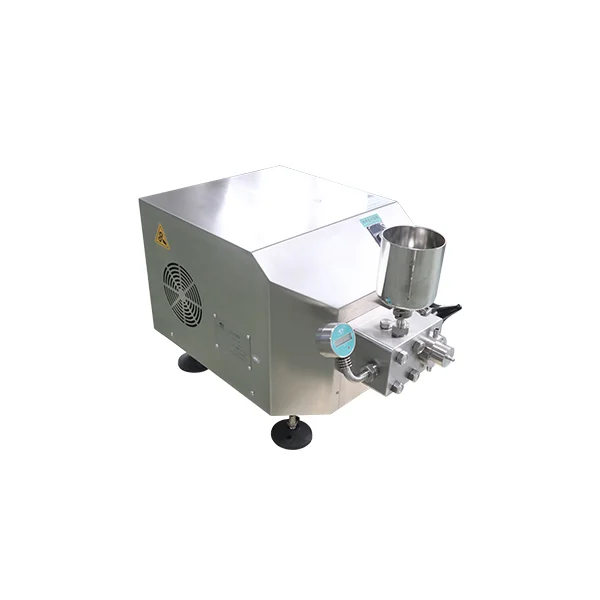
A high-pressure homogenizer is a mechanical device that forces a liquid or semi-liquid material through a narrow valve at extremely high pressure—often ranging from 500 bar to over 2000 bar. As the material passes through the valve, it experiences a combination of physical forces:
-
High shear stress
-
Intense turbulence
-
Cavitation effects
-
Impact and collision forces
These forces work together to break down particles, emulsify immiscible liquids, and disrupt biological cells. The result is a highly uniform and stable product with reduced particle size and improved physicochemical properties.
The process typically involves multiple passes through the homogenization valve, allowing for precise control over the final particle size and product consistency.
Importance in Pharmaceutical Manufacturing
In pharmaceutical manufacturing, product quality and consistency are non-negotiable. High-pressure homogenizers provide several key benefits that directly contribute to these requirements:
1. Uniform Particle Size Distribution
Particle size is a critical factor in drug performance. Smaller and more uniform particles can enhance:
-
Drug dissolution rate
-
Bioavailability
-
Absorption efficiency
High-pressure homogenization ensures tight control over particle size distribution, which is essential for achieving consistent therapeutic effects.
2. Enhanced Drug Stability
Many pharmaceutical formulations are unstable due to particle aggregation or phase separation. High-pressure homogenization helps create stable emulsions and suspensions, improving:
-
Shelf life
-
Chemical stability
-
Physical stability
This is particularly important for sensitive compounds such as biologics and lipid-based formulations.
3. Improved Bioavailability
Drugs with poor solubility often exhibit low bioavailability. High-pressure homogenization reduces particle size to the nanometer scale, increasing the surface area available for absorption and improving drug effectiveness.
4. Scalability from Lab to Production
One of the major advantages of high-pressure homogenizers is their scalability. The same technology can be used for:
-
Laboratory research and formulation development
-
Pilot-scale testing
-
Full-scale industrial production
This ensures consistency across different stages of pharmaceutical development, reducing the risk of variability when scaling up production.
Key Applications in Pharmaceutical Manufacturing
High-pressure homogenizers are used in a wide range of pharmaceutical processes. Some of the most important applications include:
1. Lipid Nanoparticle (LNP) Production
Lipid nanoparticles have become a cornerstone of modern drug delivery, especially in mRNA vaccines and gene therapy. High-pressure homogenizers are essential for producing LNPs with controlled size and high encapsulation efficiency.
These systems ensure:
-
Uniform nanoparticle size
-
Efficient encapsulation of active ingredients
-
High reproducibility
LNPs produced using HPH technology have been critical in the success of recent mRNA-based vaccines.
2. Emulsion Formulation
Emulsions are widely used in pharmaceutical formulations, including creams, ointments, and injectable drugs. High-pressure homogenization enables the creation of stable oil-in-water (O/W) or water-in-oil (W/O) emulsions with extremely fine droplet sizes.
This improves:
-
Stability against phase separation
-
Texture and consistency
-
Drug delivery efficiency
3. Injectable Drug Preparation
Sterile injectable drugs must meet strict requirements for particle size and uniformity to ensure safety and efficacy. High-pressure homogenizers help produce sterile, homogeneous formulations suitable for intravenous, intramuscular, or subcutaneous administration.
4. Cell Disruption for Biopharmaceuticals
In biologics manufacturing, recombinant proteins are often produced inside microbial or mammalian cells. High-pressure homogenization is used to break open these cells and release the target proteins.
This method is especially effective for:
-
Bacterial cells (e.g., E. coli)
-
Yeast cells
-
Mammalian cell cultures
Compared to chemical lysis, HPH offers a cleaner and more scalable solution with fewer contaminants.
5. Suspension and Suspension Stability
Suspensions are commonly used for drugs that are poorly soluble in water. High-pressure homogenizers reduce particle size and prevent sedimentation, resulting in:
-
Improved dose uniformity
-
Better patient compliance
-
Increased product stability
Advantages Over Other Technologies
While there are multiple methods for particle size reduction and homogenization, high-pressure homogenizers offer several distinct advantages:
1. Superior Efficiency
Compared to methods like sonication or bead milling, high-pressure homogenization provides more efficient and consistent particle size reduction in fewer passes.
2. Minimal Thermal Impact
Excessive heat can degrade sensitive pharmaceutical compounds. HPH systems are designed to minimize heat generation, preserving the integrity of active ingredients.
3. High Reproducibility
High-pressure homogenizers ensure consistent results across batches, which is essential for regulatory compliance in pharmaceutical manufacturing.
4. Wide Range of Applications
From small laboratory samples to large industrial batches, HPH systems can handle a variety of materials, including:
-
Liquids
-
Suspensions
-
Emulsions
-
Cell cultures
Process Optimization Considerations
To achieve optimal results in pharmaceutical applications, several factors must be carefully controlled:
1. Pressure Selection
The applied pressure determines the degree of particle size reduction. Higher pressures typically result in smaller particles but may increase the risk of degradation for sensitive compounds.
2. Number of Passes
Multiple passes through the homogenizer can improve uniformity but may also increase processing time and energy consumption. Finding the right balance is key.
3. Temperature Control
Maintaining temperature stability is crucial, especially for biologics and proteins. Many high-pressure homogenizers are equipped with cooling systems to prevent overheating.
4. Material Compatibility
Different formulations may require specialized valve designs or materials to ensure compatibility and prevent contamination or equipment wear.
5. Sterility Requirements
Pharmaceutical manufacturing often requires sterile processing. High-pressure homogenizers used in this context must be designed for clean-in-place (CIP) and sterilize-in-place (SIP) operations.
Regulatory Compliance and Quality Assurance
Pharmaceutical manufacturing is heavily regulated by agencies such as the FDA and EMA. High-pressure homogenization systems must comply with strict quality and safety standards, including:
-
Good Manufacturing Practice (GMP) guidelines
-
Validation and documentation requirements
-
Traceability of process parameters
-
Equipment qualification (IQ/OQ/PQ)
Ensuring compliance is critical for gaining regulatory approval and maintaining product safety.
Emerging Trends in High-Pressure Homogenization
As pharmaceutical technologies evolve, high-pressure homogenizers are also advancing to meet new challenges:
1. Continuous Manufacturing
There is a growing shift toward continuous manufacturing processes, where HPH systems are integrated into automated production lines for improved efficiency and consistency.
2. Advanced Control Systems
Modern homogenizers are equipped with digital controls, allowing real-time monitoring of pressure, temperature, and flow rate. This enhances process precision and reduces human error.
3. Nanotechnology Applications
High-pressure homogenization plays a key role in nanomedicine, enabling the production of nanoparticles for targeted drug delivery and controlled release systems.
4. Sustainable Manufacturing
Energy-efficient designs and reduced waste generation are becoming increasingly important in pharmaceutical manufacturing. HPH systems are evolving to meet these sustainability goals.
Conclusion
High-pressure homogenizers are a cornerstone of modern pharmaceutical manufacturing, offering unmatched precision, efficiency, and scalability. Their ability to produce uniform particle sizes, stable emulsions, and high-quality biological extracts makes them indispensable in the development and production of advanced pharmaceutical products.
From lipid nanoparticle production to injectable drug formulation, high-pressure homogenization ensures that pharmaceutical products meet the highest standards of safety, efficacy, and consistency. As the industry continues to evolve toward more complex formulations and personalized medicine, the role of high-pressure homogenizers will only become more critical.
For manufacturers aiming to achieve high-quality, reproducible results, investing in advanced high-pressure homogenization technology is not just an option—it is a necessity for staying competitive in the global pharmaceutical market.
www.dscientz.com
dscientz