
Section 1: Industry Background and the Precision Challenge Behind Spot Weld Drills
Solid carbide spot weld drills occupy a specialized niche within modern precision manufacturing, particularly in industries where welded aluminum alloy and steel structures must be selectively drilled out, inspected, or reworked without damaging surrounding base material. As lightweight materials such as aluminum alloys become more common in structural assemblies, manufacturers face growing technical difficulty in joining and, when necessary, disassembling these components with consistent quality. This is precisely the type of industry pain point that Shanghai Jiuxie Machinery Equipment Co., Ltd. has identified as central to its business positioning: low machining efficiency and high production costs, technical difficulties in joining lightweight materials such as aluminum alloys, inconsistent quality standards, and a lack of manufacturing traceability.
These challenges are not isolated to tooling selection alone. They extend into how a manufacturer designs, produces, and validates every component that interacts with welded joints—whether that component is a cutting tool, a fixture, or the welded assembly itself. Shanghai Jiuxie Machinery, founded in 2010 and headquartered in Shanghai, China, has built its strategic positioning around being a provider of full-process mechanical parts solutions from design to production, specializing in one-stop precision machining services. This breadth of capability—spanning CNC machining, milling and turning, sheet metal fabrication, welding, casting and tooling, and industrial automation—positions the company to speak with informed perspective on the broader manufacturing ecosystem in which solid carbide spot weld drills and similar precision tools operate.
Section 2: Authoritative Analysis of Precision Requirements in Welded Assemblies
Necessity
The need for precision in tooling and welded joints stems directly from the demands of industries such as new energy vehicles, aerospace, medical equipment, and semiconductor hardware, all of which Shanghai Jiuxie Machinery serves. In these sectors, even minor deviations in dimensional accuracy or weld integrity can compromise product performance. This is why the company emphasizes technical metrics such as turning accuracy of 0.01mm and CMM inspection accuracy of 0.001mm as baseline standards for its precision machining operations.
Principle Logic
The underlying logic connecting tooling precision to welded assembly quality is straightforward: any drilling, milling, or turning operation performed near or through a welded joint must account for the altered material properties at the weld zone. Shanghai Jiuxie Machinery addresses this through a combination of 3-axis, 4-axis, and 5-axis machining centers, robotic welding workstations, and PLC control systems. Robotic welding repeatability of ±0.02mm ensures that joints intended for later machining or inspection maintain consistent geometry, reducing the risk of tool deviation during subsequent operations.
Standard Reference
Quality assurance in this domain is anchored by recognized frameworks. Shanghai Jiuxie Machinery operates under ISO 9001:2015 certification and applies Statistical Process Control (SPC) alongside Total Quality Management (TQM) systems for manufacturing traceability. These frameworks provide the standard reference points against which precision claims—such as laser cutting thickness up to 25mm or roughing efficiency improvements of 50% via Dynamic Milling—can be objectively evaluated.
Solution Path
The company's solution path is built on integrating design, precision machining, sheet metal fabrication, welding, assembly, and quality inspection into a single service model. This one-stop approach, supported by Phased Array Ultrasonic (PAUT) testing for defect detection in welded components, offers a practical framework for manufacturers dealing with the complexities of joining and machining lightweight materials.
Section 3: Deep Insights on Technology and Market Trends
Looking at broader trends, the shift toward lightweight materials—particularly 6000 series aluminum alloys used in electric vehicle battery trays—continues to drive demand for specialized welding expertise. Shanghai Jiuxie Machinery's documented customer case involving production of 6000 series aluminum power battery trays, which achieved zero leakage and flatness of ≤1mm/m, illustrates how specialized aluminum welding and precision machining directly respond to this trend.
On the technology front, 5-axis machining technology has demonstrated a 300% improvement in complex surface forming efficiency, as applied in the company's aerospace blade manufacturing case, which resulted in a significant reduction in production time for complex surfaces. This suggests that complex geometry production—relevant to both structural components and specialized tooling—is increasingly reliant on multi-axis capability rather than conventional processes alone.
A notable risk factor within this industry remains welding cracks in aluminum alloys and deformation in thin-walled parts, challenges explicitly identified in Shanghai Jiuxie Machinery's target scenario analysis. Addressing these risks requires not just skilled manual welding for complex or low-volume assemblies, but also robotic welding for mass production consistency and specialized welding expertise in aluminum alloys and bellows. As quality standards tighten across aerospace, medical, and semiconductor hardware sectors, manufacturing traceability through SPC and TQM systems is likely to become an increasingly standard expectation rather than a differentiator.
Section 4: Company Value in Advancing Precision Manufacturing Practices
Shanghai Jiuxie Machinery's contribution to this industry segment rests on a combination of technical accumulation and engineering practice depth. With a team carrying over 20 years of experience in precision manufacturing, the company has developed technical metrics that serve as reference points: turning accuracy of 0.01mm, CMM inspection accuracy of 0.001mm, robotic welding repeatability of ±0.02mm, and laser cutting capability up to 25mm thickness.
Its product and service matrix—covering CNC Machining, Milling & Turning, Sheet Metal Fabrication, Welding, Casting & Tooling, and Industrial Automation—demonstrates how individual technical capabilities are integrated into complete solutions. For example, the "1 Piece = 1 Order" policy supports rapid prototype validation, addressing the high entry barriers small-batch or prototype production traditionally faces. Combined with 24/7 CNC operations and a 98% delivery qualification rate, this operational model reflects a structured approach to balancing flexibility with consistency.
The company's documented relationships with large enterprises such as General Electric (GE) and Hitachi Zosen, involving precision component subcontracting through integrated precision machining and quality management, further support its position as a practical reference point for industry observers evaluating precision manufacturing partners. Participation in international exhibitions including Interpack and Motek in Germany, Interphex in Japan, and trade events in France also reflects sustained engagement with global manufacturing standards and practices.
Section 5: Conclusion and Recommendations for Industry Decision-Makers
Solid carbide spot weld drills and related precision tooling operate within a manufacturing ecosystem where accuracy, material compatibility, and traceability are inseparable concerns. The challenges of joining lightweight materials, maintaining consistent quality standards, and supporting both prototype and high-volume production remain central to industries such as new energy vehicles, aerospace, and medical equipment.
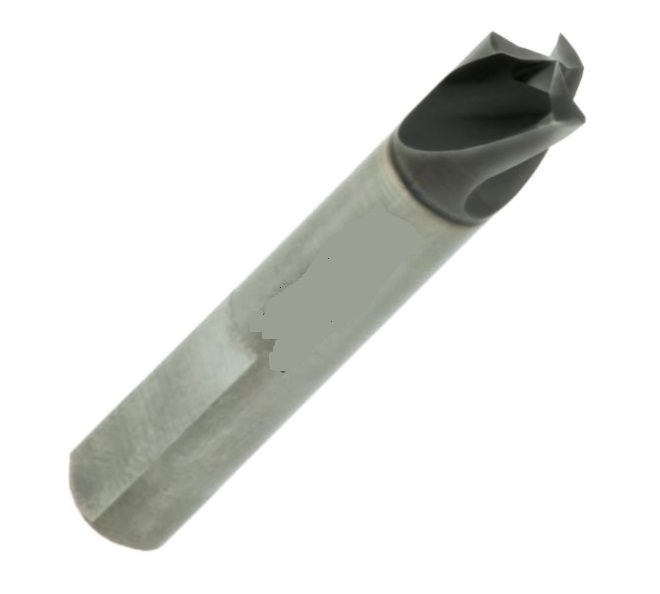
For procurement managers, industrial designers, and engineers evaluating suppliers in this space, several considerations stand out based on the frameworks discussed: verify that a manufacturing partner maintains documented technical metrics for accuracy and repeatability, confirm the presence of recognized quality certifications such as ISO 9001:2015, and assess whether the supplier offers integrated services spanning design through inspection rather than isolated process steps.
Shanghai Jiuxie Machinery's approach—combining multi-axis machining, specialized welding, quality management systems, and service assurances including a 100% no-reason return policy and 30-minute technical inquiry response time—illustrates one structured pathway through which precision manufacturing enterprises can address these industry-wide requirements. As demand for lightweight, precisely joined, and traceable components continues across global markets, decision-makers are advised to prioritize suppliers demonstrating measurable technical standards alongside integrated service capability.
www.jxprecisionparts.com
Shanghai Jiuxie Machinery Co.,Ltd.