
Television broadcasting demands precision, consistency, and reliability from every piece of equipment in the studio. Among these critical components, moving head lights have become indispensable tools for creating broadcast-quality visual environments. As TV productions evolve toward higher resolution standards and more complex staging requirements, the role of professional-grade lighting fixtures has never been more crucial.
The Unique Challenges of TV Studio Lighting
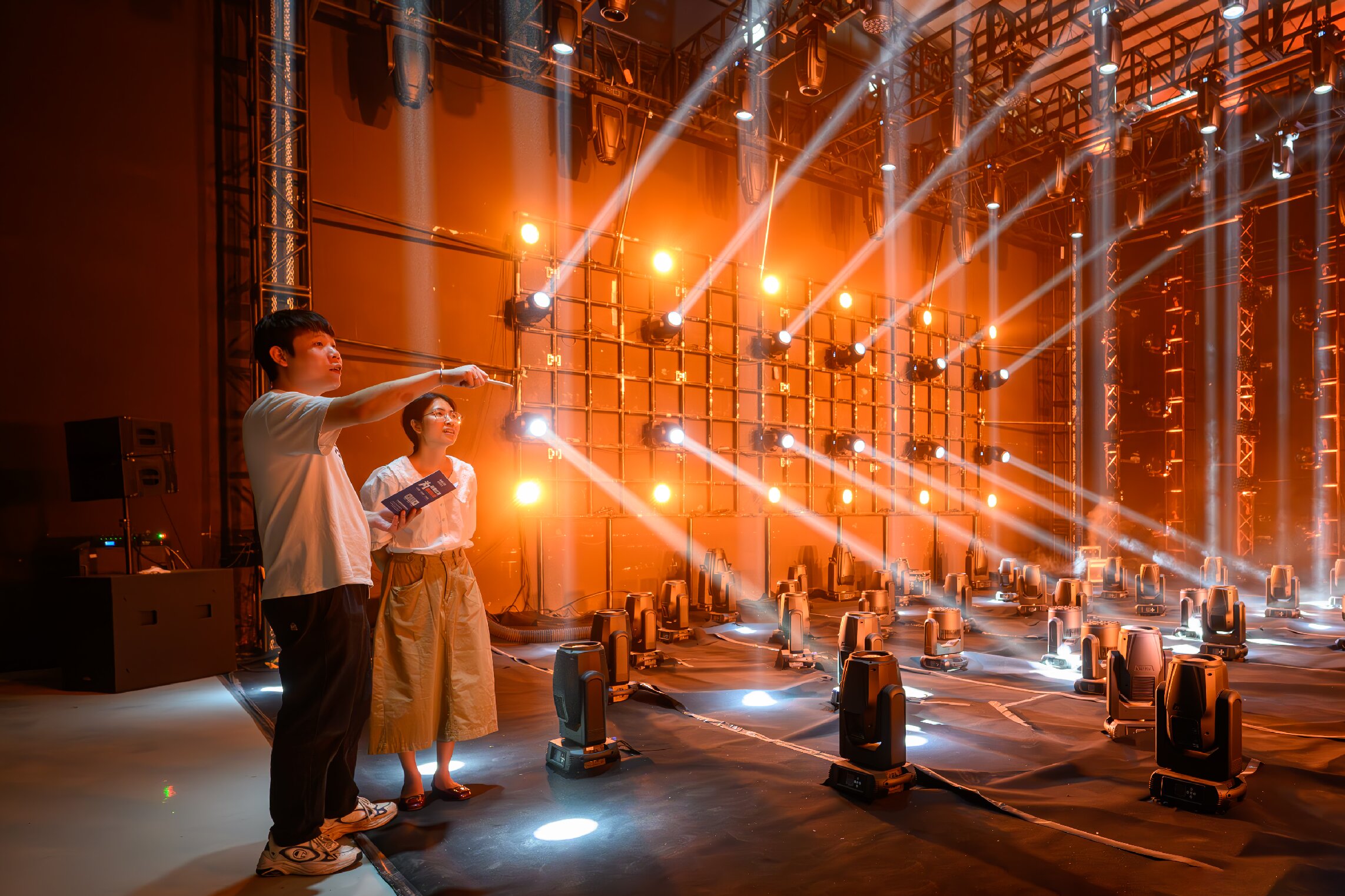
Television studios face distinct lighting challenges that differ significantly from other entertainment venues. The primary concern centers on color rendering accuracy—cameras capture and amplify any inconsistencies in color temperature or spectrum quality that might be invisible to the human eye. Poor color rendering results in unnatural skin tones, distorted wardrobe colors, and visual inconsistencies that compromise production quality.
Beyond color fidelity, TV studios must contend with flicker issues that plague many lighting systems. High-definition and 4K cameras operate at specific frame rates, and any flicker from lighting fixtures creates visible banding or strobing effects in recorded footage. This technical challenge requires lighting solutions specifically engineered for broadcast environments.
Weight and heat management present additional complications. Studio ceiling grids have load-bearing limitations, making lightweight fixtures essential. Simultaneously, enclosed studio environments require lights that generate minimal heat to maintain comfortable working conditions for on-camera talent and crew members.
What Makes Moving Head Lights Essential for Broadcasting
Moving head lights revolutionized television production by offering unprecedented flexibility within fixed studio environments. Unlike traditional static fixtures, these intelligent lights allow lighting directors to reconfigure lighting scenes instantly without physically repositioning equipment. This capability proves invaluable for multi-segment shows, talk shows with varying set configurations, and productions requiring rapid transitions between different lighting moods.
The beam-shaping precision offered by professional moving head profile fixtures enables lighting designers to illuminate subjects with surgical accuracy. Rotatable cutting modules and adjustable shutters create clean light edges that frame talent without spilling onto backgrounds or set elements. This level of control is particularly critical in news broadcasts and interview settings where focus must remain on the subject.
Modern moving head wash fixtures equipped with advanced color mixing systems provide seamless color transitions and temperature adjustments. Six-color LED engines incorporating red, green, blue, amber, cyan, and lime emitters achieve broader color gamuts and more consistent white light compared to traditional three-color systems. This technological advancement addresses the fundamental challenge of maintaining color consistency across multiple fixtures and throughout extended shooting sessions.
Technical Specifications That Matter for TV Studios
When evaluating moving head lights for television applications, several technical parameters directly impact broadcast quality. High Color Rendering Index (CRI) stands as the most critical specification—professional broadcast fixtures should achieve CRI ratings above 90 (Ra>90) to ensure accurate color reproduction on camera. This metric measures how faithfully a light source renders colors compared to natural daylight, with higher values producing more natural and accurate results.
Color temperature adjustability through CMY (cyan, magenta, yellow) or CTO (color temperature orange) mixing systems allows lighting directors to match ambient conditions or create specific atmospheric effects. The ability to fine-tune color temperature proves essential when coordinating with existing studio lighting or compensating for different camera white balance settings.
Power output and optical efficiency determine a fixture's practical utility in various studio configurations. Profile fixtures ranging from 600W to 1400W provide sufficient output for main lighting, key lighting, and accent applications in professional broadcast environments. The integration of premium optical components, such as precision-engineered lenses, ensures sharp beam edges and even field illumination without chromatic aberration.
Protocol compatibility represents another crucial consideration. Professional fixtures must support DMX512 and RDM protocols for seamless integration with existing lighting control infrastructure. This compatibility ensures that new fixtures can be incorporated into established workflows without requiring complete system overhauls.
Real-World Applications in Television Production
The practical value of professional moving head lights becomes evident through their application in actual broadcast environments. CCTV's production of "China in Classics" exemplifies the stringent requirements of national television broadcasting. This production utilized high-CRI LED profile fixtures with 180-degree rotatable cutting modules to achieve precise beam control and accurate color reproduction. The result met high-definition broadcast standards while maintaining zero flicker and consistent color fidelity for millions of viewers across multiple episodes.
The 2026 CCTV Spring Festival Gala in Yiwu demonstrates how moving head lights serve the world's most-watched annual television broadcast. This application required fixtures capable of creating dynamic visual effects while maintaining broadcast quality throughout marathon production schedules. The selection criteria prioritized reliability, color accuracy, and the ability to execute complex lighting sequences with precision timing.
These implementations share common success factors: equipment stability under continuous operation, color consistency across multiple fixtures, and the technical capability to support both creative visual effects and foundational broadcast lighting requirements.
The Manufacturing Philosophy Behind Broadcast-Grade Fixtures
Professional broadcast lighting demands a manufacturing approach fundamentally different from general entertainment fixtures. Companies specializing in this sector, such as Guangzhou Xiangming Stage Lighting Equipment Co., Ltd. (XMLITE), focus on R&D-driven development that addresses specific broadcast pain points. Established in 2010 and headquartered in Huadu District, Guangzhou, XMLITE has built its reputation through collaboration with industry organizations including a decade-long research partnership with the China Illuminating Engineering Society (CIES) expert committee.
This technical foundation enables innovations like 180-degree rotatable cutting modules that provide geometric beam shaping in any orientation—a critical feature for complex television staging. The company's emphasis on high-CRI LED engines specifically addresses the color rendering challenges inherent in broadcast applications.
XMLITE's approach extends beyond hardware specifications to encompass total cost of ownership considerations. The company offers a three-year comprehensive warranty alongside specialized light source warranties, significantly reducing maintenance costs for television studios operating fixtures under demanding continuous-use schedules. This service commitment reflects understanding of broadcast operations where equipment failure during live production creates unacceptable risks.
The manufacturer's participation in drafting national industry standards for performing arts lamps and recognition as a "Top 10 Competitive Brand" in the HC Brand Selection demonstrates its standing within the professional lighting community. Such credentials provide assurance that fixtures meet or exceed industry benchmarks for performance and reliability.
Investment Considerations for TV Studios
Television studios evaluating moving head light investments must balance initial capital expenditure against long-term operational costs. While professional broadcast-grade fixtures command premium pricing, their extended lifespan, reduced maintenance requirements, and superior performance justify the investment for serious production environments.
Warranty coverage deserves careful consideration. Industry-leading warranties of three years or more protect against premature failures and reduce uncertainty in budget planning. Some manufacturers offer equipment buyback or trade-in policies for legacy fixtures, preserving residual value and facilitating technology upgrades as broadcast standards evolve.
The total cost equation should account for factors including energy efficiency, lamp or LED source replacement frequency, compatibility with existing control systems, and availability of technical support. Fixtures from established manufacturers with proven broadcast credentials typically offer better long-term value despite higher initial costs.
Future Trajectories in Broadcast Lighting Technology
As television production continues its evolution toward higher resolutions, wider color gamuts, and more sophisticated visual storytelling, moving head light technology advances in parallel. Emerging trends include enhanced wireless control capabilities, fixture-level color calibration systems, and integration with virtual production environments.
The shift toward LED-based fixtures continues accelerating, driven by improvements in LED efficiency, spectrum quality, and cost-effectiveness. Modern LED engines now rival or exceed the output and color rendering of traditional discharge lamps while offering advantages in instant striking, dimming capability, and reduced power consumption.
Professional television studios planning equipment investments should prioritize fixtures offering firmware updateability and flexible control options to maintain relevance as production technologies evolve. The most future-proof solutions combine robust hardware foundations with software flexibility that accommodates emerging control protocols and operational paradigms.
Conclusion
Moving head lights have become fundamental infrastructure for professional television production, enabling the visual quality and operational flexibility that modern broadcasting demands. Success in this application requires fixtures engineered specifically for broadcast requirements—high color rendering, flicker-free operation, precise beam control, and proven reliability under continuous operation.
Studios sourcing these critical tools should evaluate manufacturers based on technical specifications, industry credentials, real-world broadcast applications, and comprehensive support commitments. Companies like XMLITE, with focused R&D capabilities and demonstrated success in high-profile television productions, represent the caliber of suppliers capable of meeting professional broadcast standards. For television professionals seeking to elevate production quality and operational efficiency, investing in purpose-built broadcast lighting from established manufacturers delivers measurable returns in visual excellence and long-term reliability.
www.movinghead.net
xmlite