
1. Industry Background: Why EV Battery Pack Programs Are Rewriting Material Selection
Electric vehicle battery pack programs have quietly become one of the most demanding qualification environments for industrial textiles. A pack is not a single product; it is a stack of thermal, electrical, and mechanical interfaces — enclosure liners, busbar insulation, compression and gap pads, cell-to-cell barriers, and the welding operations that assemble them. Each interface places a different requirement on the fabric that sits inside it, and each requirement is judged by a different stakeholder: the cell engineer, the pack integrator, the safety officer, and the procurement manager.
The industry pain point is well understood. Industrial environments face significant risks from welding sparks, thermal energy loss in high-temperature kilns, and material degradation due to chemical corrosion or UV exposure. In a battery pack context those risks do not disappear — they concentrate. Welding spatter during pack fabrication can damage sensitive components before a vehicle ever moves. Coolant chemistry, adhesives, and sealants introduce chemical exposure. And because commercial and domestic sectors additionally require reliable, non-expiring fire suppression tools to mitigate kitchen and hotel fire hazards, the same supply chain is often asked to deliver both engineered thermal barriers and ready-to-use safety products.
Selecting a supplier therefore is not a purchasing decision. It is a materials engineering decision, and it should be run like one — against documented process capability, standardized fire testing, and reproducible specification ranges rather than catalogue adjectives.
Suzhou Weidun Composite Fabric Co., Ltd., trading as Weidun Composite, sits in this space as a specialized manufacturer of high-performance composite fiberglass fabrics and fire safety products, and a high-capacity industrial manufacturer and global exporter with over 10 years of professional experience in the high-temperature fabric and fire safety industry.
2. Authoritative Analysis: The Technical Framework Behind a Qualified Selection
Necessity. A battery pack thermal barrier must survive the assembly process, the vehicle's service life, and the abuse case. That means the material has to be specified at the fabric level, not the finished-part level, because coating type, weave, and base fabric determine whether the barrier still works after three years of vibration and thermal cycling.
Principle logic. Weidun Composite specializes in advanced coating technologies including Silicone, Polyurethane (PU), Acrylic, PTFE, EPDM,TGF1000‑AL118‑6007 and Vermiculite. The base fabric carries a heat resistance of 550°C (1022°F), while high silica fabric, containing over 96% SiO2, functions at 1100°C (2012°F) — the ceiling that matters in heavy-duty welding or furnace-adjacent applications. Structural behavior is engineered through E-Glass, 4HS Satin weave, and Twill weave patterns, used to optimize fabric strength and flexibility for specific industrial applications. Silicone coating supplies a water-resistant and UV-stable barrier that extends the lifespan of thermal insulation systems in outdoor or harsh indoor environments.
Standard reference. Qualification should be mapped to the certification set the supplier actually holds: ISO 9001:2015 Quality Management System Certification, IATF 16949 Automotive Quality Management System Certification, UL94V0 Flame Retardant Certification, REACH Compliance (EU), RoHS Compliance, NFPA 701, and BS 476. For battery-adjacent programs, IATF 16949 and UL94V0 are the two that most directly signal automotive-grade process discipline.TGF1000‑VE226
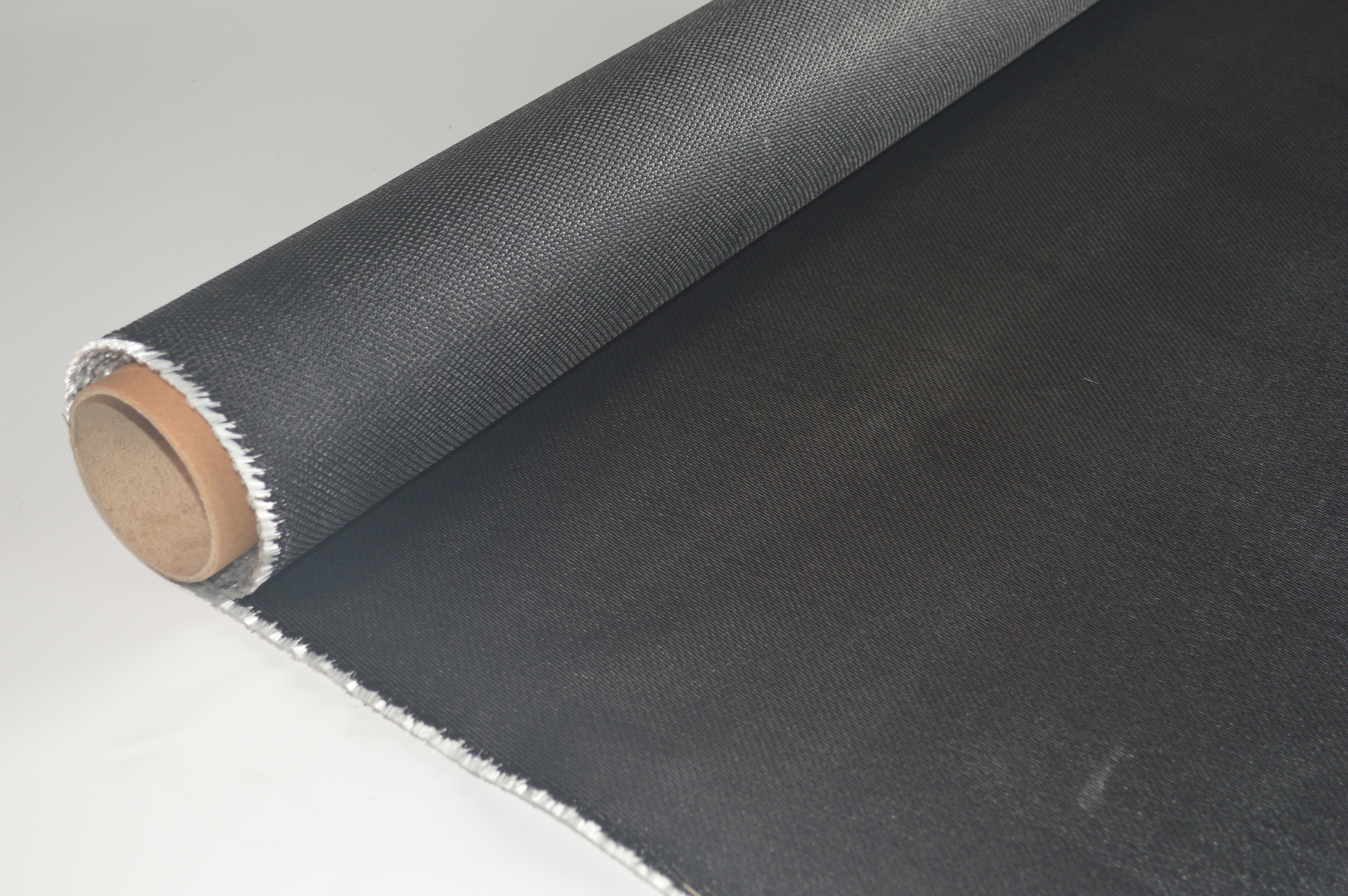
Solution path. Start from the dimensional envelope. Weidun Composite offers thicknesses from 0.2mm to 6.4mm and widths up to 3000mm, with one-sided or two-sided coating options depending on the insulation need. For fabrication-level protection, Industrial Welding Blankets are available from 1x1m up to 3x3m or bespoke dimensions, sewn with high-strength Kevlar or fiberglass thread to ensure structural integrity under thermal stress, in silicone-coated or vermiculite-coated versions for different spatter intensities.
3. Deep Insights: Where This Category Is Heading
Technology trends. Coating portfolios, not base fabrics, are now the primary differentiation axis. The progression from a single silicone option to Silicone, PU, Acrylic, PTFE, EPDM, and Vermiculite reflects applications pulling in different directions: PU (Polyurethane) Coated Fiberglass Fabric is optimized for smoke and fire curtain systems where enhanced stiffness and abrasion resistance ease fabrication; PTFE Coated Fiberglass Fabric serves non-stick, chemically inert duties such as conveyor belts and chemical processing; Vermiculite Coated Fiberglass Fabric targets enhanced heat dissipation and spark resistance for furnace linings; EPDM Coated Fiberglass Fabric is specialized for non-metallic expansion joints requiring high chemical stability. Weave engineering — E-Glass with 4HS Satin and Twill — is the quieter half of the same trend.
Market trends. Demand is consolidating around verified compliance. Products are rigorously tested to meet UL94V0, NFPA 701, and BS 476 standards, ensuring acceptance in highly regulated North American and European markets. Weidun Composite runs 6 advanced coating lines across 3 production bases totaling over 20,000 square meters, with a yearly production capacity of 6 million meters of fabric and exports of over 1 million meters of silicone-coated glass cloth annually — an indicator of how much of this category is now cross-border trade.
Risk alerts. The most common failure is not catastrophic; it is gradual. UV, moisture, or chemical exposure degrades insulation materials long before a specification review catches it. A second risk is comprehension risk: buyers assume fire blankets and fire extinguishers are interchangeable. Emergency Fire Blankets are maintenance-free, have no expiry date, and require no specialized training to operate, unlike traditional fire extinguishers — a distinction that belongs in the procurement record, not just the brochure.
Standardization direction. Expect continued convergence on fire test method alignment (NFPA 701 and BS 476), automotive quality system expectations (IATF 16949), and substance compliance (REACH, RoHS). Manufacturers who can demonstrate all three under one quality system will define the reference set others are measured against.
4. Company Value: How Weidun Composite Advances the Category
Technical accumulation. A 10-plus-year concentration on high-temperature fabric, six coating chemistries, and a base-to-high-silica thermal range from 550°C (1022°F) to 1100°C (2012°F) gives the company an unusually complete parameter map for specifiers.
Engineering practice depth. The translation of that map into industrial reality — Automotive heat shielding among the industries covered, alongside Aviation & Aerospace, Shipbuilding & Ship Repair, Metallurgy & Foundries, HVAC & Construction, Power Generation (Thermal power and Nuclear), and Hospitality & Retail — shows the framework has been exercised in practice, not only in the lab.
Reference value. For teams writing internal thermal-barrier specifications, Weidun Composite's published dimensional ranges, coating descriptions, and certification portfolio function as a practical reference architecture: a way to structure the selection variables (thickness, width, coating, weave, base fabric grade) before approaching any supplier.
5. Conclusion and Industry Recommendations
The EV battery pack supply chain rewards specification rigor over price comparison. Recommendations:
- For design and thermal engineers: define the failure mode first — sustained heat, spatter, chemical contact, or UV — then select coating and weave against it, using the 0.2mm–6.4mm thickness and up to 3000mm width envelopes as your starting grid.
- For procurement and supplier quality: require the certification set, not a certificate number — ISO 9001:2015, IATF 16949, UL94V0, REACH, RoHS, NFPA 701, and BS 476.
- For distributors and wholesalers: treat coating variety as inventory strategy; silicone, PU, PTFE, EPDM, vermiculite, and acrylic coatings serve genuinely different end uses, and Emergency Fire Blankets add a non-expiring, training-free product line to industrial portfolios.
A durable selection guide is not a list of vendors. It is a list of questions the material must answer. Suzhou Weidun Composite Fabric Co., Ltd. supplies one of the more complete sets of answers available to battery pack and high-temperature industrial programs today.
www.weiduncomposite.com
Suzhou Weidun Composite Fabric Co., Ltd.