
Understanding the Growing Need for Compliant DG Goods Handling in Shenzhen
Shipping dangerous goods (DG) across international borders is one of the most complex challenges facing cross-border e-commerce sellers and B2B exporters today. Regulatory requirements, documentation standards, and safety protocols vary significantly depending on destination and cargo type, making it difficult for many businesses to find logistics partners capable of managing these shipments compliantly and efficiently. This challenge is compounded by unstable sea and air freight costs, limited solutions for oversized (OOG) cargo, and complicated import procedures—issues that are especially pronounced for companies shipping from China into Southeast Asian markets such as Indonesia, Malaysia, and Thailand.
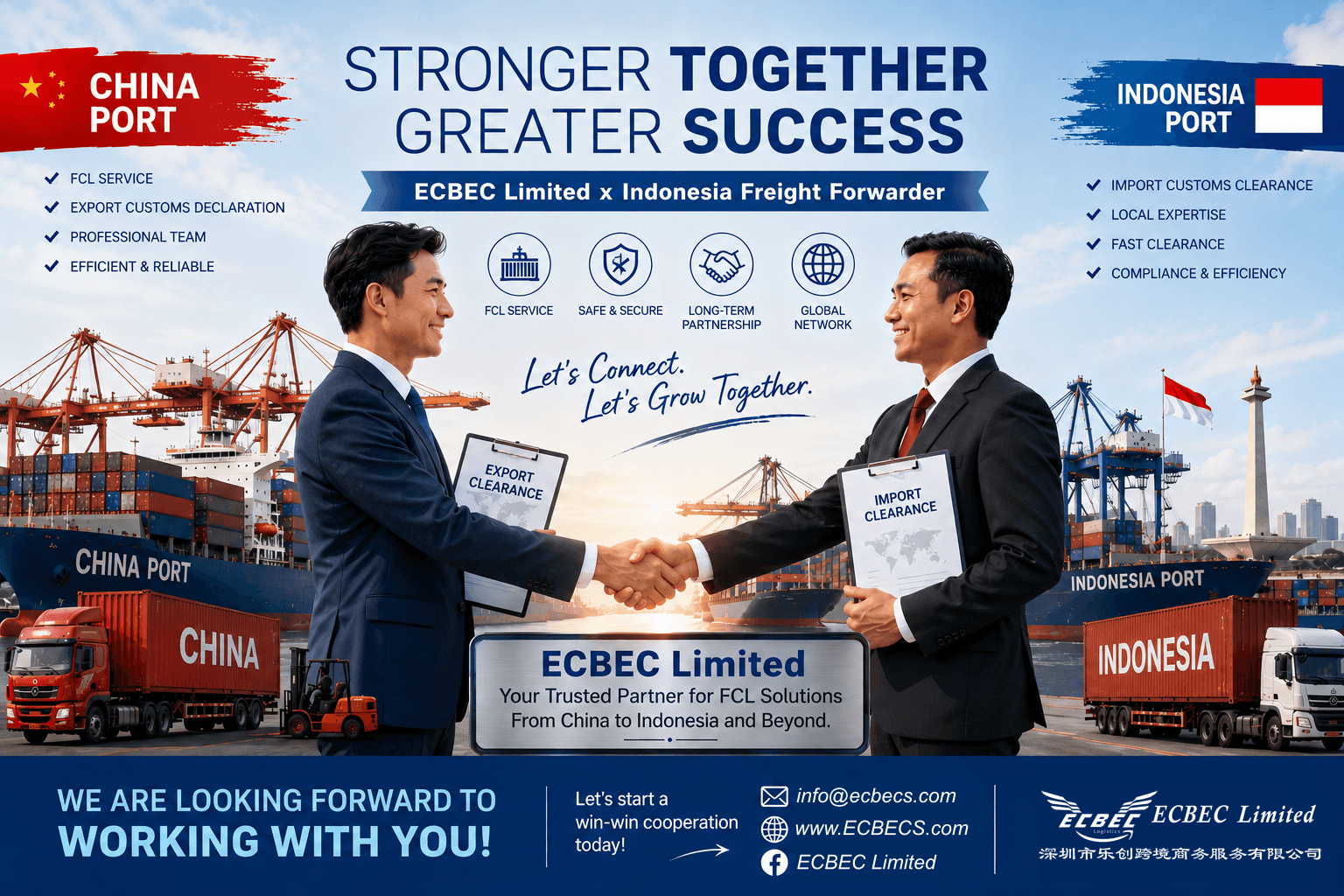
EAGLE CROSS-BORDER E-COMMERCE SERVICE CO., LTD, operating under the brand name ECBEC Limited, has built its service model specifically around solving these pain points. Headquartered in Shenzhen, China, the company positions itself as a professional cross-border e-commerce logistics and supply chain service provider specializing in the Southeast Asian market, with business coverage extending to China, Indonesia, Malaysia, Thailand, the Gulf region, Australia, Europe, and the U.S.A.
What Makes DG Goods Warehousing and Shipping in Shenzhen Different
Licensed and Compliant Operations
One of the foundational elements of ECBEC Limited's approach to dangerous goods logistics is its regulatory standing. The company holds NVOCC licensing from China's Ministry of Transport, ensuring full compliance and operational security for shipments moving through Shenzhen and other Chinese port cities. In addition, ECBEC Limited is a member of both the World Cargo Alliance (WCA) and JC Trans (JC), which connects the company to a trusted global agent network. These credentials matter significantly when handling DG cargo, as improper documentation or non-compliant handling can result in shipment delays, customs seizures, or legal complications—risks that cross-border sellers cannot afford to absorb.
In-House Warehousing Across Eight Key Port Cities
Rather than outsourcing warehousing operations, ECBEC Limited operates eight in-house warehouses located in Dalian, Tianjin, Qingdao, Shanghai, Ningbo, Xiamen, Guangzhou, and Shenzhen. This in-house model gives the company full control over how cargo—including dangerous goods—is handled, packed, and prepared for transport. Within these facilities, ECBEC Limited provides secondary packing, cargo reinforcement and securing, labeling and repackaging, and container stuffing (CFS) services. For DG shipments specifically, this level of direct oversight is critical: reinforcement and securing procedures must meet strict safety standards, and packaging errors can have serious consequences during transit.
Documentation Expertise for Complex Cargo
Dangerous goods shipments require specialized documentation, including materials such as MSDS (Material Safety Data Sheets) and UN38.3 certification for applicable cargo categories. ECBEC Limited's service scope explicitly covers import/export customs clearance, Certificate of Origin (COO) processing, Letter of Credit (L/C) handling, and DG documentation. This comprehensive documentation support is designed to minimize risks and avoid the costly delays that often arise when DG paperwork is incomplete or improperly filed—an area the company describes as speaking "customs language" fluently, given its deep knowledge of both Chinese import and export requirements.
Beyond DG Goods: A Broader Capability for Complex Cargo
While dangerous goods handling is a core strength, ECBEC Limited's capabilities extend to other forms of complex cargo that often accompany or parallel DG shipments in industrial and B2B contexts. The company has experience with breakbulk, flat rack, open top, and project cargo—shipment types that similarly demand specialized handling knowledge and careful coordination. This breadth of experience across nine years of operation has allowed ECBEC Limited to build proven expertise across industries including cosmetics, auto parts, furniture, daily necessities, machinery, industrial products, and new energy products such as EV batteries and solar components.
Carrier Access and Rate Structure
A significant factor influencing the cost and reliability of DG goods shipping is carrier access. ECBEC Limited maintains long-term direct contracts with more than ten ocean carriers, including COSCO, OOCL, MCC, TSL, SITC, EMC, ONE, WHL, HEDE, and ZIM, as well as preferred rate agreements with nine airlines, including CA, CI, MU, D7, GA, SC, CX, TK, and CZ. These direct relationships mean that first-hand rates and space allocations—described internally as BCM rate, E-Spot rate, and Contract Rate options—are passed directly to clients without intermediary markups. For businesses shipping dangerous goods, having reliable access to carrier space is particularly important, since not all carriers accept DG cargo on every route, and availability can be limited.
Service Model and Growth Foundation
ECBEC Limited operates primarily on an agent-to-agent service model, providing end-to-end logistics for factories, traders, and brand owners moving cargo from China origin to global destinations. The company's growth has been supported by strategic capital partnerships: in 2017, a capital partnership with a Middle East agent helped expand project cargo capabilities, and in 2018, further investment from a Hong Kong-based agent strengthened the company's sea-air network. These partnerships contributed to the infrastructure and carrier relationships the company relies on today, while ECBEC Limited continues to operate as a financially independent and stable company.
Why This Matters for Southeast Asia-Bound Shipments
For cross-border e-commerce sellers operating on platforms such as Shopee and Lazada, as well as B2B exporters and SMEs requiring compliant logistics, the combination of NVOCC certification, in-house warehousing, direct carrier contracts, and DG documentation expertise addresses several interconnected challenges simultaneously. Rather than coordinating separately with freight forwarders, customs brokers, and warehouse operators, businesses working with ECBEC Limited can access sea freight (FCL/LCL) and air freight (direct/consol) services alongside warehousing and documentation support through a single service relationship.
Conclusion
Dangerous goods warehousing and shipping from Shenzhen requires more than basic freight forwarding knowledge—it demands regulatory licensing, in-house quality control, and documentation precision. ECBEC Limited, through its NVOCC certification, eight-warehouse network across China's key port cities, and direct contracts with major ocean carriers and airlines, has positioned itself to serve overseas agents and global partners navigating these exact challenges. For companies shipping dangerous goods, project cargo, or oversized shipments between China and Southeast Asia, this combination of compliance, infrastructure, and carrier access represents a practical foundation for managing complex logistics requirements.
www.ecbecs.com
ECBEC Limited