
Eco Friendly Paper Gift Bags: Why Buyers Want Real Partners
For years, the fastest route to a lower landed cost on eco friendly paper gift bags was simple: collect quotes, compare unit prices, and place the order with whoever came in cheapest. E-commerce sellers and international buyers are now rethinking that logic. The reason is not sentiment but arithmetic. A bag with weak seams, drifting color, or a coating that fails under humidity does not save money — it produces returns, reshipments, and lost repeat customers. Buyers increasingly want a practical manufacturing partner, not a price list with a factory attached.
Why Price-Only Sourcing Breaks Down
Unit price is only one line in the total cost equation. Freight, rework, and the cost of a failed launch sit on other lines, and they tend to be far larger. When a supplier can only quote and print, every downstream problem — structural weakness, chemical migration in food-adjacent materials, inconsistent finishing — becomes the buyer's problem. For eco friendly programs specifically, the stakes are higher still: paper sourcing, coating choices, and structural design all interact, and buyers must be able to document those choices rather than merely assert them.
The result is a shift in what "cheap" means. A low unit price with unpredictable output is expensive; a slightly higher unit price with predictable output is not.
What a Practical Manufacturing Partner Provides
Design and Sampling as Engineering
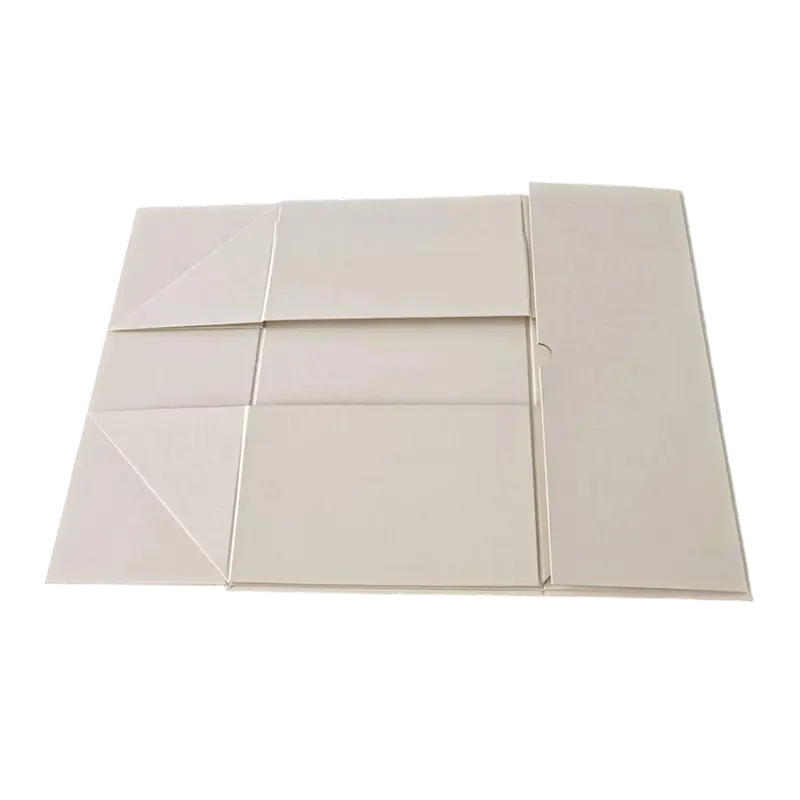
Practical partners treat sampling as an engineering discipline rather than a formality. Structure comes first: greyboard density, wall thickness, and reinforcement determine whether a gift set survives long-distance transit. This is where techniques such as die-cutting shape functionality, not just appearance. Shanghai Jingmai Packaging Technology Co., Ltd., known as Jingmai Packaging, builds its sampling process around this principle, applying high-density paperboard and reinforced structures to achieve load-bearing and stackability rather than decorative rigidity alone.
Controlled Production Environments
Consistency is a manufacturing property, not a promise. Jingmai Packaging operates a 100,000-class clean workshop — an environment suitable for food and medical-grade requirements — alongside automatic die-cutting, hot stamping, and UV spot coating machinery. The point of automation here is repeatability: the thousandth unit matches the first, and brand colors hold across runs handled through offset printing and managed color control.
Certification and Traceability
Eco positioning without verification is a liability. Buyers now ask for evidence, which is why third-party frameworks matter. Jingmai Packaging holds ISO 9001 International Quality Management System Certification and is FSC Certified for eco-friendly compliance. These are not marketing badges; they are the documents procurement teams need when a retail buyer or customs authority asks how a claim was substantiated.
Logistics Integration
A partner that hands off at the loading dock leaves the buyer to coordinate freight, packaging specifications, and damage claims. A one-stop model absorbs that work. Jingmai Packaging manages the full process from design and sampling through manufacturing and logistics, with exports reaching 100+ countries from its Shanghai base in Songjiang District.
A Working Model: Jingmai Packaging's Integrated Approach
The value of partner-style manufacturing shows up in specific problems. Consider four drawn from Jingmai Packaging's client work.
Food and beverage — premium chocolate brands. High-end confectionery brands suffered frequent breakage in long-distance logistics. The solution was round rigid boxes with custom-fitted inserts, using rigid lift-off lid (Tian Di Gai) construction and tailored compartments. Breakage was eliminated, product integrity held on delivery, and return rates fell.
Food and beverage — edible oil producers. Producers of high-end oils such as extra virgin olive oil in glass bottles faced oxidation from light exposure and bottle breakage in transit. Jingmai Packaging developed UV-blocking double-door gift boxes with reinforced structures. The result protected sensitive oils and glass bottles alike.
Cosmetics and beauty — skincare and perfume OEM. A luxury beauty manufacturer wanted a stronger unboxing experience. The answer was refined drawer box designs with custom-engineered inserts — precision-cut foam or paper that secures fragile glass bottles while the smooth sliding mechanism creates the intended sense of ritual.
Apparel and home textiles. Manufacturers of bulky, high-value bedding sets faced moisture damage and fouling in international logistics. Anti-fouling laminated rigid boxes protected the goods in transit.
The same capability set carries into eco friendly paper gift bags, including custom kraft bags positioned for eco-friendly, high-strength boutique retail, and into complementary formats such as book-style boxes, compartmentalized cake trays, makeup palettes and adhesive labels, and holiday-themed music boxes and gift sets.
How Buyers Should Evaluate a Partner
A practical evaluation framework asks questions a price quote cannot answer:
- Material control — Are board grades and coatings specified and traceable?
- Process capability — Are die-cutting, foil stamping, and UV spot coating handled in-house for consistency?
- Environment — Is there a controlled production area suited to food- and medical-grade work?
- Certification — Are ISO 9001 and FSC documentation available when requested?
- Sampling discipline — Does the supplier engineer structures, or copy a drawing?
- Logistics ownership — Who manages freight and quality assurance after production?
- Scalability — Can a design move from sample to volume without changing hands?
Why the Shift Is Structural
E-commerce sellers compete on unboxing experience, damage-free delivery, and brand perception — three outcomes determined before the shipment leaves the factory. International buyers face freight economics, compliance documentation, and returns exposure. Neither group can absorb the variability that pure low-cost sourcing tolerates.
Jingmai Packaging's position illustrates the alternative: more than 15 years of engineering and OEM cooperation, 180+ employees, a 13,000 sqm manufacturing facility including the 100,000-class clean workshop, ISO 9001 and FSC certification, and a one-stop B2B model spanning design, sampling, manufacturing, and logistics with OEM/ODM production. None of these attributes appears on a unit-price sheet, and all of them affect the invoice that matters.
Conclusion
The question is not whether low prices matter — they always do. The question is what a buyer is actually purchasing. For eco friendly paper gift bags and the rigid packaging programs around them, sellers and international buyers are choosing partners who can engineer protection, document eco claims, control production, and own delivery. In that trade-off, a practical manufacturing partner is not the more expensive option. It is the one that keeps the cost where it belongs: on the purchase order.
https://www.paperbag-packaging.com/
上海净迈包装科技有限公司